A business model is the blueprint for how you deliver value to customers. In practice, it becomes the foundation for your market identity and your operational strategy. Specifically, it outlines how a company creates, delivers, and captures value. In turn, those three answers determine your path to profitability and growth.
Brand managers, CMOs, and founders own these decisions. Every day, they craft the strategies meant to resonate with their target audience. Above all, they need to stand apart in a crowded marketplace.
Below, we walk through the most common business models. Then we look at how well-known brands used each one to build their position.
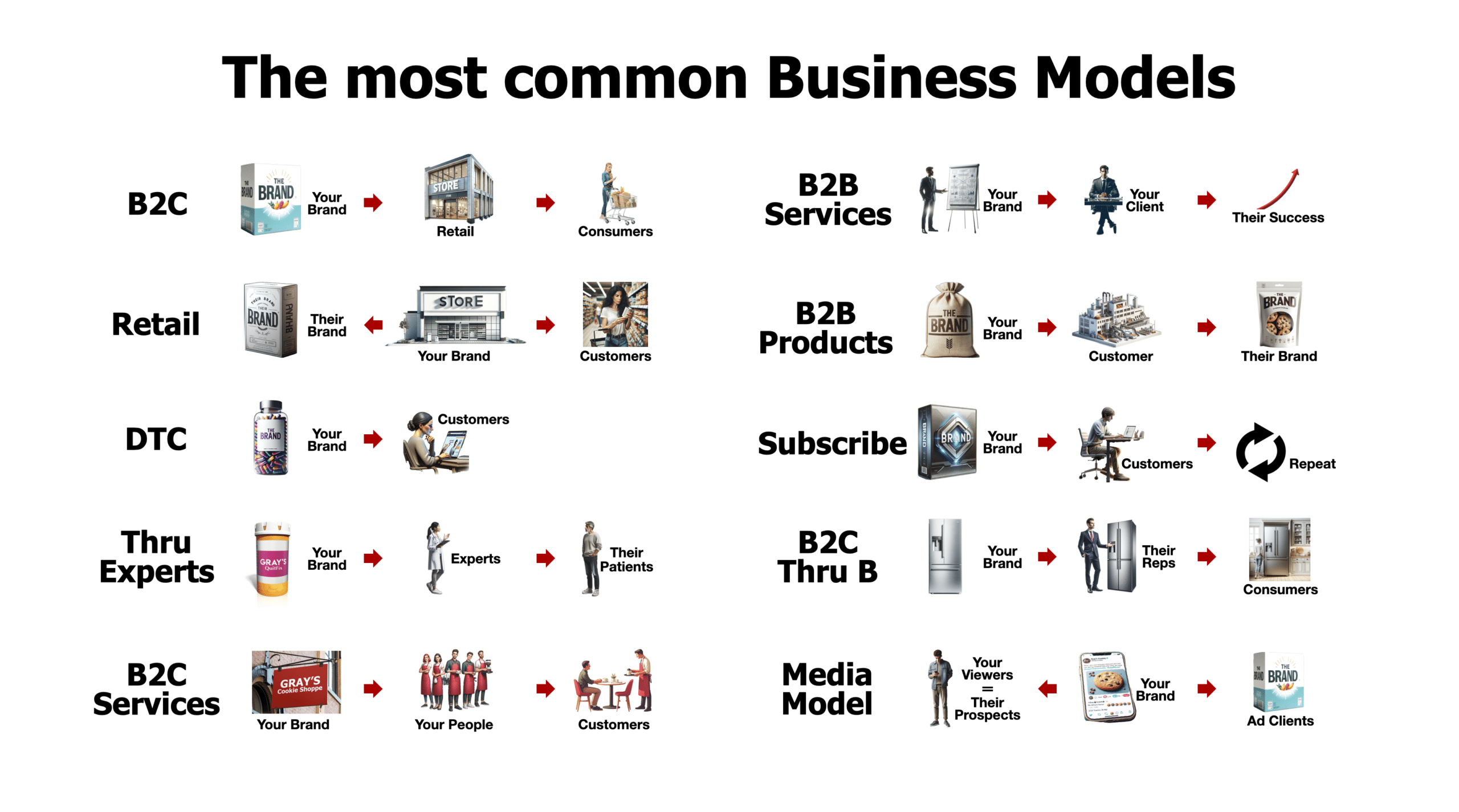
B2C Business Model
Apple - A paradigm of a consumer-centric brand
Business-to-Consumer (B2C) business model
Apple has masterfully capitalized on the B2C model, not merely by selling products but by curating a simple consumer experience. This ethos, championed by Steve Jobs, posits that consumer-friendly technology is the cornerstone of the future. To read our Apple case study, click on this link: Apple Case Study.
Retail Strategy business model
Apple’s retail outlets are a physical manifestation of its brand strategy. Far from being mere stores, they serve as sleek, minimalist sanctuaries where technology meets art. Here, every customer can touch, feel, and experience Apple’s ecosystem in a setting that’s as intuitive as the products displayed.
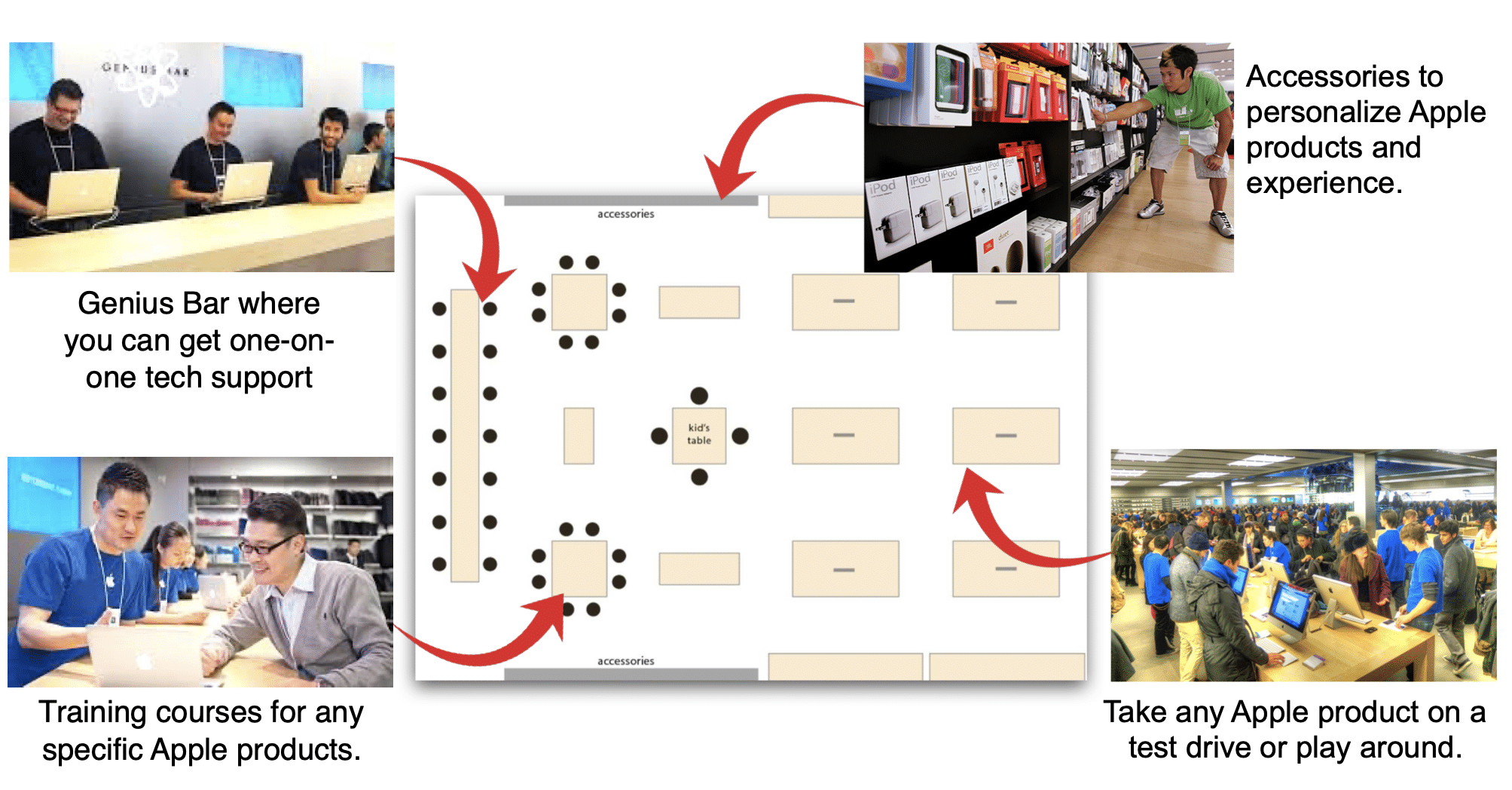
To illustrate, click the image above that outlines Apple’s retail business models.
Value Proposition
The Apple brand stands on the pillar of simplicity. It’s not just about owning a device but embracing a lifestyle where technology complements human potential. This is evident in how their products, from the iPhone to the MacBook, boast user-centric design and harmonious interconnectivity, making each release a much-anticipated event. Below is Apple’s brand idea map to see how they stretch their simplicity across the brand promise, story, innovation, purchase moment, and experiences. To read our methodology on how to create a brand idea, click on this link: Brand Idea.
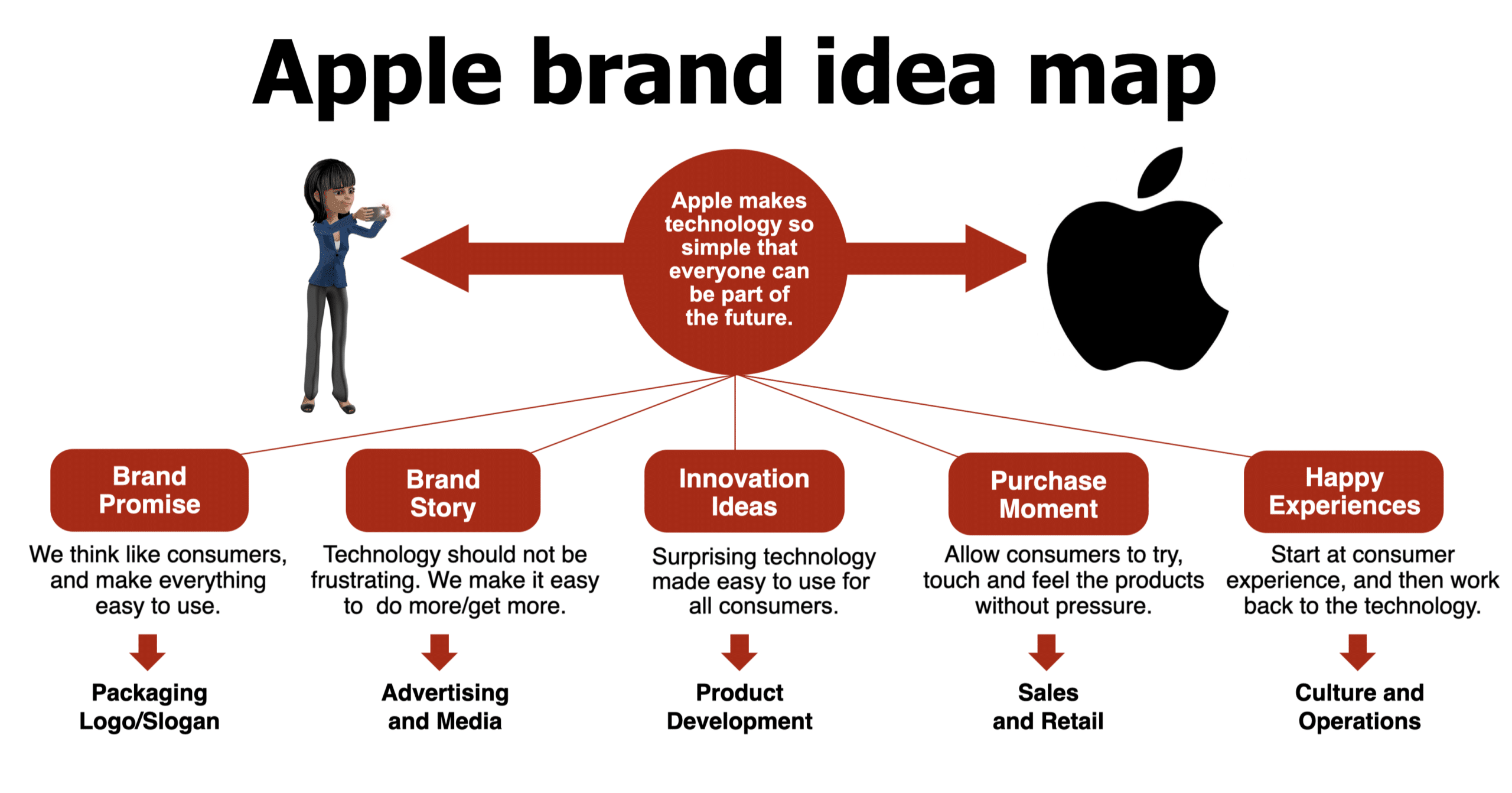
To illustrate, click the image above that outlines Apple’s various business models.
Direct Sales business model
Apple’s vision extends to online sales, ensuring a seamless digital customer journey that mirrors the in-store experience. Their website, app store, book store, and online store continue to exude simplicity, enabling customers to purchase easily while gathering valuable consumer data to refine the user experience further.
Apple’s advertising and brand message
Since its early days, Apple’s advertising has underscored simplicity. Campaigns like “I’m a Mac, and I’m a PC” differentiated Apple from its competitors and resonated with consumers’ desire for easy-to-use technology. To see our Apple advertising story, click this link: Apple Advertising
In harnessing the power of simplicity, Apple has not just created products; it has cultivated a loyal following, a culture, and a benchmark for what it means to be a consumer-centric brand in the B2C domain.
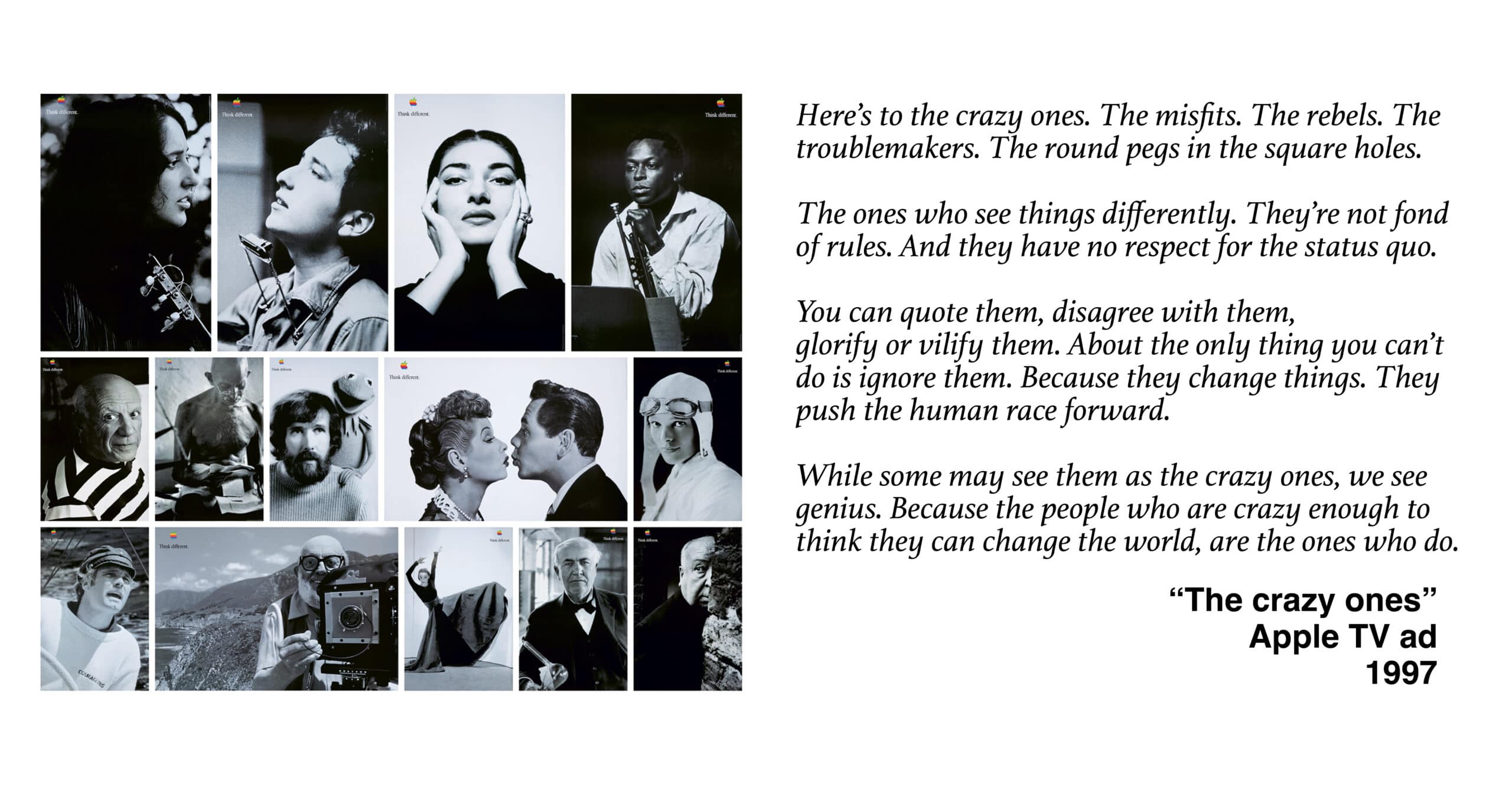
To illustrate, click the image of how Apple’s B2C business model comes to life through advertising.
B2B Services Business Model:
Salesforce's Blueprint for Success
In the realm of B2B services, Salesforce has emerged as a paragon, illustrating how a brand can transcend mere transactions to become integral to its clients’ successes.
Empowering Client Success
Salesforce’s cloud-based CRM platform exemplifies the B2B service model by enabling businesses to comprehensively enhance customer relationships. Their services are not just about providing software; they are about crafting a journey towards digital transformation for their clients.
Value Proposition
Salesforce’s value proposition hinges on customization and scalability, allowing businesses of all sizes to find solutions that grow with their needs. They offer a suite of applications focused on customer service, marketing automation, analytics, and application development, all centralized on their CRM platform.
Client-Centric Innovation
With a relentless focus on client success, Salesforce has innovated solutions anticipating business needs, driving trends such as AI with their Einstein platform, rather than merely responding to them.
Partnerships and Ecosystem
Beyond its direct services, Salesforce has fostered a vast ecosystem of partners, amplifying its value proposition. Their AppExchange marketplace is a testament to their collaborative approach, providing clients and other vendors a platform for extending the functionality of the Salesforce suite.
Brand Community
Finally, Salesforce has built a community around its brand. Events like Dreamforce serve as networking and learning hubs and reinforce Salesforce’s position as a thought leader and a pivotal node in the B2B services space.
Salesforce’s model is a testament to the power of providing a service and becoming a partner in client success, exemplifying a robust B2B services business model.

B2B Products Business Model
Intel's integration into innovation
Intel stands as a colossus in the B2B products landscape, where its microprocessors are the heartbeat of many devices across the tech world.
The Core of Technology
Intel’s semiconductors are ubiquitous, found in personal computers, servers, and an array of smart devices. Their product integration strategy has made Intel an indispensable supplier and partner to tech giants and emerging players alike.
Driving Innovation
Intel’s roadmap is not just about maintaining the status quo but pushing the boundaries of what’s possible. Their commitment to research and development ensures that partners always have access to the cutting edge in processing power.
Strategic Partnerships
Partnerships with tech giants like Apple have been pivotal. Intel’s chips have powered Mac computers for years, although Apple’s recent shift to their own chips also exemplifies the volatile nature of B2B relationships and the need for constant innovation and adaptability.
Marketing Expertise
Intel’s marketing has also set a benchmark, with campaigns like “Intel Inside” achieving iconic status and ensuring that their brand is synonymous with quality and reliability in the minds of consumers, thus indirectly influencing B2B clients through B2C brand recognition.
Intel demonstrates that at the core of the B2B products model is not just supplying a component – it’s about being a linchpin in the technological advancement of your partners’ products.
What type of business model do you work on?
We believe that marketers learn best when they see our marketing concepts applied to brands that look like their own. We have come up with specific examples – consumer, B2B and healthcare – to showcase our marketing tools. Click on the icon below to choose your interest area.

Direct To Consumer (DTC) business model
Tesla's Trailblazing Approach
Tesla, under Elon Musk’s leadership, has mirrored strategies akin to Steve Jobs’ Apple, particularly in creating intense consumer desire through hype marketing. This approach has positioned Tesla as a coveted brand in the electric vehicle market.
Innovative Marketing and Production
Tesla’s marketing, reminiscent of Apple’s event-style approach, has fueled a high demand for their vehicles, despite initial production challenges. Their strategy reflects a long-term vision, gradually transitioning from high-end models to more accessible options, broadening their market reach.
Simplified Product Design
Mirroring Apple’s philosophy, Tesla’s vehicles are designed with fewer parts compared to traditional cars, emphasizing both style and technological advancement. This simplification extends to their software, continuously enhancing the driving experience.
Consumer Engagement and Brand Promise
Tesla’s direct sales model, bypassing traditional dealerships, allows for a unique purchase experience – simple, transparent, and tailored. Their brand promise combines high performance, stylish design, and a commitment to environmental sustainability, appealing to a lifestyle choice rather than just a product need.
Brand Strategy and Positioning
Tesla’s brand idea, “the electric vehicle designed for our future,” is delivered consistently across various touchpoints, from the brand promise and story to innovation and consumer experience. Their focus remains on high-performance, stylish designs, and leveraging technology for continuous improvement.
This strategic approach has seen Tesla become a symbol of innovation and environmental consciousness, making it more than just a car brand but a representative of a future-oriented lifestyle. To read our Tesla case study, click on this link: Tesla.
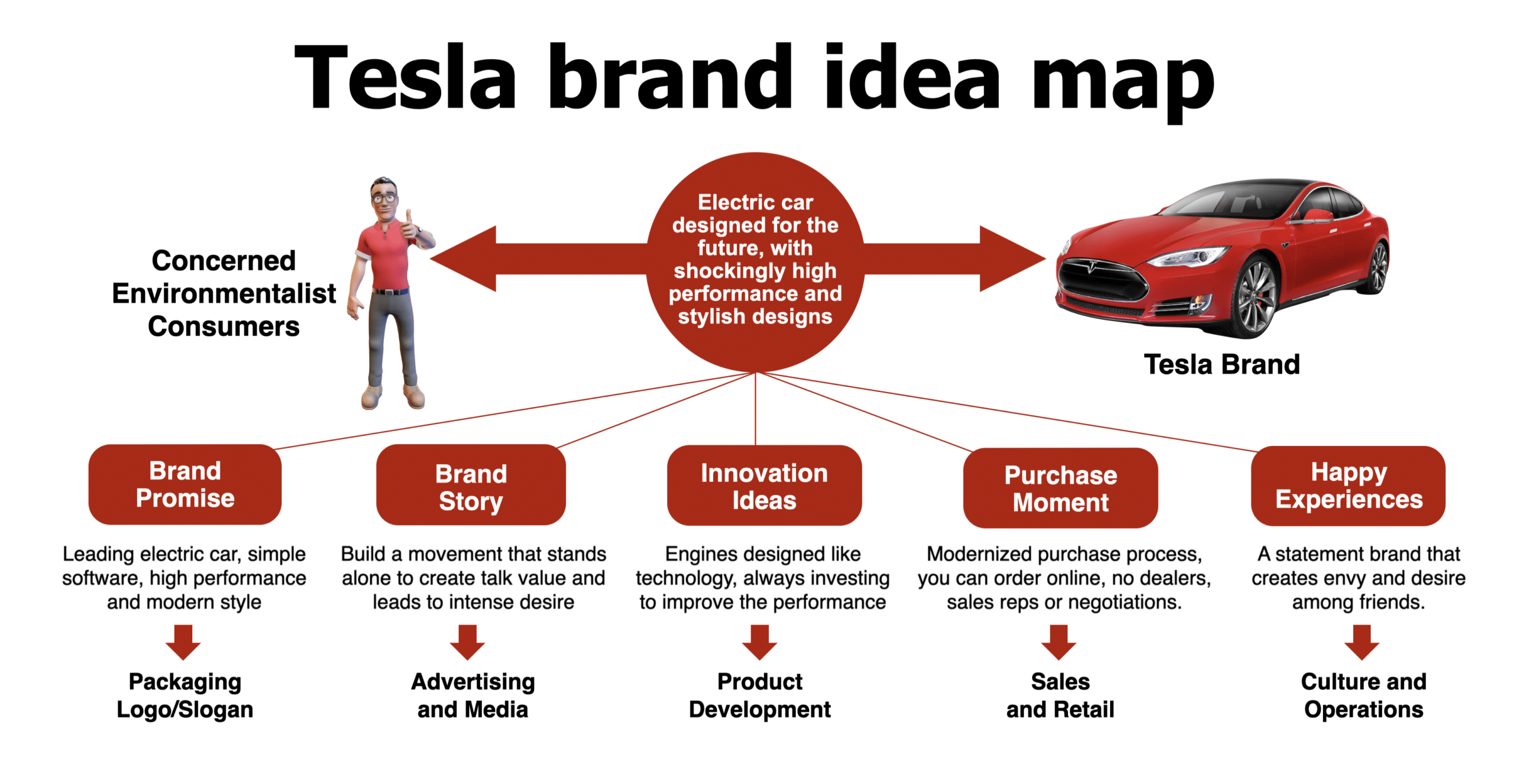
To illustrate, click the image above that outlines Tesla’s DTC business models.
Subscription Business Model:
Netflix's Pioneering Path
Netflix transformed the entertainment landscape, capitalizing on the subscription model to offer unparalleled convenience and variety in content streaming.
Revolutionizing Content Consumption
Netflix began as a DVD rental service but quickly pivoted to streaming, foresightedly tapping into the consumer’s growing preference for digital content. Their subscription model offers unlimited access to a diverse library, fundamentally changing how people consume movies and TV shows.
Personalization and User Experience
A key to Netflix’s success is its personalized recommendation system, enhancing user engagement by tailoring content to individual preferences. This customer-centric approach keeps subscribers hooked and reduces churn.
Content Creation and Acquisition
Netflix invests heavily in both acquiring and producing original content, ensuring a constant supply of fresh and exclusive material that attracts and retains subscribers. This strategy diversifies their library and establishes them as a prominent player in content creation.
Global Reach and Scalability
The scalability of the subscription model has enabled Netflix to expand globally, adapting to different markets while maintaining a uniform service quality. Their international expansion strategy includes localizing content and investing in regional productions, further solidifying their global presence.
Netflix’s mastery of the subscription model showcases how consistent innovation, customer-centricity, and strategic content investment can create a sustainable, globally successful business.
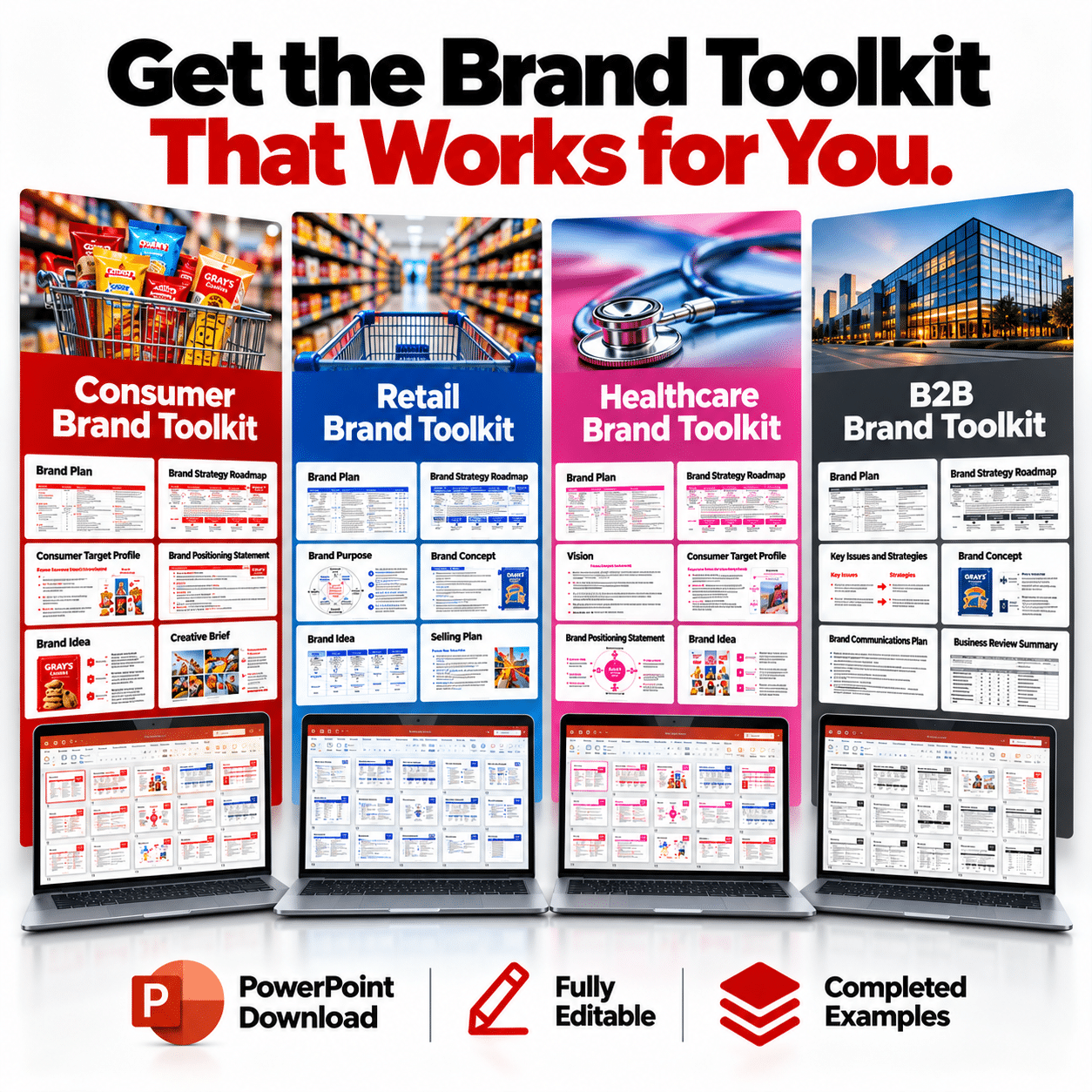
Brand Toolkit for brand consultants
Our Brand Consulting Toolkit provides all the necessary templates, allowing you to streamline your process and concentrate on your clients! We have combined our brand toolkits in one package.
B2C Services Business Model:
Starbucks' Resurgence through focus on the Customer Experience
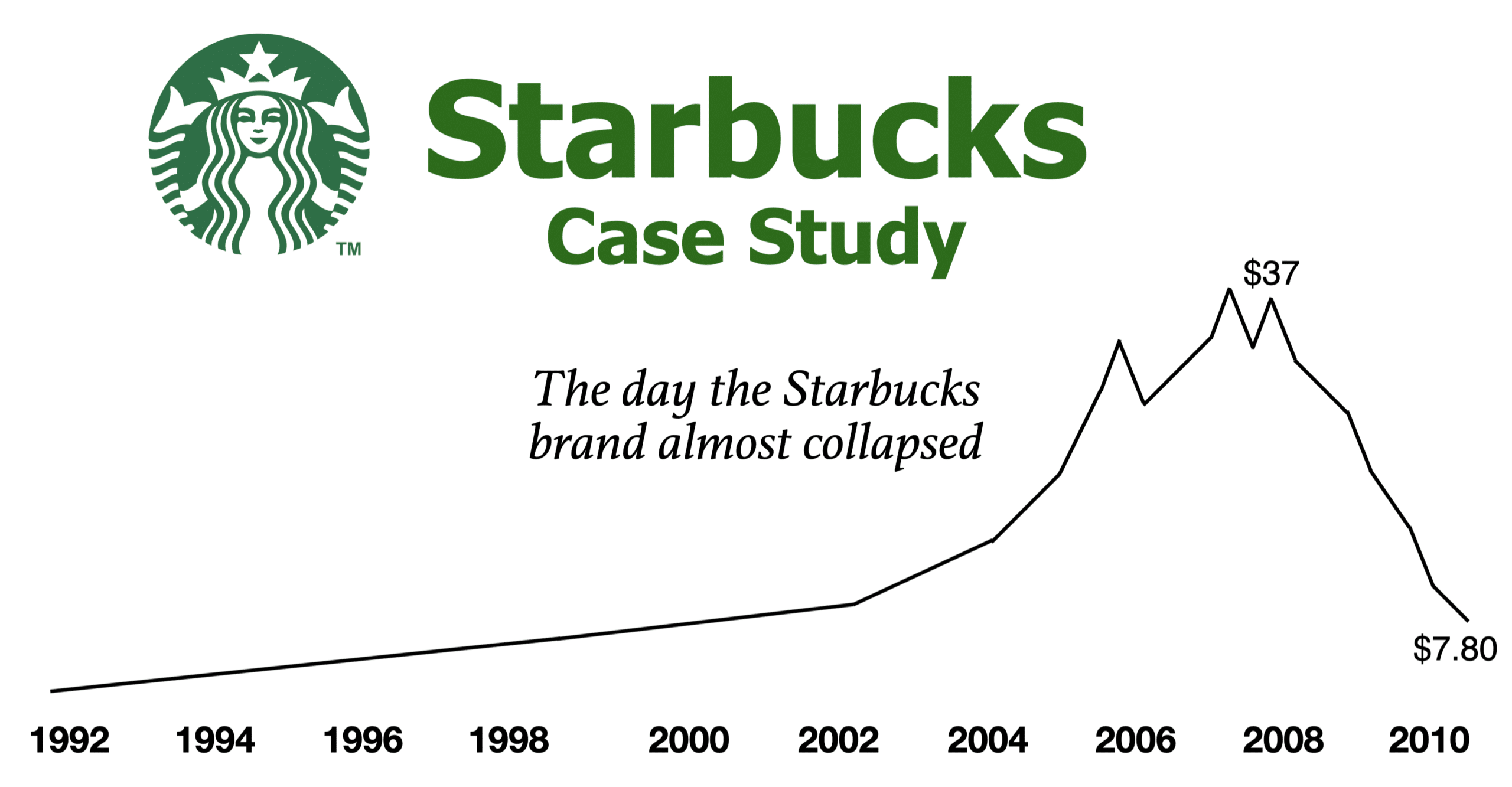
Starbucks, recognized for its exceptional customer experience, underwent a significant transformation following a challenging period in 2008. This case study exemplifies the importance of maintaining core brand values and focusing on customer experience.
Rebuilding the Starbucks Experience
Starbucks’ turnaround centered on returning to its core business of coffee and re-emphasizing the customer experience. This included retraining baristas and restructuring stores to enhance the coffee ritual.
Strategic Refocus
The company divested its extraneous entertainment ventures to concentrate on creating a welcoming, consistent atmosphere in its stores, which serves as an escape between home and work.
Innovative Expansion
Starbucks expanded its offerings to include lunch and dinner options, leveraging its existing store infrastructure. This strategy aimed to transform Starbucks locations into all-day destinations, further ingraining the brand into customers’ daily routines.
Revival and Growth
The renewed focus on the core coffee experience and strategic expansion helped Starbucks reconnect with customers, leading to significant growth in same-store sales and a remarkable recovery in stock value.
Starbucks’ story is a testament to the power of refocusing on core brand values and the customer experience, crucial elements in the B2C services business model.
B2C Thru Business Model:
Major Appliance Manufacturers' Route to Market
Major appliance manufacturers like Whirlpool, Sony, LG, and Samsung exemplify the B2C Thru Business Model, leveraging retailer partnerships to reach consumers effectively.
Partnerships with Retailers
These manufacturers rely on relationships with large retailers to display and sell their products. This approach allows them to benefit from the retailers’ foot traffic, brand recognition, and sales expertise.
Marketing and Branding
While they sell through third parties, these companies maintain strong marketing efforts to build brand recognition and demand among consumers, influencing their choices at retail outlets.
Product Innovation and Quality
Continuous innovation and emphasis on quality ensure that their products stand out in retail environments, compelling consumers to choose their brand over competitors.
Customer Service and Warranty
Post-purchase, these manufacturers provide customer service and warranties, maintaining direct contact with consumers to ensure satisfaction and foster brand loyalty.
This business model shows how manufacturers can effectively reach consumers through retail channels while maintaining brand integrity and customer relationships.


Thru Experts Business Model:
Pharmaceutical Brands' Strategy for Success
Pharmaceutical companies like Pfizer and Johnson & Johnson operate under the Thru Experts Business Model, focusing on healthcare professionals as a primary channel to reach end-users.
Collaboration with Healthcare Professionals
They work closely with doctors, nurses, and pharmacists to educate them about their products, ensuring these professionals can recommend or prescribe their medications appropriately to patients.
Research and Development
Significant investment in R&D allows these companies to bring innovative, effective drugs to market, addressing unmet medical needs and ensuring trust in their brand among healthcare professionals.
Regulatory Compliance and Marketing
Compliance with stringent regulatory standards is crucial, as is ethical marketing. Pharmaceutical companies provide healthcare professionals extensive scientific data and research, supporting their decision-making process.
Patient Education and Advocacy
These companies also engage in patient education and advocacy, supporting patients in understanding and accessing their treatments, thus ensuring their brand is associated with quality care and positive health outcomes.
The Thru Experts Business Model in pharmaceuticals highlights the importance of expert-led endorsement and education in industries where products require specialized knowledge for their use and recommendation.


Media Business Model:
Facebook's Ad-Driven Empire
Facebook, a leader in the digital media landscape, illustrates the efficacy of the Media Business Model, primarily driven by advertising revenue.
Ad Revenue as Primary Income
Facebook’s business model is heavily reliant on advertising revenue. Businesses of all sizes utilize Facebook’s extensive user data to target their advertisements effectively, making it a vital platform for digital marketing.
User Data and Targeting
The key to Facebook’s success in advertising lies in its vast user data, allowing for highly targeted and personalized advertising. This precision increases the ads’ effectiveness, making Facebook an attractive platform for advertisers.
Free User Access
The platform remains free for users, essential for its widespread use and engagement. This broad user base makes it so attractive to advertisers, creating a cycle that fuels Facebook’s growth.
Facebook’s success demonstrates how the Media Business Model can be leveraged in the digital age, combining free access for users with powerful advertising revenue streams.