
The best brand managers always seem to know where the problems are before anyone else does. Usually that comes from running a thorough brand audit and business review every year. When you look at the marketplace, consumers, channels, competitors, brand health, and financials in a structured way, the real issues surface before they show up in the results.
Otherwise, you are investing resources without knowing what is actually working, where you are losing ground, or what the real opportunity is. In contrast, the brand audit gives you the structure to build a situation analysis that feeds your marketing plan with real insight. Above all, good brand performance analysis builds a clear point of view on what needs to happen next.

The six sections of a brand audit and business review
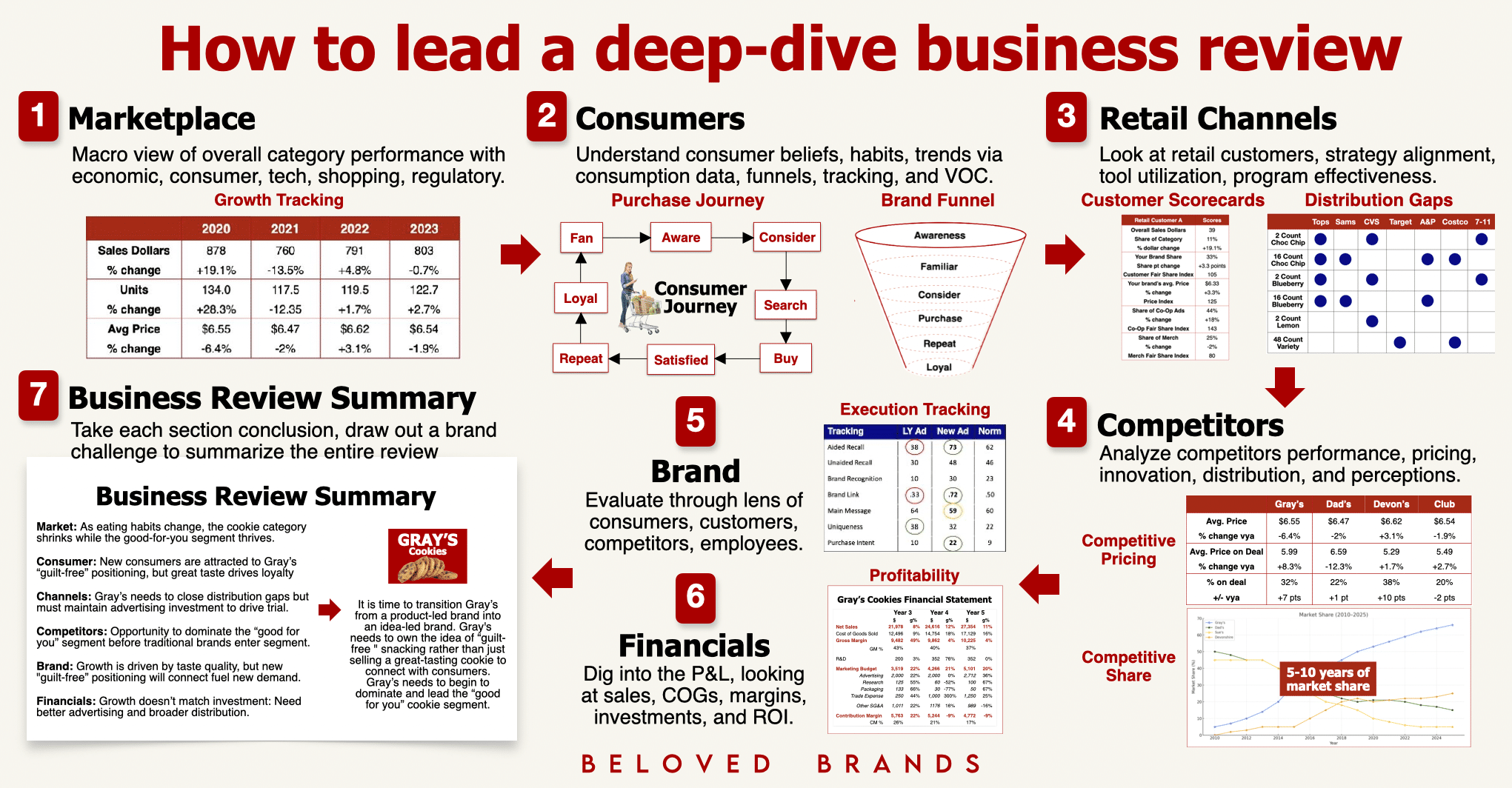
A thorough brand audit covers six areas. Together, these sections build a complete picture of where the brand stands and where the real issues are hiding.
Marketplace
First, start the business review with a macro read of the category. How is the overall market performing? Specifically, look at the forces shaping growth: economic shifts, changes in consumer behavior, technology, shopper trends, and any regulatory pressures that could affect the category. In addition, scanning adjacent categories for patterns that might signal what is coming next in yours is worth the extra effort. As a result, brand managers who understand the marketplace context are rarely caught off guard by a category shift.
Consumers
Next, build a real understanding of your consumer target using the analytics available to you. Look at their beliefs, habits, and motivations, and then track how they shift over time. For example, brand funnel analysis and leaky bucket analysis show you where consumers are entering and exiting your brand’s universe and what is driving those decisions. In addition, tracking studies, voice-of-consumer data, and qualitative research add the layer of what consumers think and feel at every stage of the purchase journey. Ultimately, consumer insight is what separates a surface-level business review from a genuine brand audit.
Channels
Then evaluate how each distribution channel and major retail partner is performing. Specifically, understand their strategies, the tools they offer, and how well your brand is currently using them. When you show up in a way that supports each customer’s growth model, you build strong retail relationships. In practice, gaps in distribution or poor execution at shelf are often the first place a business review surfaces hidden problems in brand performance.
Competitors
After that, break down your closest competitors across performance, positioning, innovation, pricing, and distribution. Then use your analytics to map where they are likely headed next. Most importantly, a solid competitor section in a brand audit anticipates where they go next. Therefore, sharpening your own strategy in response is the real value of the exercise.
Brand
Next, assess your brand from every angle: consumers, customers, competitors, and employees. Specifically, pull together funnel data, tracking results, research, pricing analysis, distribution gaps, and financial indicators to get a complete view of brand health. In fact, a strong brand performance analysis looks at both sides of the equation. Brand health tracks how consumers feel about the brand, while brand wealth measures how the brand is performing against its financial targets.
Financials
Finally, evaluate your full P&L to understand the economic drivers behind your brand’s performance. In particular, know the levers that drive profitability, including pricing, costs, market size, and market share, and understand when to pull each one. As a result, connecting the financial section of the business review to the brand performance analysis ensures that strategic choices also deliver the right economic outcomes.
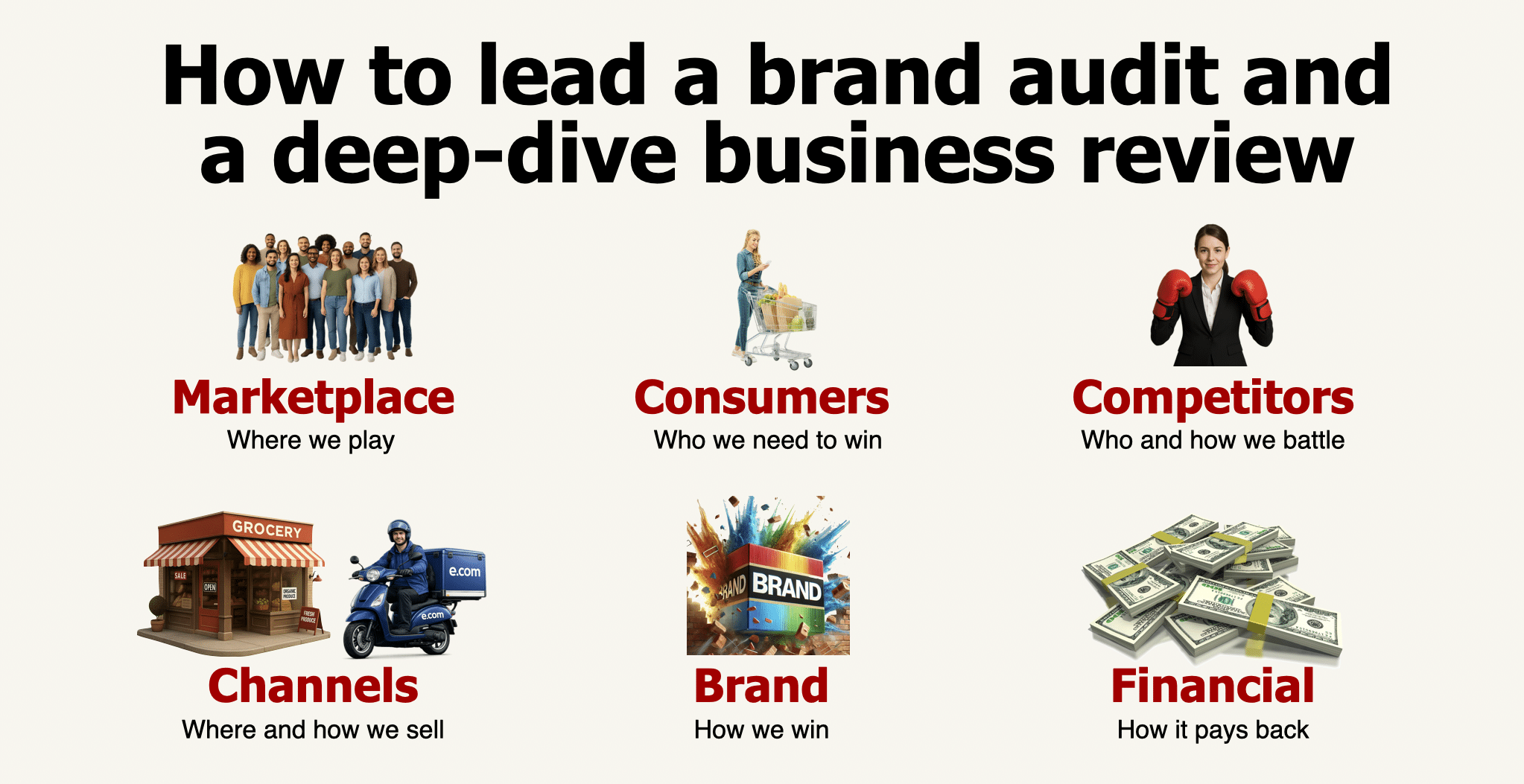
Start your brand audit with our best analytical questions for each of the six sections
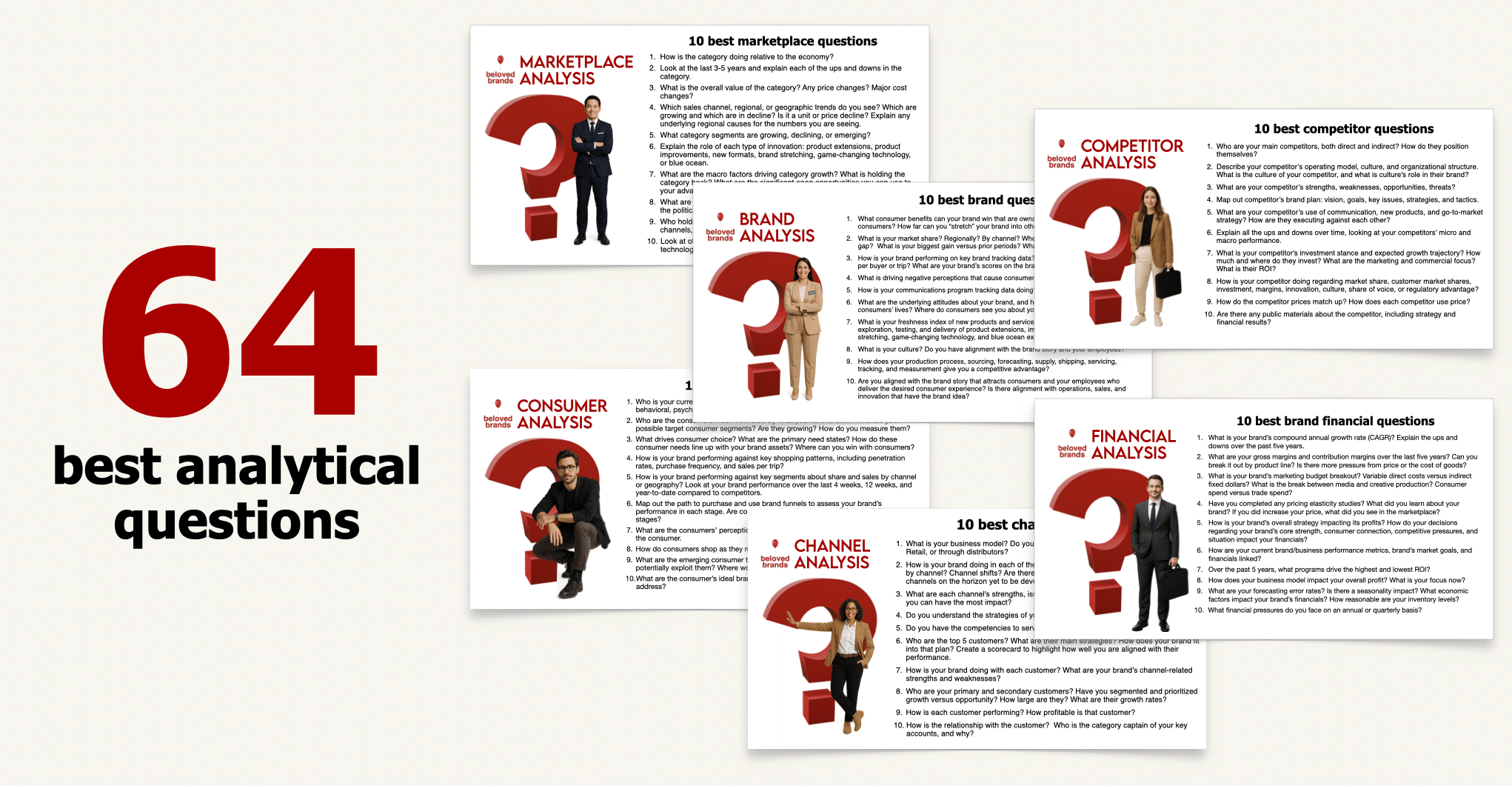
How to summarize your brand audit into a situation analysis
Putting together your deep-dive business review
Once the six sections of the business review are complete, four questions turn the analysis into a situation analysis that feeds directly into your marketing plan.
First, what is driving growth? Identify the top factors of strength, positional power, or market momentum that have a proven link to your brand’s growth. Therefore, the plan should continue to fuel these drivers.
Second, what is inhibiting growth? Identify the most significant factors of weakness, unaddressed gaps, or market friction that are holding the brand back. In turn, the plan should focus on reducing or reversing these inhibitors.
Third, where are the opportunities for growth? For example, look for untapped areas in the market such as unfulfilled consumer needs, new technologies, potential regulatory changes, or new distribution channels that could fuel future growth.
Finally, what are the threats to future growth? Look at changing circumstances, such as shifts in consumer behavior, competitive activity, distribution changes, or potential barriers, that create risks to the brand. Then build the plan to minimize the impact of those risks.
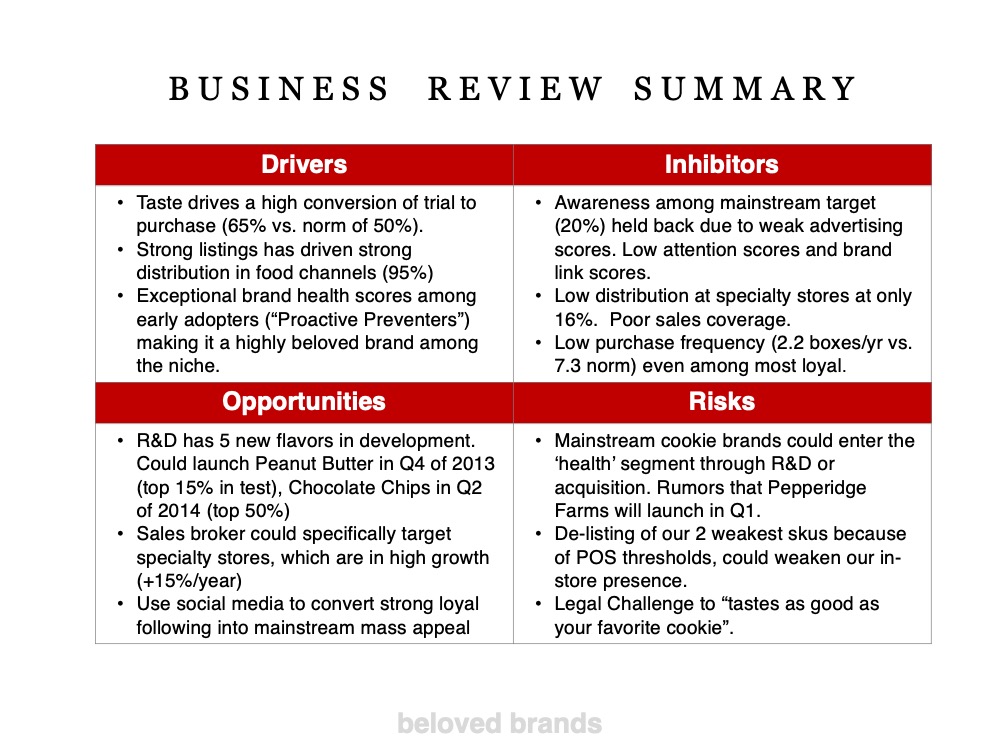
Above all, narrowing to the top three factors in each box keeps the situation analysis focused and directly actionable. The Gray’s Cookies example below shows how this works in practice.
How to build the business review presentation
A well-structured brand audit typically runs to 25 slides for a management audience, with 3 to 5 slides per section. Because the process is iterative, expect to go back and forth a few times before each slide holds up.
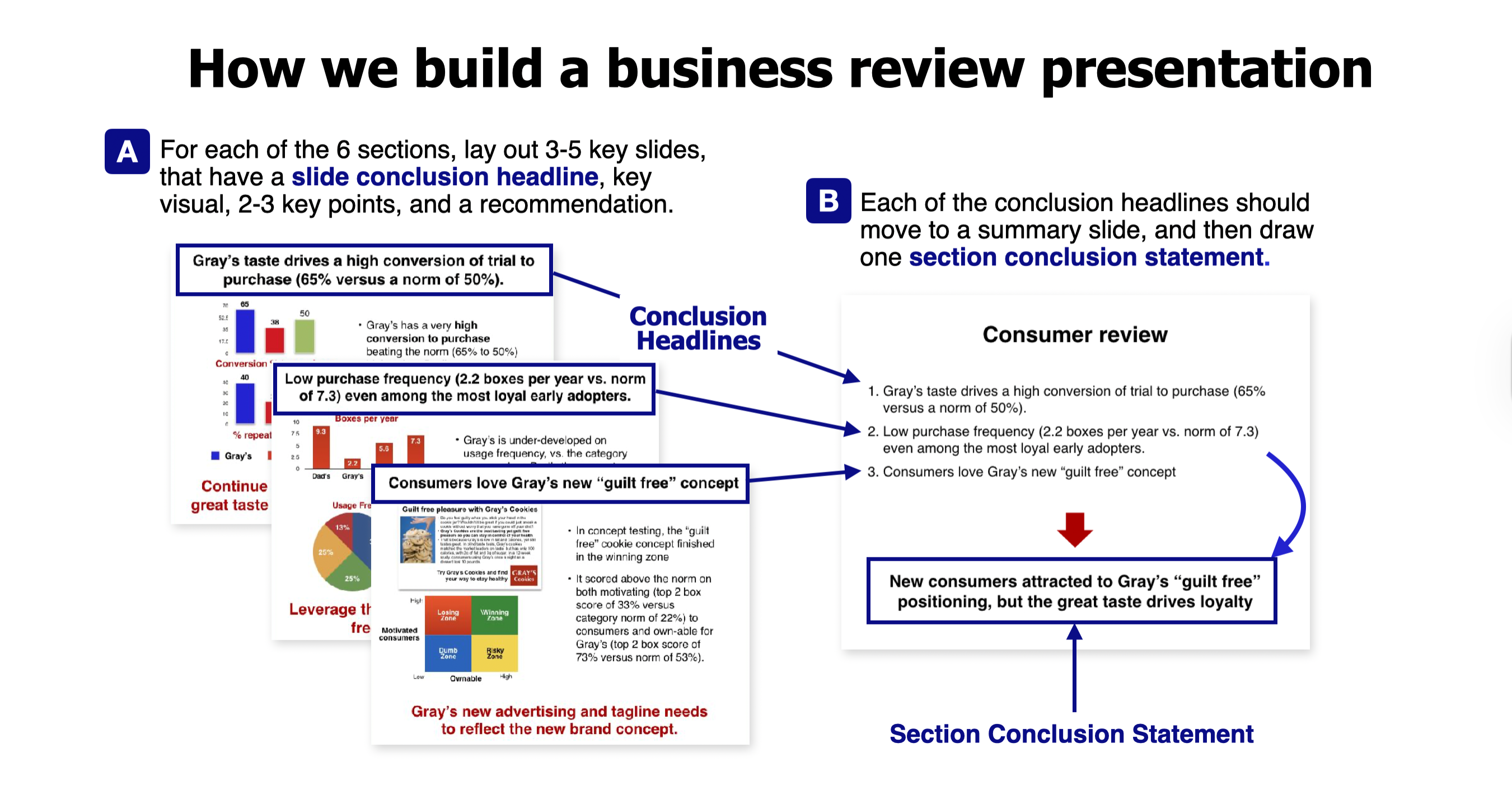
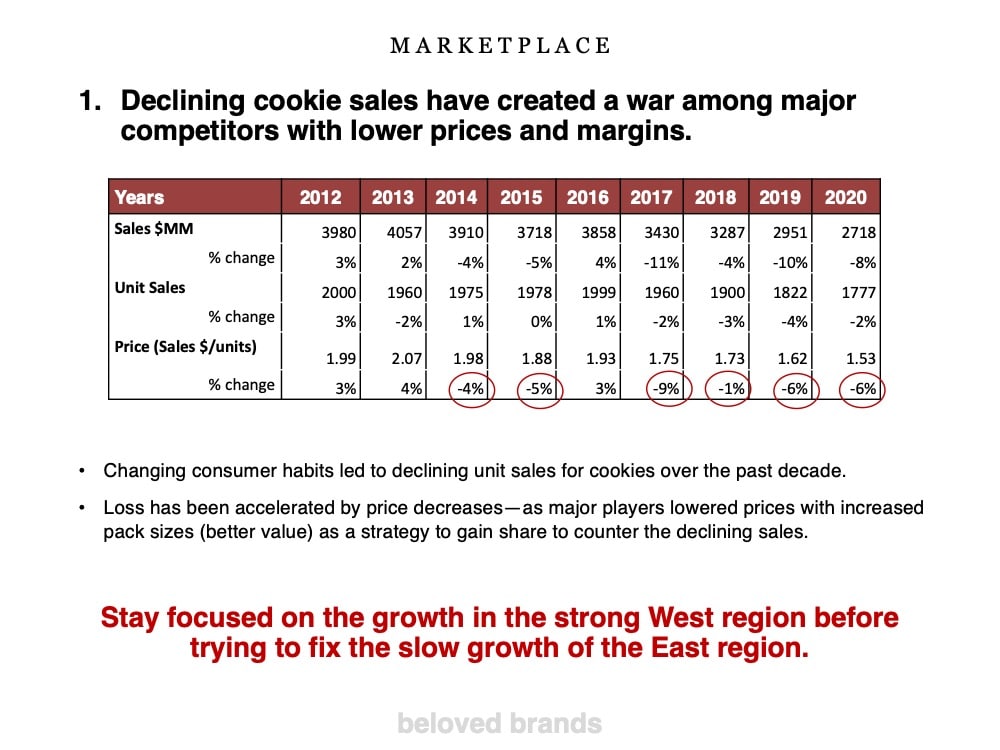
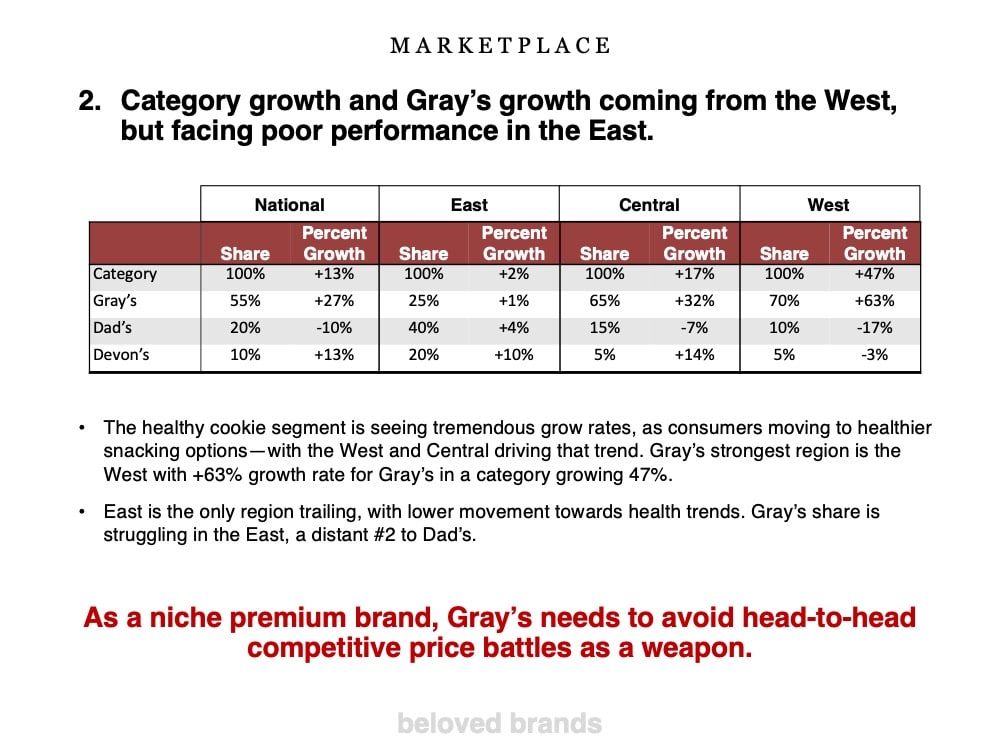
For each section of the business review, dig into the data and draw out three strong conclusions. Build one slide for each conclusion, with 2 to 3 supporting data points and a visual chart underneath. Refining the conclusion headline and the support points until they work together clearly is the iterative part of the process — expect to go back and forth a few times before each slide holds up.
Once the individual slides are solid, build a summary slide for each section that draws a single overall conclusion from the three findings. Take all six section conclusions to a master summary slide and identify one major brand challenge from the full brand performance analysis. That challenge becomes the strategic anchor for the situation analysis and the marketing plan.
How to build each of the five analytical sections of the deep-dive business review
A: First, for each of the five sections of your deep dive business review, use all the data you have dug into to draw out the three hypothetical conclusions. Then, build one ideal slide for each conclusion, adding the 2-3 critical support points, and layer in the supporting visual charts. This type of analysis is an iterative process where you have to keep modifying the conclusion headline and the support points to ensure they work together.
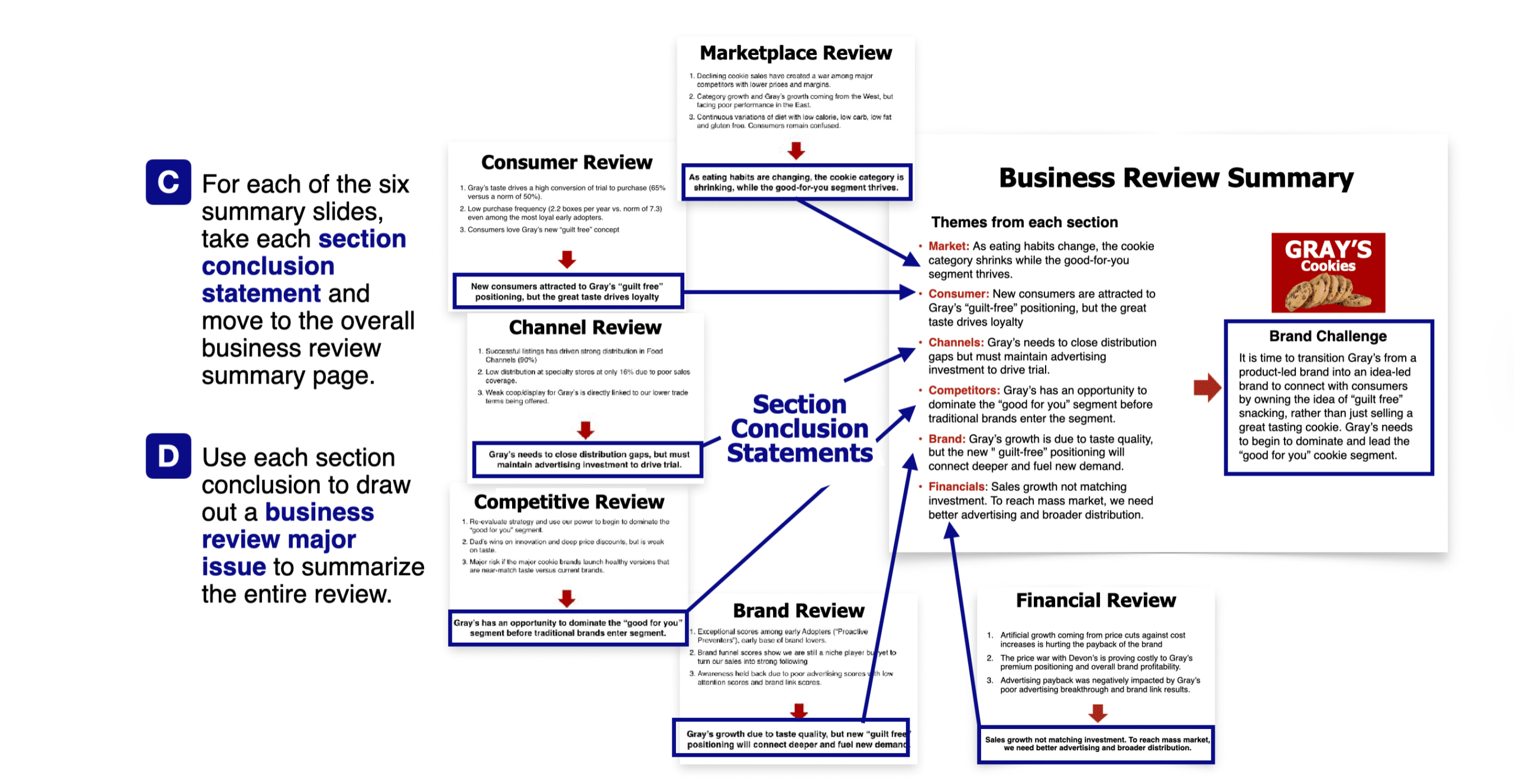
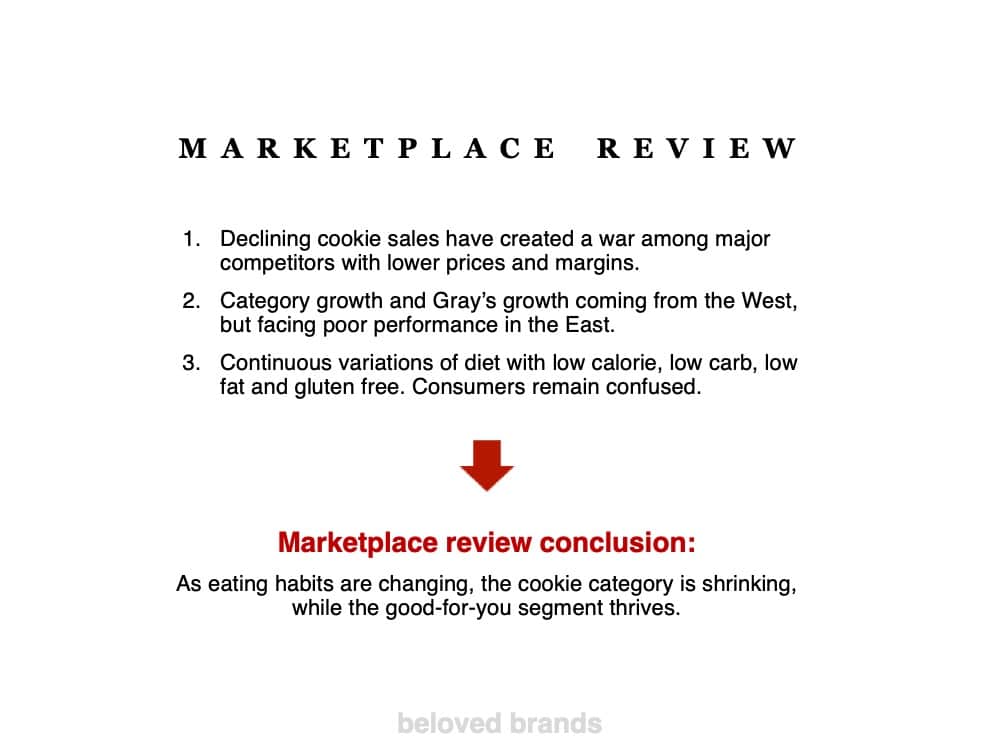
B: Next, once you have nailed the conclusion headline for each page, you should build a summary chart for each of the five sections, which takes those three conclusion statements and builds a section conclusion statement. The example above shows how to do it for the category, which you can replicate for the consumer, channels, competitors, and the brand.
Summarizing the deep-dive business review
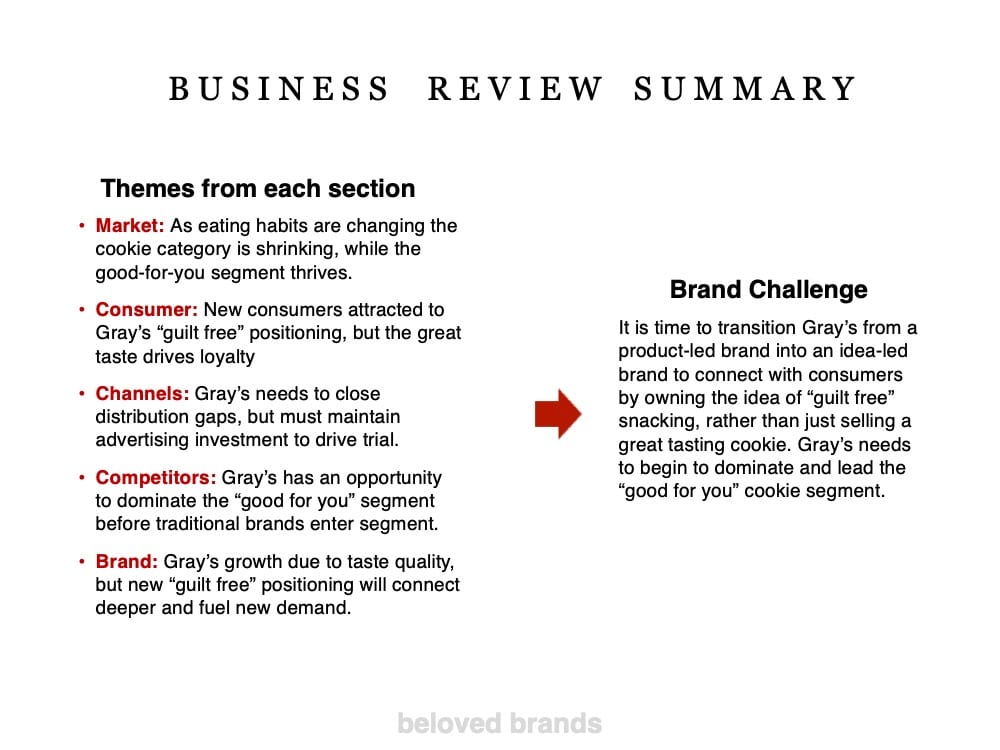
C: For each of the five sections, take each section conclusion statement, move them to an overall business review summary slide, and draw one big summary statement for each of the five sections.
D: Finally, use those section conclusion statements to draw out an overall business review major issue, which summarizes everything in the analysis.
How to build an ideal analytical slide
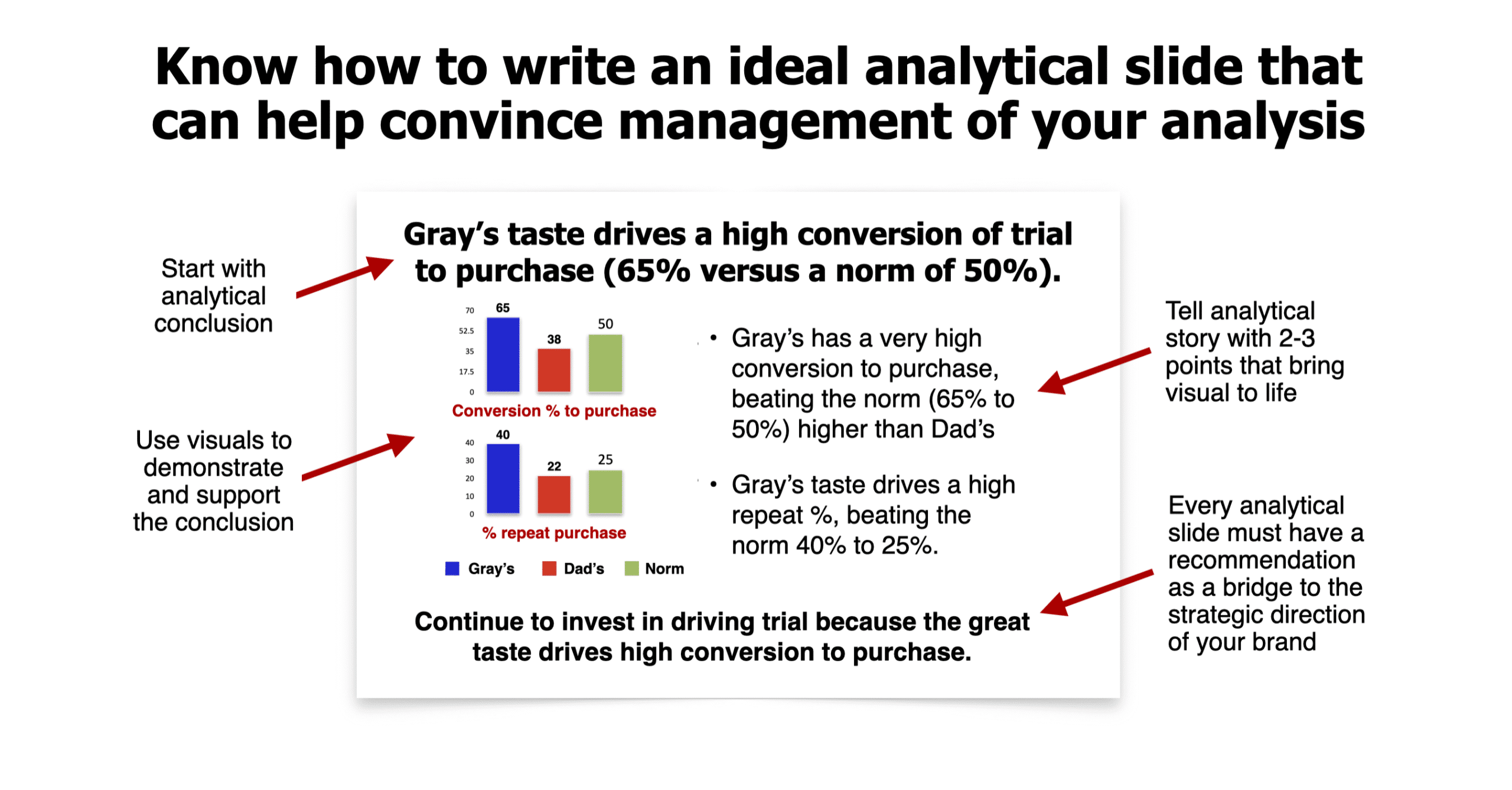
Every slide in a business review or brand audit presentation follows the same structure. First, start with an analytical conclusion statement as the headline. Then support it with 2 to 3 key data points. Next, add a visual or chart to show the evidence underneath. Finally, close with an impact recommendation covering what should be done based on this finding.
Otherwise, a data point without a recommendation is just a number. After all, management needs to know what to do with the information. Therefore, leading every slide with a conclusion and closing with a recommendation turns a business review into a brand performance analysis that actually drives decisions.
Business review example - Gray's Cookies
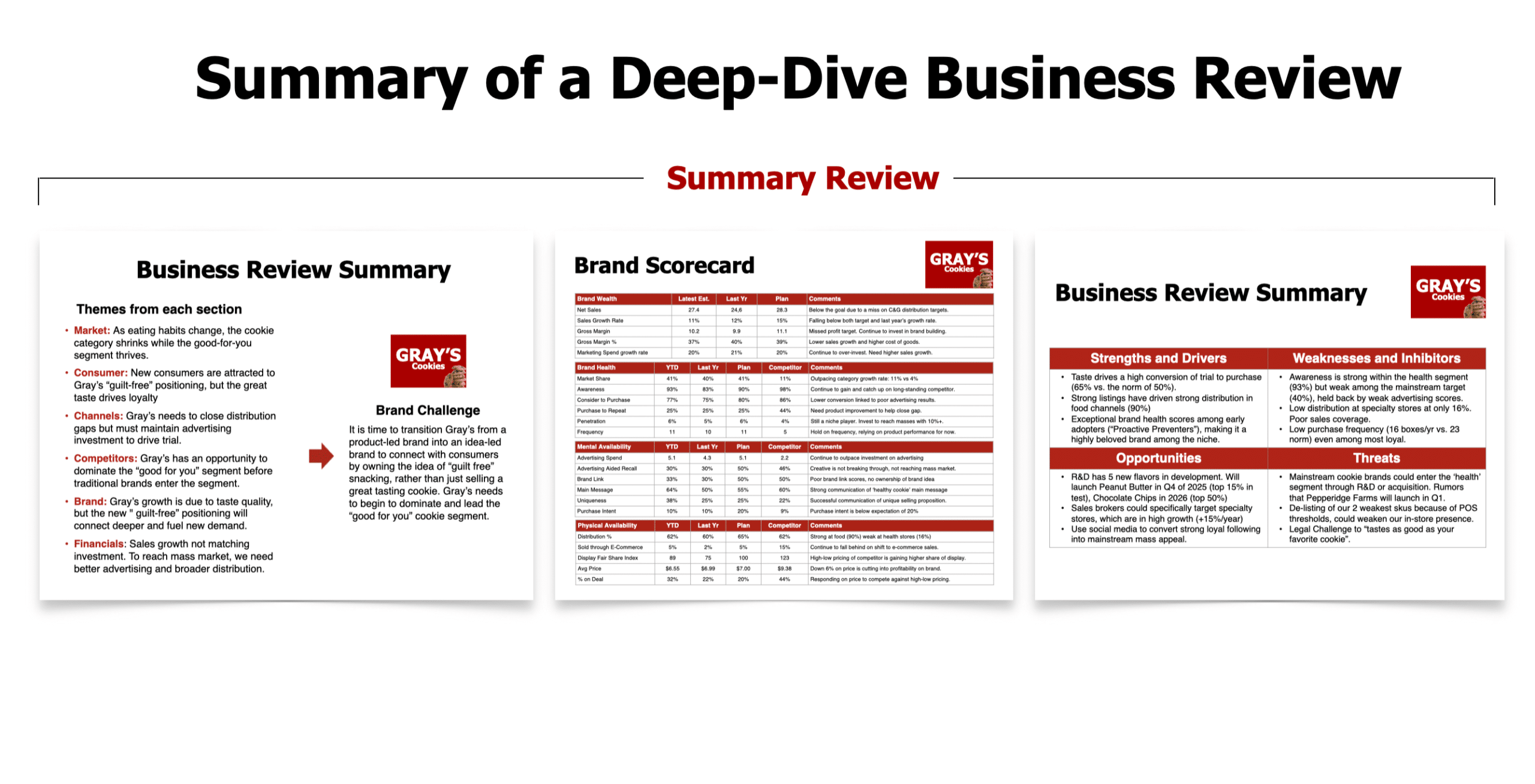
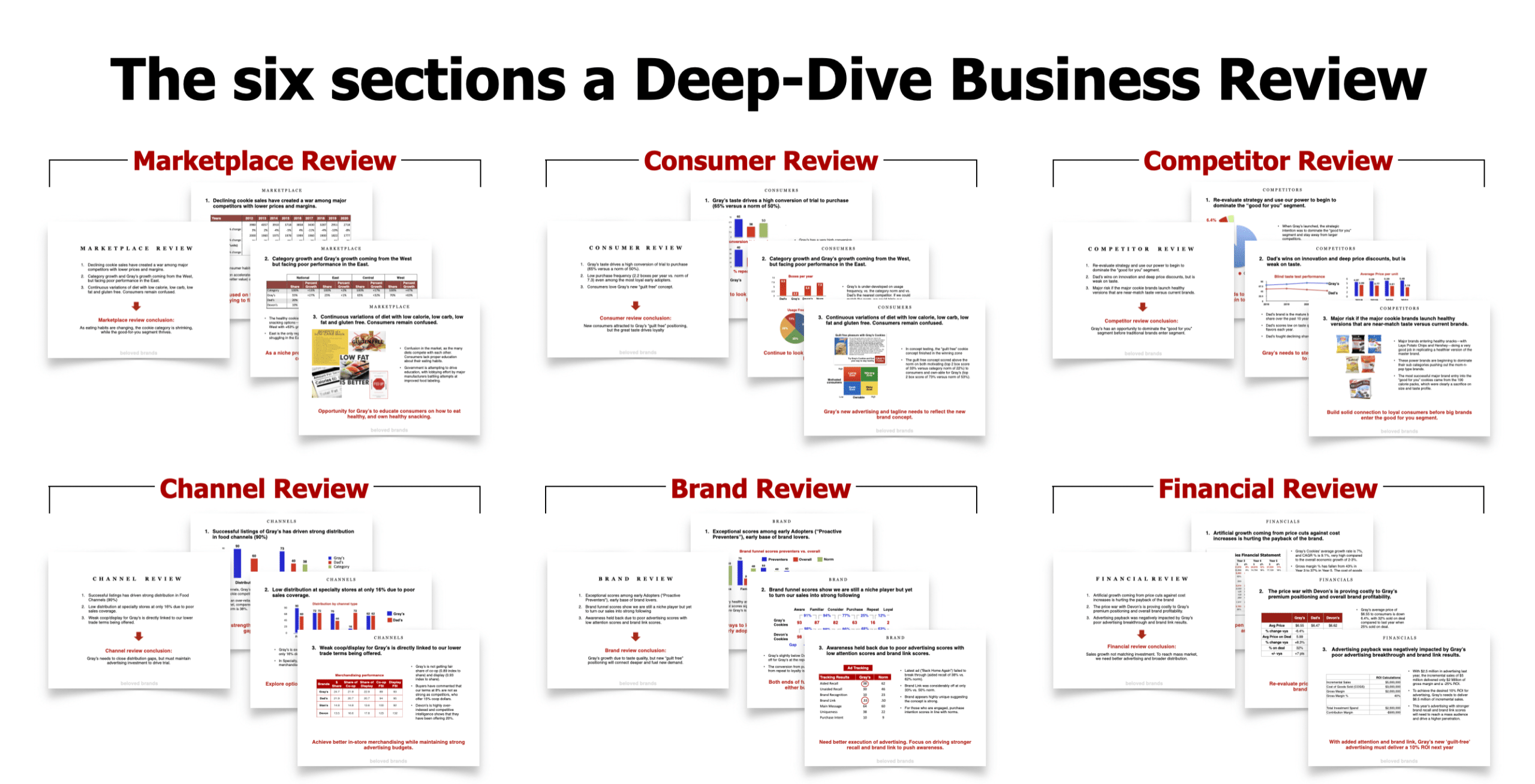
Example slides for a Business Review for Gray's Cookies

Business review template
You can download our business review templates to work on your brand

Frequently asked questions about brand audits and business reviews
What is a brand audit?
A brand audit is a structured analysis of everything affecting a brand’s performance, covering the marketplace, consumers, channels, competitors, the brand itself, and the financials. Specifically, brand managers use it to get a complete picture of where the brand stands, what is working, what is holding it back, and where the real opportunities are. As a result, running a brand audit once a year gives your marketing plan a foundation built on evidence.
What is a business review in marketing?
A business review is the full analytical process that examines all six areas of brand performance. Specifically, it covers the marketplace, consumers, channels, competitors, brand health, and financials. In turn, the output is a situation analysis that identifies the key issues the marketing plan needs to address. Although many marketers use brand audit and business review interchangeably, at Beloved Brands we treat them as the same exercise.
What is a situation analysis in a marketing plan?
A situation analysis summarizes the findings from a brand audit or business review into four categories: drivers of growth, inhibitors of growth, opportunities, and threats. In other words, it is the bridge between the analytical work and the strategic decisions in the marketing plan. Above all, a strong situation analysis identifies the one major brand challenge that the plan needs to solve.
What is brand performance analysis?
Brand performance analysis is the process of evaluating how a brand is performing across health and wealth measures, including consumer perception, market share, distribution, financials, and competitive position. Therefore, it sits at the analytical core of a brand audit, and the findings feed directly into the situation analysis and the marketing plan.
How long should a business review take to prepare?
For a brand manager running this process for the first time, expect two to three weeks of data gathering, analysis, and slide building. However, with experience and established data sources, it moves faster. Even so, speed is the wrong goal. Because a rushed business review produces shallow conclusions, it will not hold up when the strategy is challenged in a management meeting.
What data do you need for a brand audit?
The core data sources for a brand audit include category sales data, market share tracking, brand funnel and tracking studies, consumer research, distribution and velocity data by channel, competitor performance data, and the brand’s full P&L. Of course, the quality of the brand performance analysis depends on the quality of the data. Even with gaps, a disciplined process will surface useful insights.
How does a brand audit connect to a marketing plan?
The brand audit feeds into the situation analysis section of the marketing plan through four questions: what is driving growth, what is inhibiting growth, where are the opportunities, and what are the threats. In turn, those answers define the strategic challenges the plan needs to address and therefore set the direction for the brand’s objectives and strategies.