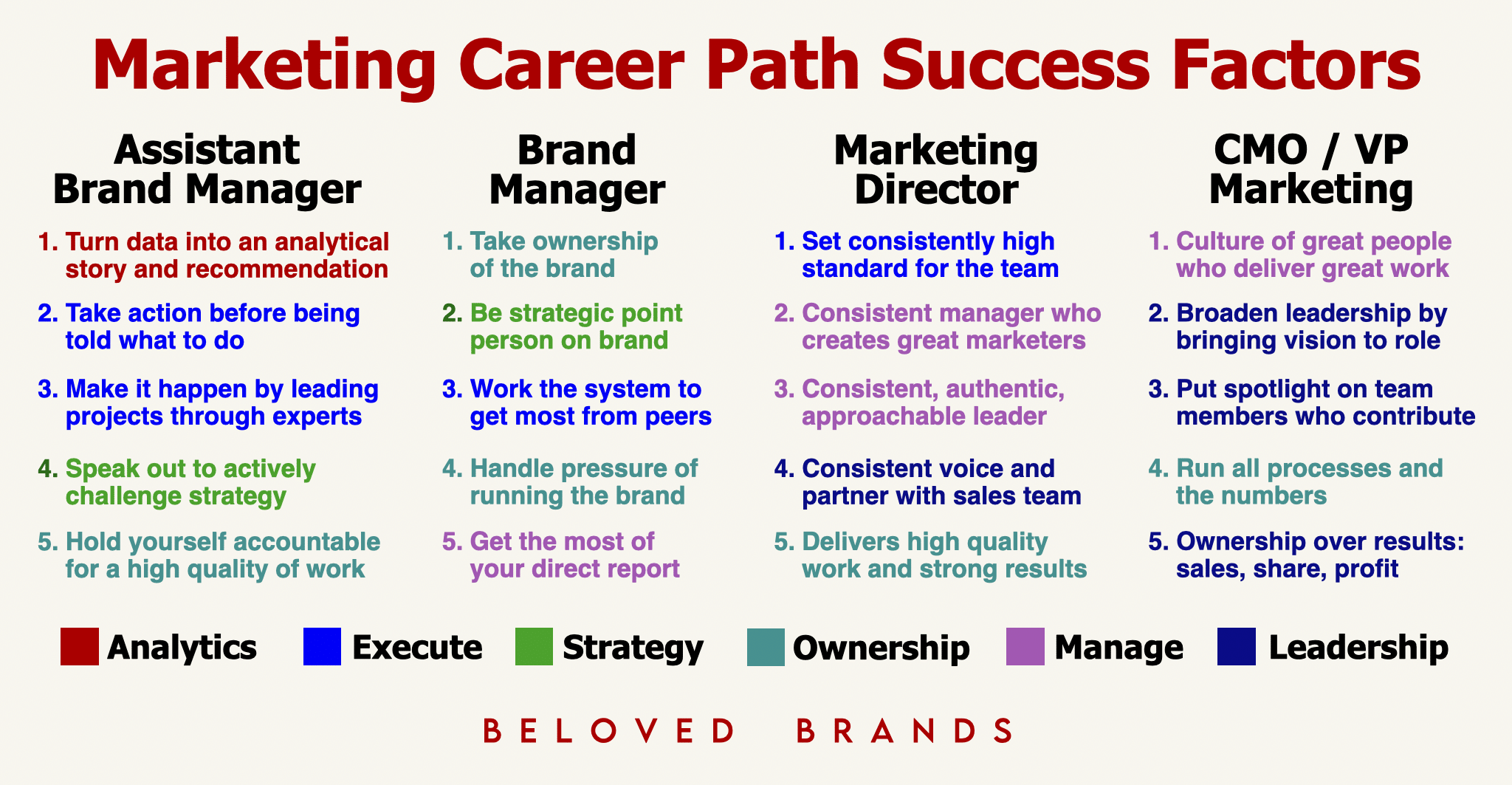
I think of a Marketing Career as an iterative process of continuous learning and improving, with a few eye-opening moments that separate the great ones from everyone else. Getting promoted at each level is less about working harder and more about recognizing when the job has fundamentally changed. Here are the four levels of a brand management career.
- For an ABM, the best ones get things done and, more importantly, the right things. That comes from combining the ability to work the system with analytics that tell you which things are actually worth doing.
- At the Brand Manager level, the shift is ownership. You stop executing someone else’s plan and start taking full accountability for the brand’s direction.
- At the Marketing Director level, the realization is that you have to stop doing the work and start inspiring others to do it. The ones who figure that out quickly become the best directors. The ones who never do stay stuck.
- At the VP and CMO level, your results are entirely a function of your team’s delivery. Your job is to build that team and create the conditions for them to produce outstanding work.
After 20 years in brand management at General Mills, Coca-Cola, and J&J, these are the five success factors I looked for at each level — and the ones I still see determine who moves up and who stays put.
Brand Management Career Path - Table of Contents
Use the > button to move the presentation, and the + / – to zoom in or out.
Assistant Brand Manager - Success Foundation
The Assistant Brand Manager (ABM) is the bedrock upon which a career in brand management is built. It is where we all start. And struggle. It will be painful sometimes, but everything you learn here will apply later in your brand management career. In this role, you hone your analytical acuity, demonstrate initiative, and begin to articulate your leadership narrative.
1. Turn data into recommendations
The ABM who gets promoted fastest is rarely the one with the best raw analytical skills. It is the one who knows what to do with the analysis. Data alone does not move a brand forward — the recommendation does. Get in the habit of never bringing a number without a point of view attached to it. What does it mean? What should we do about it? That shift from reporting to recommending is the first signal that you are thinking above your current level.
2. Take action before being told what to do
Waiting to be told what to do is the fastest way to stay where you are. The ABMs who move up quickly spot a gap and fill it without being asked, identify a problem before it surfaces in a meeting, and come to their manager with a proposed solution rather than just a question. This is not about being aggressive or overstepping. It is about showing that you already think like someone operating at one level above your role.
3. Make things happen through experts
An ABM has almost no formal authority over anyone. Most of what needs to get done — agency work, research, cross-functional projects — runs through people who do not report to you. Learning how to influence, align, and motivate those people is one of the most transferable skills in brand management. Stop thinking of experts as resources to manage and start treating them as partners to bring along. The ones who figure that out early move faster than almost everyone else.
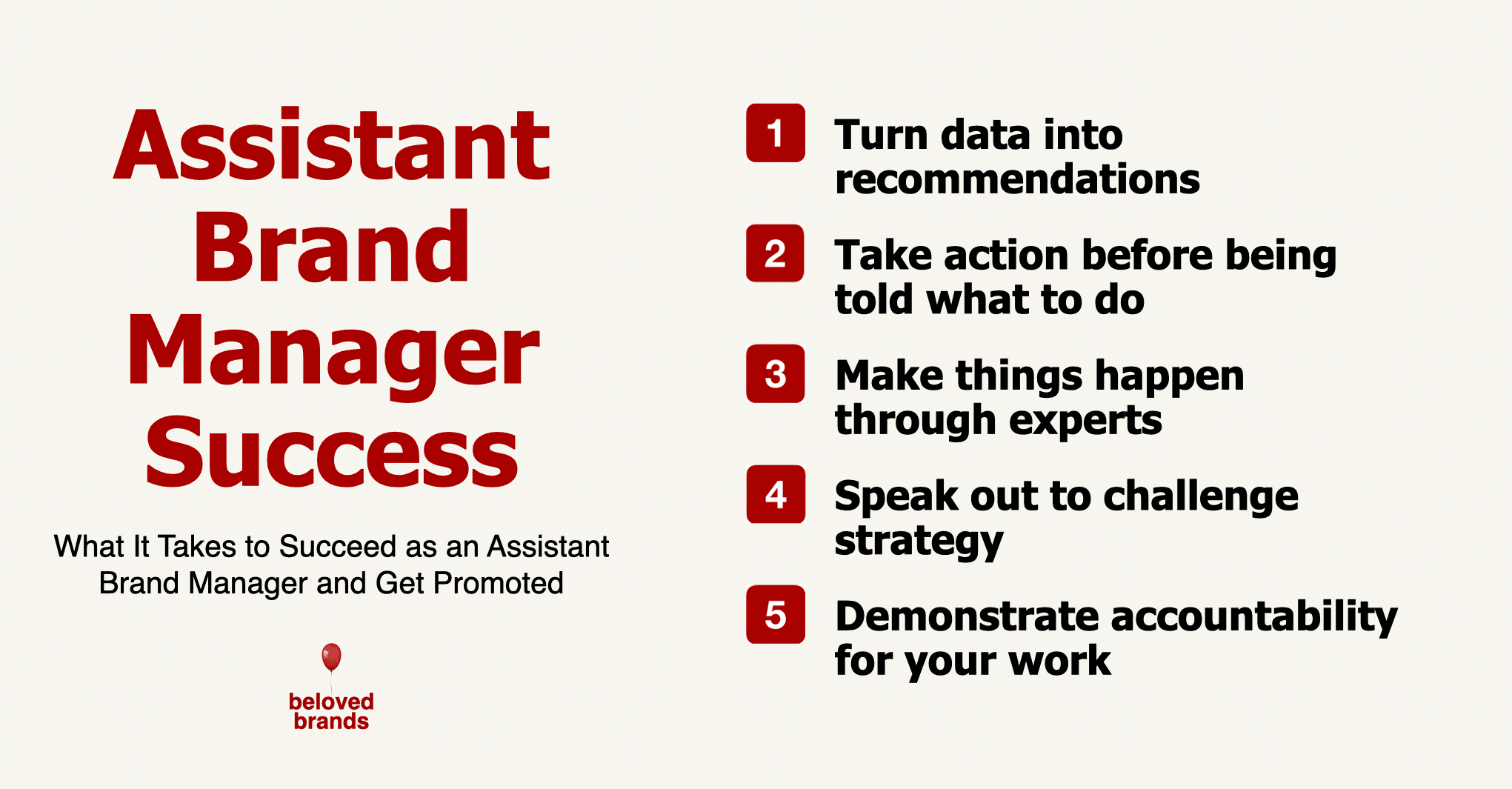
4. Speak out to challenge strategy
One of the clearest signals an ABM is ready to move up is when they start pushing back constructively on the strategy rather than just executing it. This does not mean disagreeing for its own sake. Bring a well-reasoned perspective, ask the questions others are not asking, and be willing to put a point of view on the table even when you are the most junior person in the room. Good managers are not looking for compliance. They are looking for thinking.
5. Demonstrate accountability for your work
Accountability at the ABM level means owning the outcome of your work completely — not just when things go well. If a program underdelivers, know why before anyone asks. If a project runs late, flag it early and come in with a plan. The ABMs who build the strongest reputations are the ones their managers never have to chase. Own your work fully and people above you will start treating you as someone ready for more of it.


Brand Manager - Take Ownership
Transitioning to a Brand Manager signifies a shift from execution to ownership, from tactical to strategic thinking. It’s about broadening your horizon within your brand’s ecosystem and preparing to nurture your first direct reports.
1. Take ownership of the brand
At the Brand Manager level, the brand is yours. Not in the sense that you make every decision without input, but in the sense that you carry the deepest, most complete understanding of where the brand stands and where it needs to go. When your director asks a question about the business, you should already have the answer. When an issue surfaces in a meeting, you should be the most informed person in the room. Ownership is not a title. It is a posture you earn through preparation and follow-through every single day.
2. Be the strategic point person for the brand
A Brand Manager who only executes plans is operating below the role’s requirements. Your job is to be the strategic anchor for every conversation about your brand — with agency partners, sales, finance, and senior leadership. Develop a clear point of view on where the brand should be heading, be able to defend it under pressure, and update it when the market gives you new information. Everyone around you should feel confident that the strategy is in good hands.
3. Work the system to get the most from peers
Getting things done as a Brand Manager means navigating people who do not report to you — finance, sales, operations, legal, agency partners. The ones who move quickly figure out early how to build genuine working relationships across functions, align agendas before meetings rather than in them, and get the best out of every expert they work with. Influence without authority is a skill, and this is where you build it. The Brand Managers who treat cross-functional relationships as transactional tend to find everything harder than it needs to be.
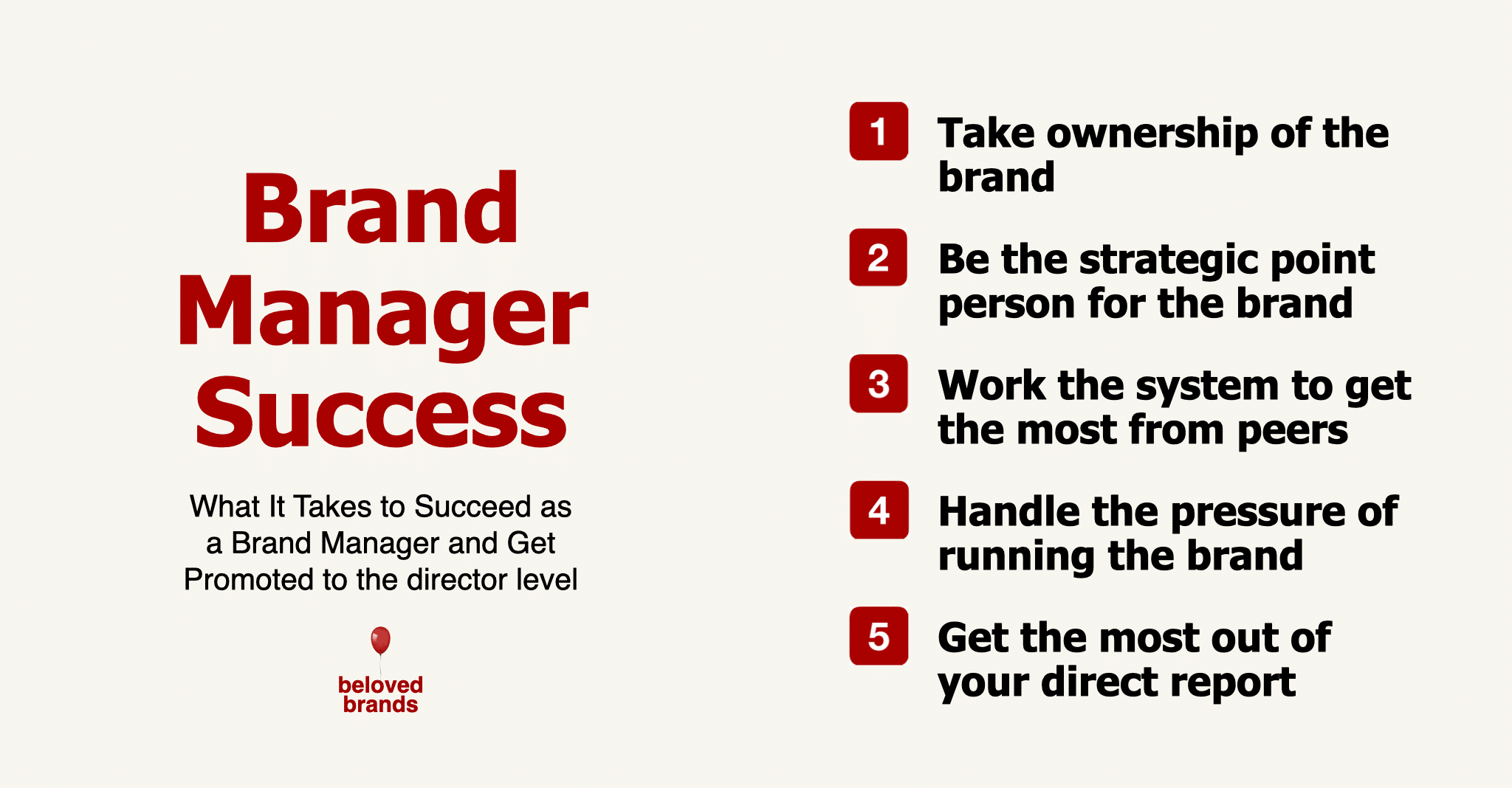
4. Handle the pressure of running the brand
The Brand Manager role carries real pressure — targets, deadlines, senior stakeholder expectations, and the added complexity of managing your first direct report. How you carry that pressure is visible to everyone around you. Stay clear-headed when things get difficult, communicate calmly when there is bad news, and keep the team focused rather than adding to the stress. Managing your own composure under pressure is as important as managing the brand itself, and it gets noticed.
5. Get the most out of your direct report
Managing your first direct report is one of the hardest adjustments of the Brand Manager role. The temptation is to do things yourself when you could be developing your ABM to do them. Resist it. Set clear expectations, give honest feedback regularly, and create enough space for your direct report to grow while holding them to a real standard. Brand Managers who develop a reputation as strong people developers get noticed early. It signals to senior leadership that you are ready to lead a bigger team.

Marketing Director - Consistent Leadership
The role of the Marketing Director is characterized by a pivot from managing to leading. It’s less about individual thinking and doing and more about inspiring a broader team to excel.
1. Set a consistently high standard for your team
Your job as a Marketing Director is not to be the best marketer on the team. It is to establish what great looks like and hold everyone to it. Clear expectations, honest feedback, and the discipline to keep raising the bar rather than accepting work that is merely adequate. The hardest part for most new directors is delegation — giving the team real ownership of the work while staying close enough to the standard to push back when it falls short. Delegate the work, hold the standard, and resist the urge to do it yourself when the deadline approaches.
2. Be a consistent and predictable leader
The word that comes up most when strong Marketing Directors are described by their teams is consistent. Consistent in how they set standards, how they communicate, how they make decisions, and how they show up on a hard day versus an easy one. At this level, you are the stable reference point for the VP above you, the sales leadership beside you, and the brand managers below you. Predictable leaders create confident teams. Unpredictable ones create teams that spend energy reading the room rather than building great brands — and that dynamic shows up in the work.
3. Be a consistent, authentic, approachable leader
Your team needs to be able to reach you with real information, including the kind that is uncomfortable to share. A director whose reactions are unpredictable, or who responds to bad news with visible frustration, stops getting honest updates. Keep an open door and make it genuinely easy for people to bring you problems before they become crises. The directors who know what is actually happening on their team are always better positioned than the ones who find out too late. Honest communication flows toward approachable leaders and away from difficult ones.
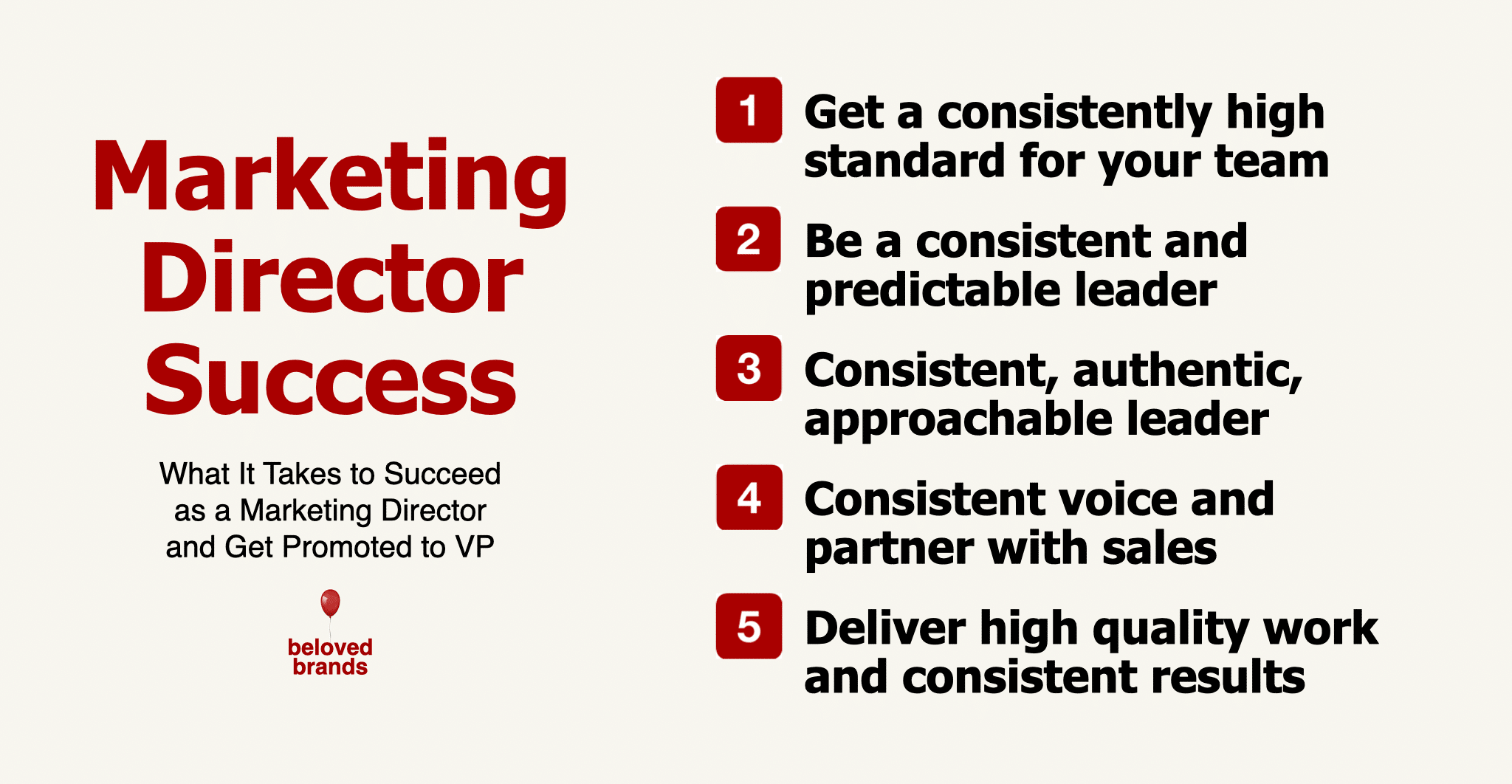
4. Be a consistent voice and partner with sales
At the director level, you become the marketing leadership voice that the sales organization looks to for direction and strategic alignment. Build genuine working relationships with senior sales leaders — not just through formal program reviews, but through regular informal contact where you listen to their challenges and keep the conversation grounded in the brand plan. Sales leaders who feel genuinely heard by the marketing director are far more likely to commit to the marketing program and defend it in account negotiations. A sales team that has learned to work around marketing is a much harder problem to fix than one that was never lost in the first place.
5. Deliver high-quality work and consistent results
Your effectiveness as a Marketing Director is measured by what your team produces, not by your personal output. Give your people real ownership, trust them to deliver, and coach them when they fall short rather than stepping in and doing it yourself. Hold high standards for both creative and strategic work. When strong work comes up for approval and it is fundamentally sound, approve it with confidence. Sending good work back through unnecessary revisions trains people to play it safe, and safe work does not move brands.
Beloved Brands Marketing Training
It's time to elevate your marketing team's performance with our Beloved Brands Marketing Training program.
🛠️ We build essential Marketing Skills
Our Beloved Brands Marketing Training will equip your marketing team with the essential marketing skills to meet your expectations, including brand analytics, strategic thinking, brand positioning, strategic planning, and marketing execution.
📈 Marketers will work on their own brand
We impact your marketing team’s on-the-job performance by ensuring your marketers apply every new tool, method, and skill directly to their brand.
🚀 Our marketing coaching is like having a VP in the room
Our hands-on coaching replicates real-world challenges, with your marketers experiencing the pressure and expectations they face in a boardroom
🌍 Custom-Tailored Marketing Training Programs
We provide specialized marketing training tailored to different business models, including Consumer, B2B, Retail, and Healthcare brands. Our industry-specific examples demonstrate how easily our tools work on a brand like the marketer is working on.
Ask us to make your marketing team smarter!

CMO/VP Marketing - Creating a Culture of Excellence
Reaching the VP or CMO level is about embodying the essence of leadership. The role extends beyond the marketing department and influences the entire organization.
1. Culture of great people who deliver great work
People come first at this level. Smart people produce great work, and great work drives outstanding results. Build a culture where that chain is actively supported — through regular talent reviews with your directors, a consistent feedback system for everyone on the team, and genuine investment in training and development. Marketers today are not getting the structured development that prior generations received. Closing that gap makes your team better and signals clearly that their growth matters to the organization. Both things improve performance.
2. Put spotlight on team members who contribute
Let your people own the work and take the credit. A VP or CMO who inserts themselves into every decision or needs to be seen on every win is operating below the level the role requires. Ask questions rather than give answers. Challenge your team to think harder rather than directing them toward your conclusion. Recognize great work loudly and publicly. One habit worth building: instead of saying thank you, say “you should be proud” — because they did it for themselves, not for you. People who feel genuinely seen and credited for their contributions produce at a higher level and stay longer.
3. Broaden leadership as a partner in all functions
A VP Marketing or CMO who operates as the head of a silo will always be limited. Building real working relationships across sales, finance, operations, and HR is part of the job. Peers want to know you will run Marketing well and give them room to run their areas. Get visible inside the organization — walk around, engage at every level, and build a team culture that reflects the standards and behaviors you expect to reward. Approachable leaders get better information, because people bring them real problems rather than managed versions of them.
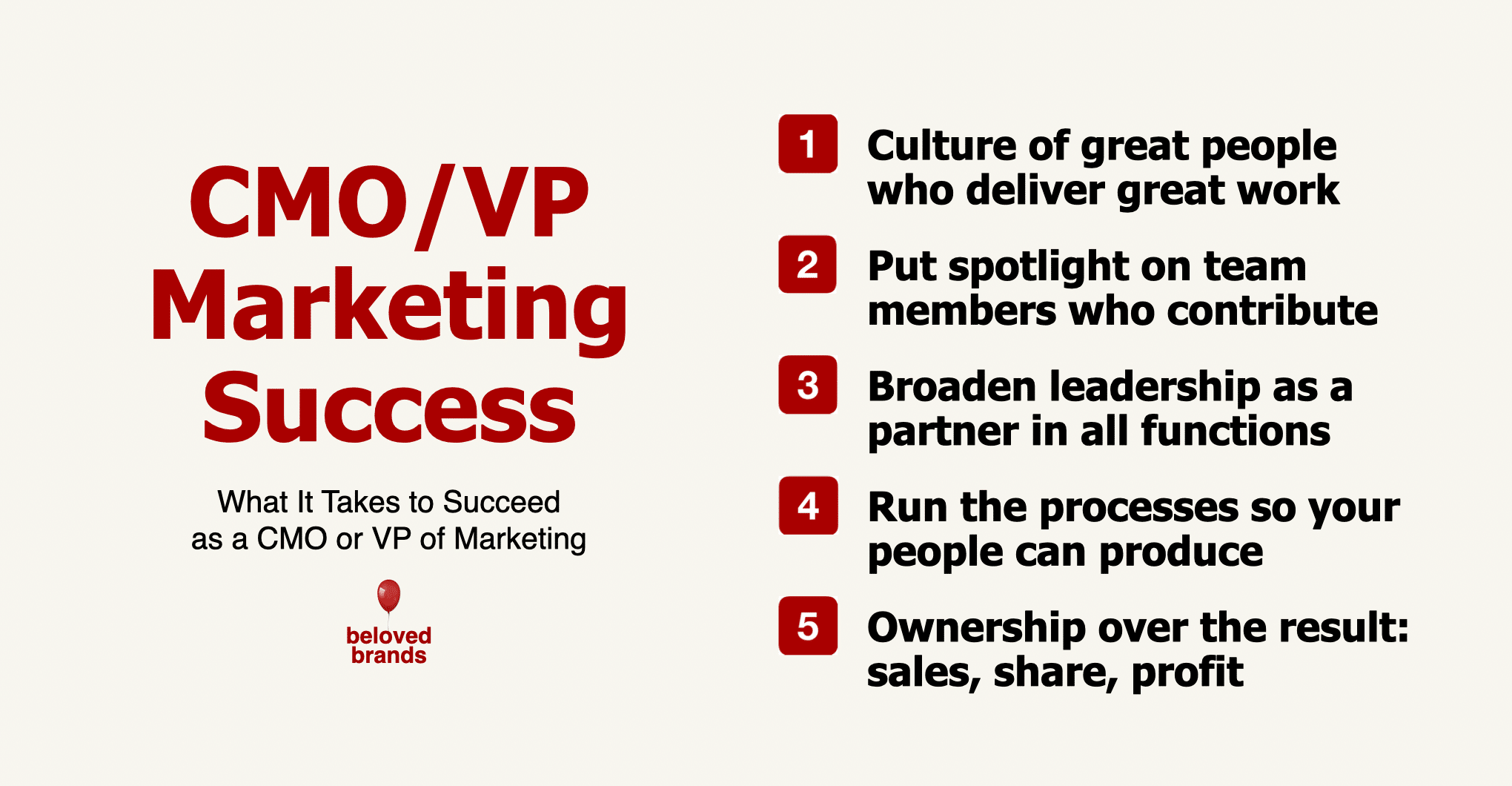
4. Run the processes so your people can produce
Own the P&L and the marketing processes. Investment decisions need an ROI and ROE mindset — getting those choices right creates the financial breathing room to run things the way you want. In the process, the goal is clarity rather than control. Well-run processes in brand planning, advertising, and creative briefs channel your team’s energy toward work that reaches consumers rather than toward navigating internal confusion. Remove the friction that has nothing to do with making better marketing. Your people will spend their best thinking on the brand when the system is not getting in the way.
5. Ownership over the result: sales, share, profit
Creating demand for your brands is the primary job. Gaining share, growing sales, and contributing to company profit is what the role exists to deliver. Own the numbers completely — know why they moved, have a point of view on what needs to happen next, and bring that perspective into every leadership conversation rather than waiting to be asked. Making the numbers gives you freedom in how you run things. Falling short narrows every option available to you. Own the outcomes fully, both the strong results and the setbacks, and your standing across the organization will reflect it.
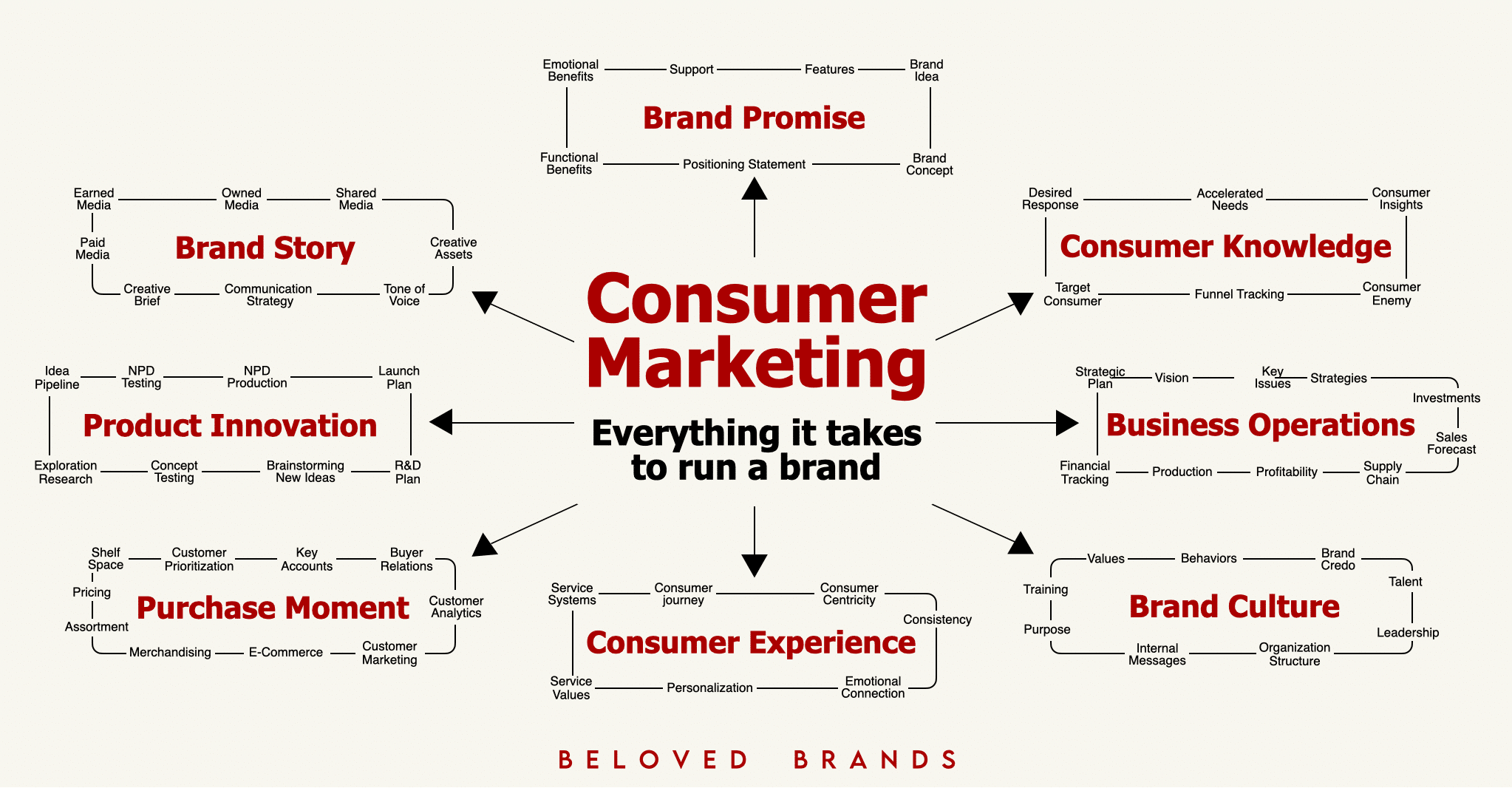
A Marketer's focus must shift as you move up in your brand management career
The higher you climb in brand management, the broader the perspective you must adopt. You transition from individual contributor to strategic thinker, from manager to leader, from one who does to one who empowers others to do. It’s a journey of transformation, where your growth is measured not just in your brand’s success but in your team’s flourishing.
Embrace this evolution in your brand management career. Let the distribution of your efforts across execution, strategy, management, and leadership reflect your stage and prepare you for the one to come. It’s a powerful framework that can guide your decisions, your development, and ultimately, your ascent to the pinnacle of your profession.
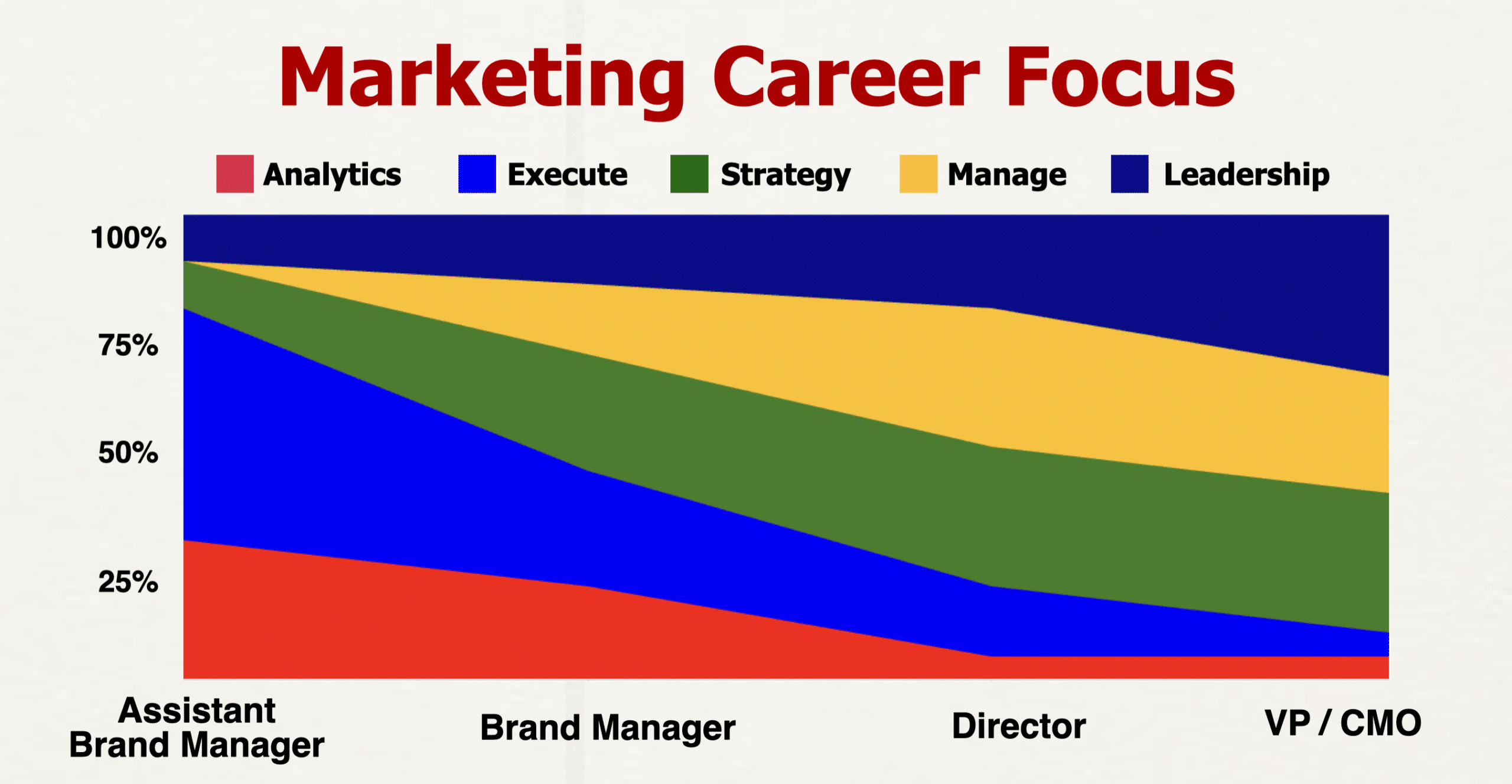
This shift in focus isn't just a recommendation—it's necessary for brand management success.
As you ascend the ranks in brand management, your focal point must evolve. The journey begins in the trenches of execution, where as an Assistant Brand Manager, your hands are deep in the day-to-day, yet you’re also sowing the seeds of strategic thought and leadership.
As a Brand Manager, the balance shifts slightly – you’re still in the thick of execution but also managing projects and people, honing your leadership skills with every challenge.
Upon reaching the Marketing Director level, you’ll orchestrate efforts through a broader team, leading with strategies, empathy, and inspiration and nurturing the next generation of leaders.
At the zenith of the brand management career, as a VP or CMO, your role transcends traditional boundaries. Here, 60% of your focus is on people – leading, managing, and inspiring equally. Your leadership is the tide that raises all boats, steering the brand towards uncharted waters with a crew that’s empowered, engaged, and aligned with your vision.
Frequently Asked Questions About Brand Management Careers
What are the levels of a brand management career?
The typical brand management career path moves through four levels: Assistant Brand Manager, Brand Manager, Marketing Director, and VP of Marketing or CMO. Each level requires a different mix of skills — shifting from execution at the entry level toward leadership and vision at the top.
How long does it take to become a Brand Manager?
Most marketers spend 2–3 years as an Assistant Brand Manager before being promoted. The fastest path is demonstrating strong analytical thinking, strategic initiative, and the ability to lead projects without being asked.
What factors determine success at each level in brand management?
The skills that matter shift at every level. As an ABM, the focus is on turning data into recommendations, taking initiative, and getting things done through people over whom you have no authority. At the Brand Manager level, it moves to ownership, strategic direction, and managing your first direct report. As a Marketing Director, the job becomes about setting a high standard, consistent leadership, and developing your team rather than doing their work. At the VP and CMO level, it is about building a culture of great people, running the processes that let them produce, and owning the business results completely.
What is the difference between a Brand Manager and a Marketing Director?
A Brand Manager owns the strategy and execution for their brand. A Marketing Director leads a team of brand managers, sets standards, and focuses more on developing talent and consistent leadership than on day-to-day execution.