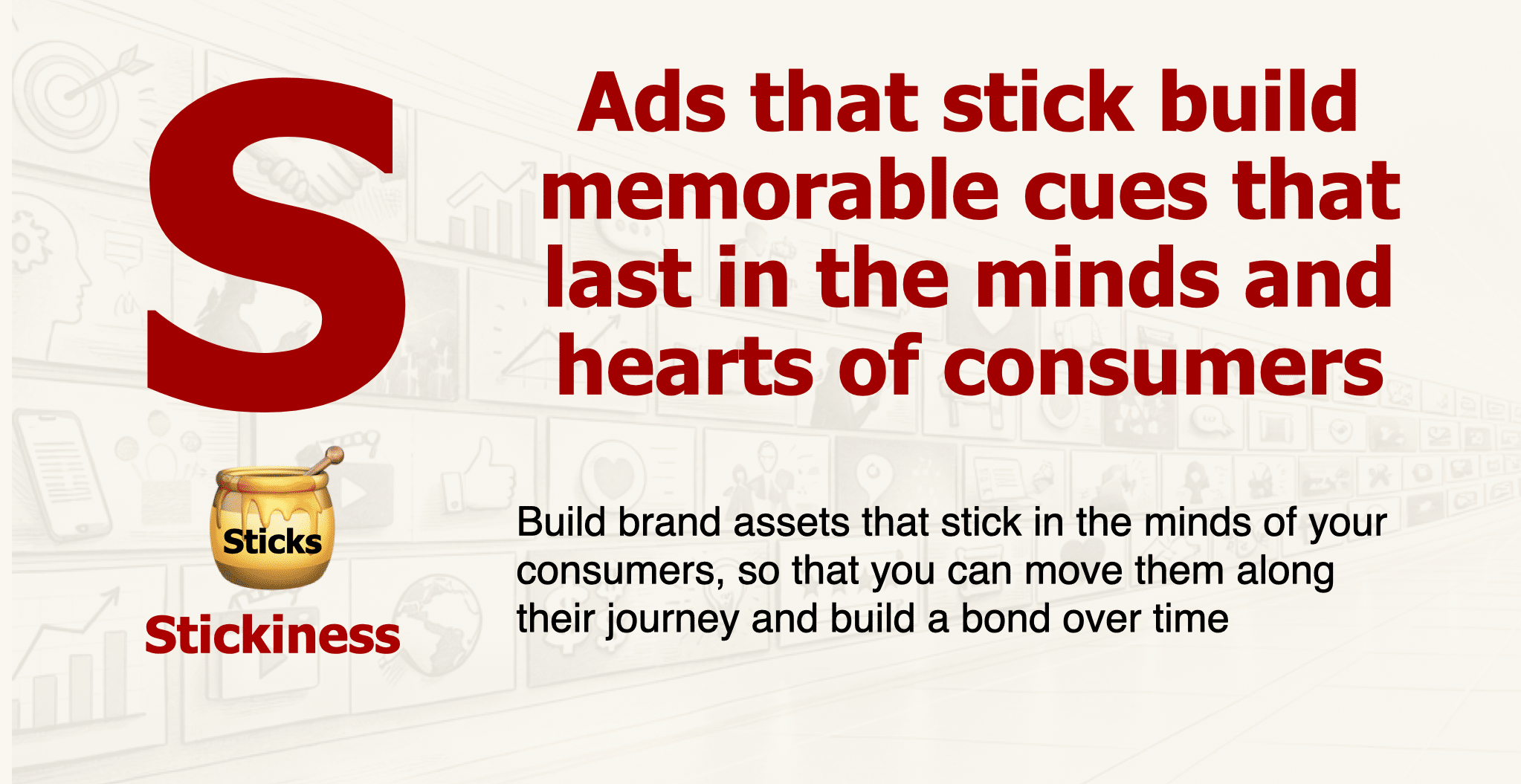
The best advertising does not just get noticed once. It stays with consumers long after the media spend stops, gets recalled at the shelf, and builds something durable for the brand over time. That is what stickiness means in the context of the ABCS framework — memorable advertising that moves consumers and keeps working for the brand long after the campaign launches.
When judging whether an ad will stick, look at the creative idea at the center of it. A strong creative idea earns attention, drives brand link, sets up the communication of the main benefit, and then lodges itself in the consumer’s memory in a way that influences their behavior. When the story, device, copy, or visual does not connect to that central creative idea, the ad works against itself. The creative elements go one way, and the brand message goes another, and consumers end up remembering the wrong thing.
Memorable advertising, iconic advertising, and distinctive brand assets are built deliberately over time. The four approaches below show how the best brands do it.
Advertising Decisions
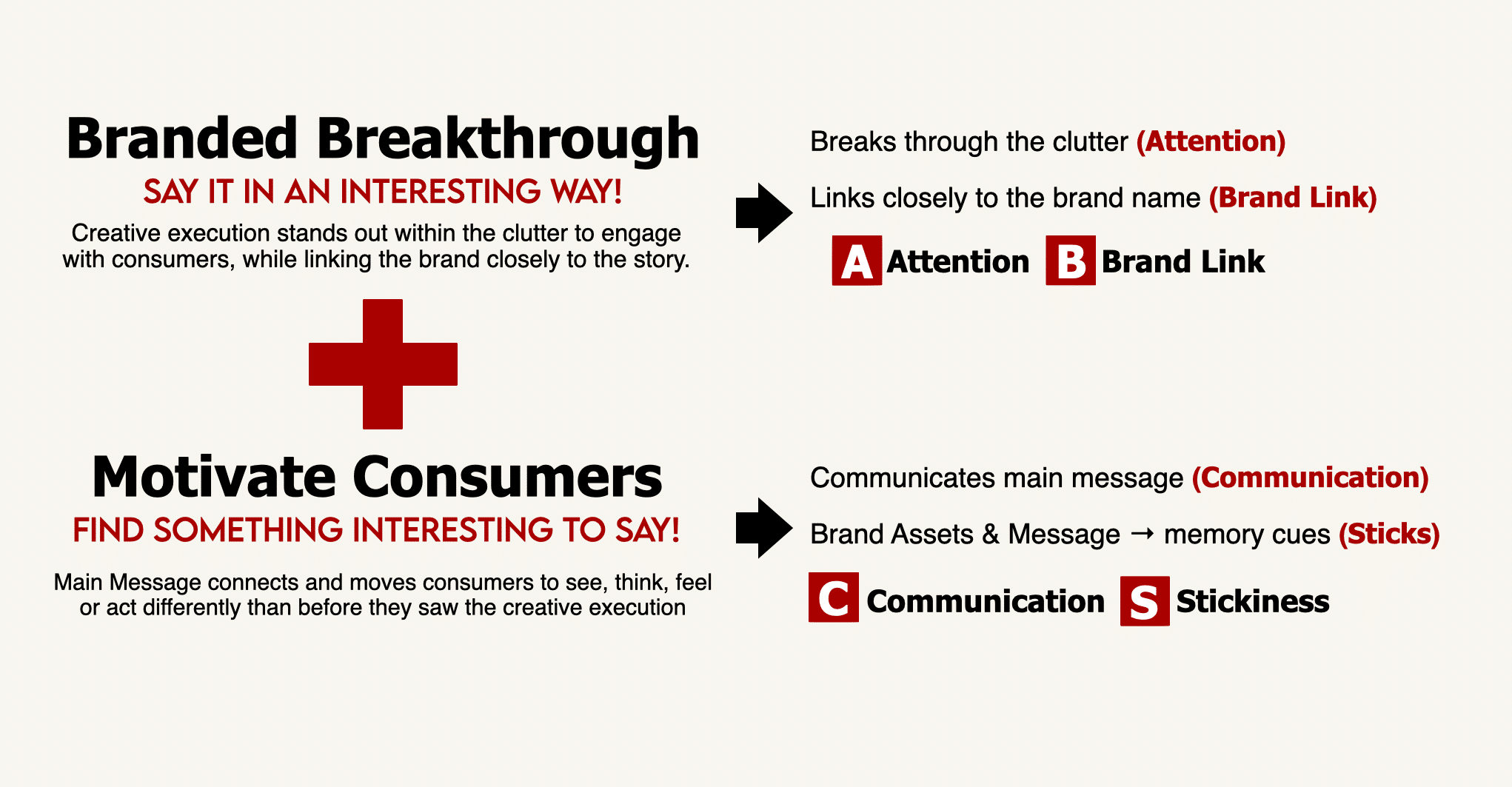
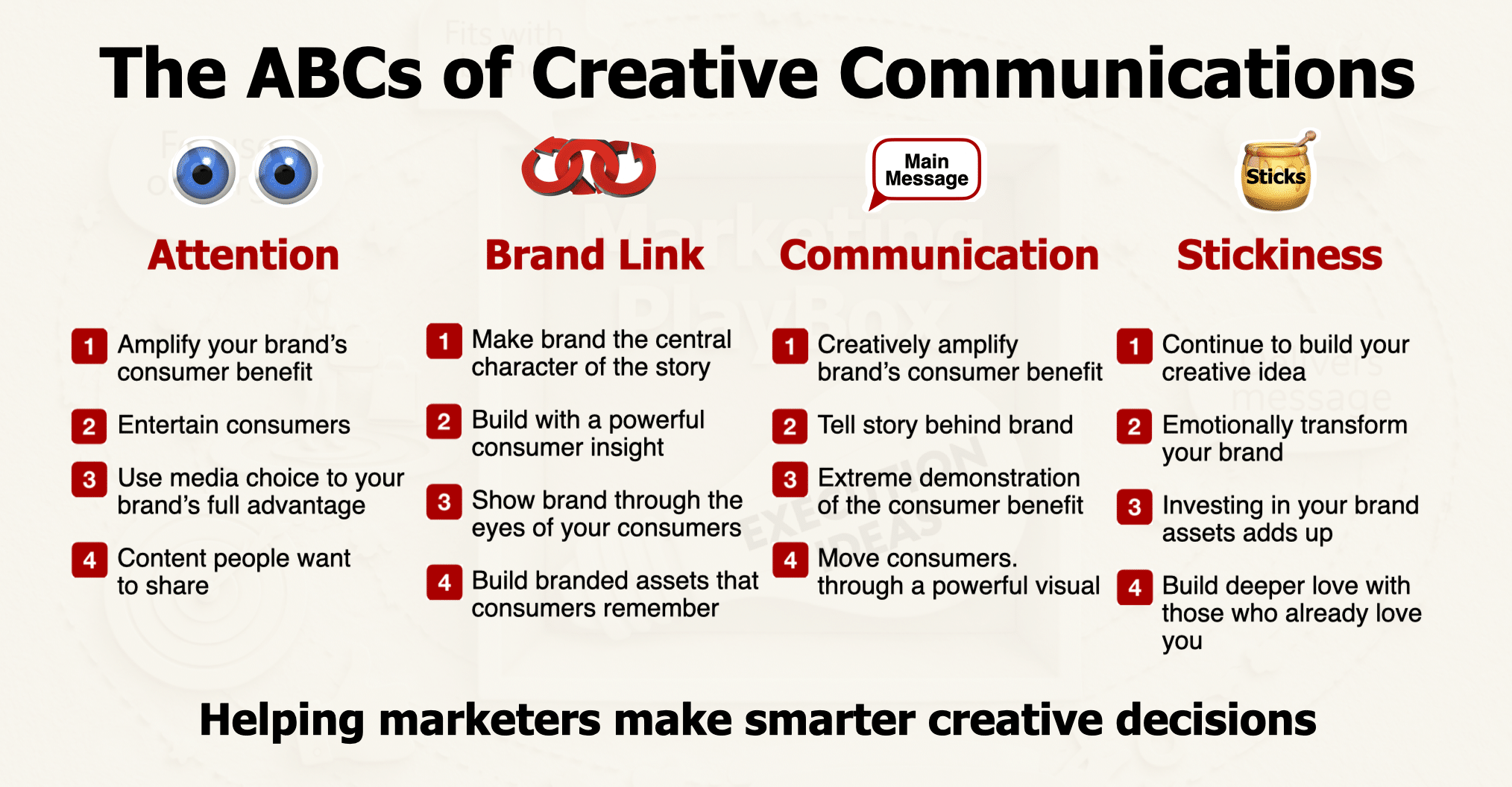
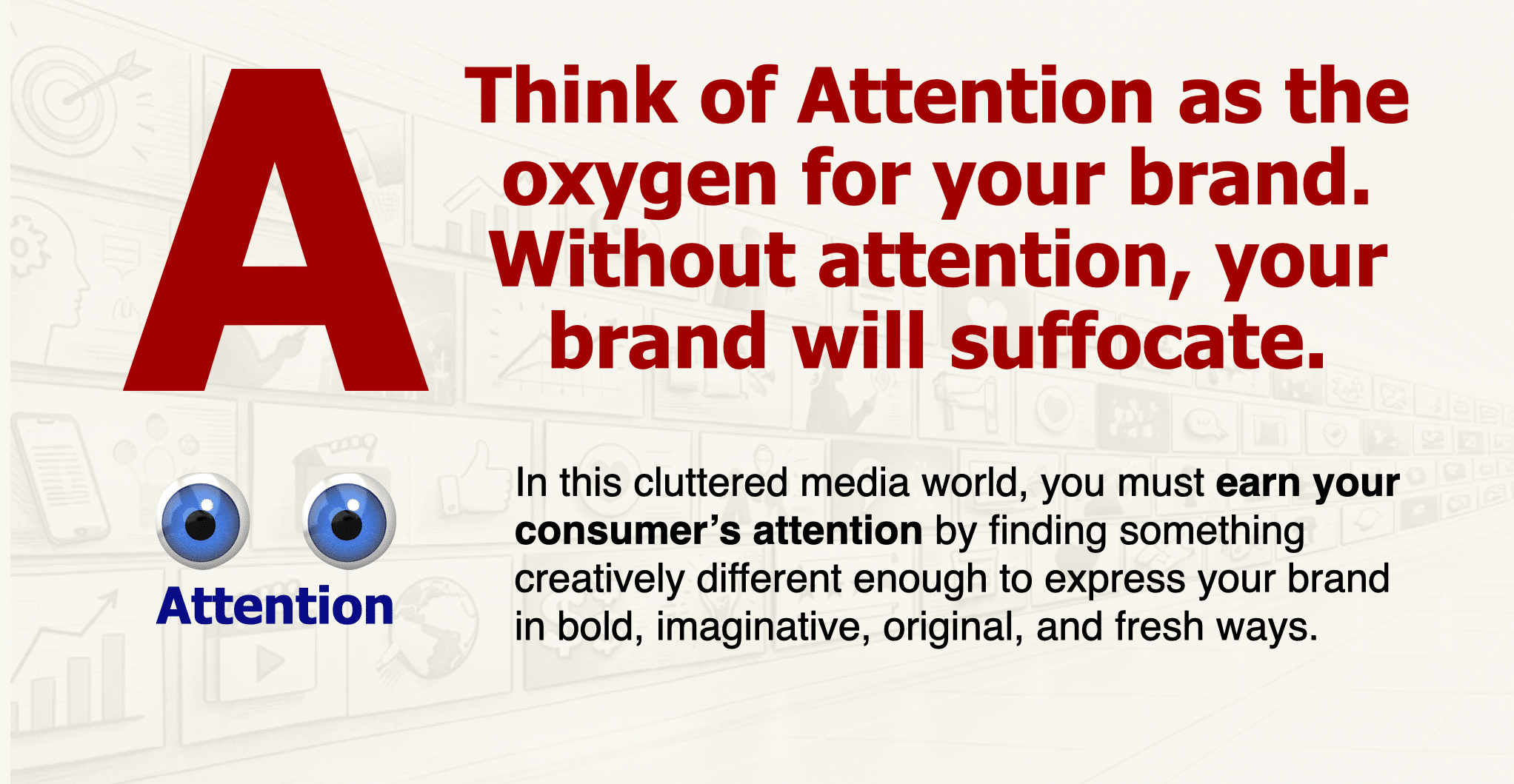
The ABC's of Advertising: Attention, brand link, communication stickiness
Here are four questions to ask:
- First, is it the creative idea that earns the consumer’s attention for the ad?
- Then, is the creative idea helping to drive maximum brand link?
- Next, is the creative idea setting up the communication of the main consumer benefit?
- And, is the creative idea memorable enough to stick in the consumer’s mind and move them to purchase?
Four ways to build advertising that sticks
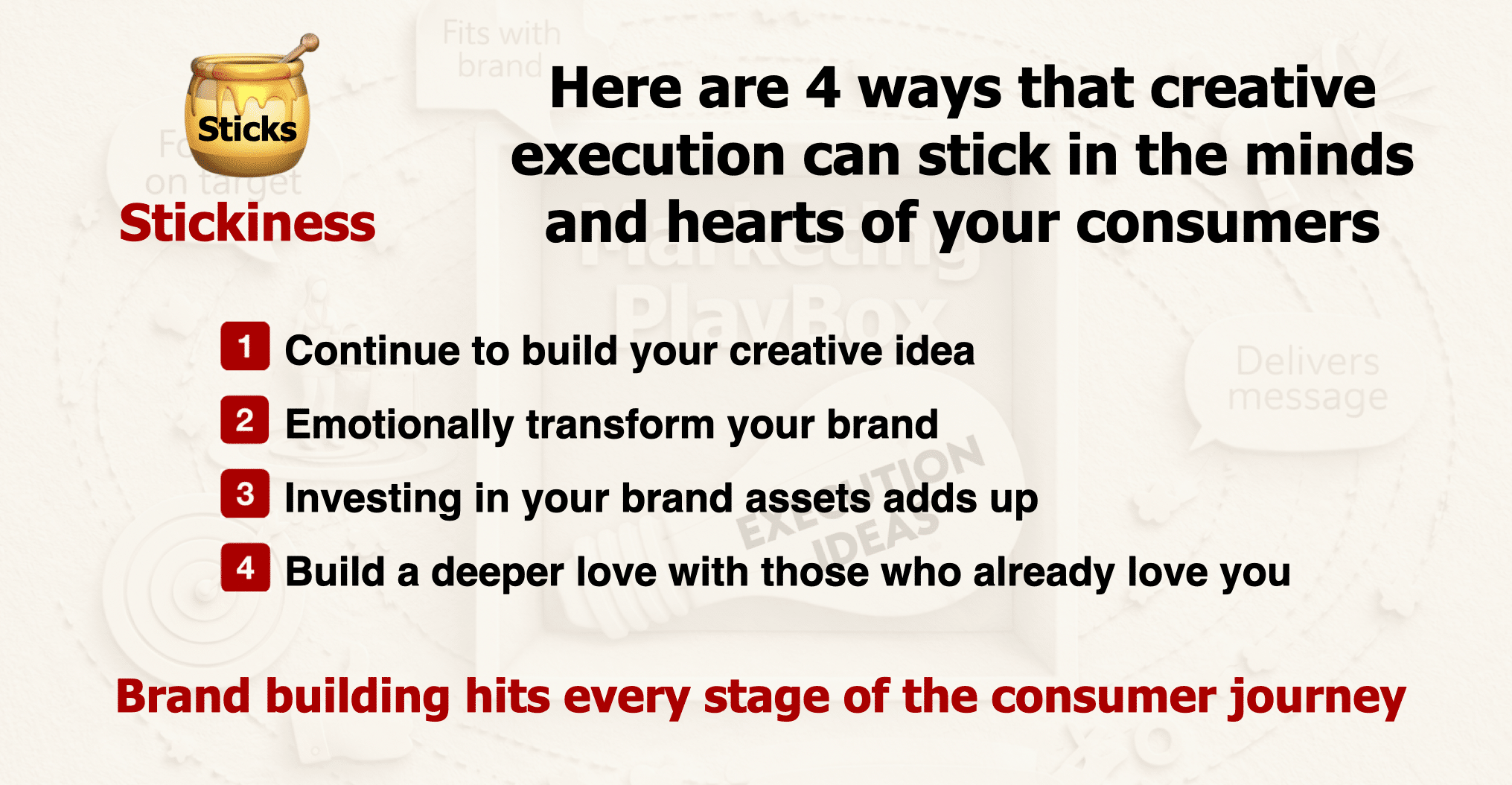
- Continue to build your creative idea
- Emotionally transform your brand
- Investing in your distinctive brand assets adds up
- Build a deeper love with those who already love you
1. Continue to build your creative idea
A goldfish grows bigger in a bigger bowl. Creative ideas work the same way. The best memorable advertising builds the same central creative idea over time — across media formats, product lines, consumer targets, and storylines — with each execution adding to what came before rather than starting over.
Nike Just Do It
The most iconic advertising of the past 40 years is Nike’s Just Do It campaign. The creative idea reflects Nike’s brand positioning perfectly: Nike pushes you beyond your athletic boundaries. Every execution builds on that same idea, with a new story, a new athlete, a new moment, but always the same underlying creative thought.
The range of stories Nike has told under that single creative idea is remarkable.
- Michael Jordan’s Failure ad has him speaking directly about the times he was trusted with the last shot and did not deliver.
- The Jogger ad from the 2012 London Olympics featured a heavy-set kid running alone at 6 am — a deliberate challenge to every average athlete watching.
- The Colin Kaepernick ad was their most controversial, generating an immediate and massive social media response the moment it launched.
- If You Let Me Play Sports from the early 1990s made an emotional case for girls in sport, with adolescent girls delivering lines about confidence, safety, and mental health.
- Dream Crazier featured Serena Williams making a pointed argument about the double standard women face when they compete at the highest level.
Every one of those ads is different. Every one of them is unmistakably Nike. That is what a great creative idea does — it gives the brand infinite room to tell new stories without ever losing its identity.

NIke's Colin Kaepernick
"If you let me play" by Nike
To view, use the arrow or sound buttons.
Nike's Find your Greatness
2. Emotionally transform your brand
Moving from a functional benefit to an emotional one is where advertising stops being informative and starts being memorable. Emotional advertising connects with consumers at a deeper level, builds stronger brand associations, and generates the kind of loyalty that functional messaging rarely achieves on its own.
Dove Real Beauty
Dove’s Real Beauty campaign is one of the most studied examples of how emotional advertising can transform a brand. Before the campaign, Dove competed on a functional platform — the pH balance litmus test against Ivory soap. It was a credible claim but an uninspiring one, and Dove never pulled ahead of Ivory while fighting on functional ground.
The Real Beauty ad showed a woman’s face being transformed through makeup, hair styling, and then digital editing — adjusting cheekbones, eye shape, and facial structure to create a manufactured ideal. The closing line was direct: no wonder our perception of beauty is distorted. The ad connected with women on a level that no pH claim ever could. Dove was repositioned from a soap brand into a brand that spoke on behalf of women, and the brand’s performance reflected that shift almost immediately.
The lesson for brand managers is not that functional benefits are wrong. Emotional advertising reaches consumers in a way that changes how they feel about the brand, and that feeling is what drives long-term preference and purchase.
To view, use the arrow or sound buttons.
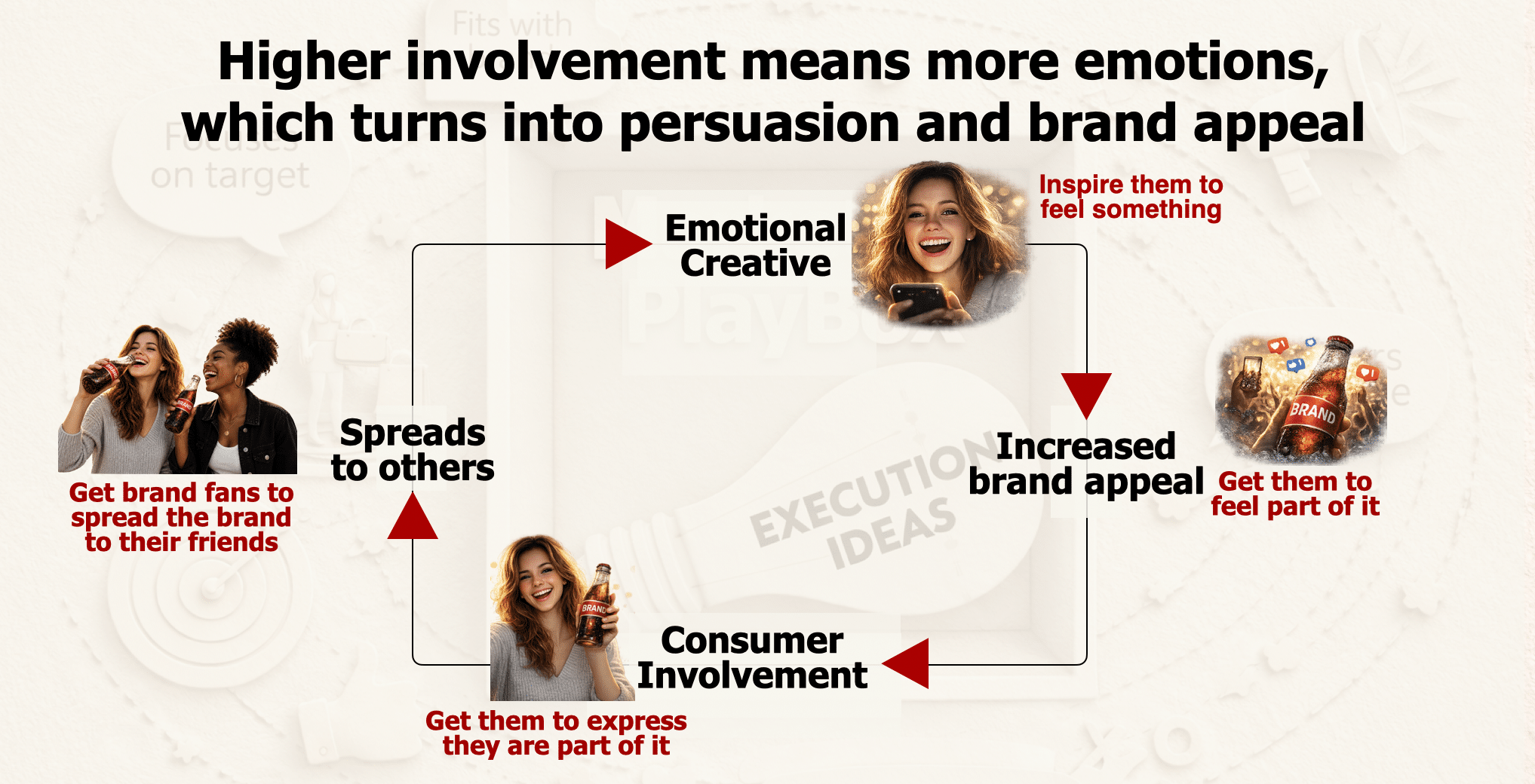
The link between emotion and persuasion
Millward Brown research confirms what strong creative instincts already suggest. There is a direct correlation between the emotional involvement a consumer feels while watching an ad and their scores on both persuasion and brand appeal. As emotional response moves from low to medium to high, both measures rise with it. Emotional advertising does not just feel better — it performs better in the metrics that matter.
3. Invest in your distinctive brand assets
Distinctive brand assets are the visual and verbal elements that consumers associate exclusively with your brand — the characters, icons, sounds, colours, and devices that make your advertising instantly recognizable before the logo even appears. Building and protecting those assets over time is one of the highest-return investments a brand can make.
There are two types worth building behind:
- Brand assets are the associations and messages that show up in your brand tracking — the things consumers connect specifically to your brand when prompted. Look at your image scores and your main messaging scores, identify the associations that are uniquely yours, and keep reinforcing them in every campaign. These become the heart of the brand’s reputation over time.
- Creative assets are the specific images, icons, characters, or devices from your advertising that consumers remember and internalize. When a creative element is breaking through — a character, a visual style, a recurring situation — that is a signal to keep using it rather than retiring it for the sake of novelty. These assets give your advertising a sense of continuity that makes each new execution feel familiar even when it is telling a new story.
Apple Mac vs PC
Apple’s I’m a Mac, and I’m a PC campaign ran to over 60 executions. Every single one used the same two characters — a relaxed, casually dressed Mac and a stiff, suit-wearing PC — to tell a different story about why simplicity beats complexity. The visual asset was simple and instantly ownable.
By the time Apple had run 20 of those ads, the two characters were among the most recognized creative assets in advertising. Consumers knew what they were watching before a single word of dialogue had been spoken.
That is the compounding effect of investing in distinctive brand assets. Each execution benefits from all the brand recognition built by the ones that came before it.
4. Build a deeper love with those who already love you
Some of the most memorable advertising ever made was not designed to acquire new consumers. It was designed to deepen the relationship with people who already loved the brand — telling richer, more layered stories that reward the brand’s most loyal users.
Budweiser Clydesdales
Six months after September 11, Budweiser ran a Super Bowl ad using their iconic Clydesdale horses. The horses travel through towns across America, approach the New York skyline, and kneel in front of Manhattan in tribute to those lost. No product message. No tagline. Just the horses and the moment.
For consumers who already knew the Budweiser brand, the ad carried an additional layer of meaning. The Clydesdales had first appeared in 1934, when they marched from St. Louis to the White House to deliver a keg to the President after the repeal of Prohibition. That history gave the Super Bowl ad a resonance that a new consumer would not fully feel — but for loyal Budweiser drinkers, it was one of the most powerful pieces of iconic advertising the brand had ever produced.
Elaborate storytelling aimed at your most loyal consumers is not wasted reach. It reinforces the emotional connection that keeps them loyal, deepens their advocacy, and gives them something worth talking about.
What memorable advertising has in common
Across all four approaches, the best sticky advertising shares the same underlying qualities. It is new enough to capture attention, relevant enough to connect with the consumer’s life, credible enough to be believed, and different enough to be remembered. Millward Brown research shows a direct correlation between the number of those four criteria an ad satisfies and its ability to persuade consumers to buy. The more criteria it hits, the stronger the persuasion opportunity.
Memorable advertising, iconic advertising, emotional advertising, and distinctive brand assets are not separate strategies. They are different expressions of the same discipline — finding a creative idea that is true to the brand, building it consistently over time, and trusting it long enough to let it compound.
Apple advertising
What you can learn from the best Apple Advertising of all time
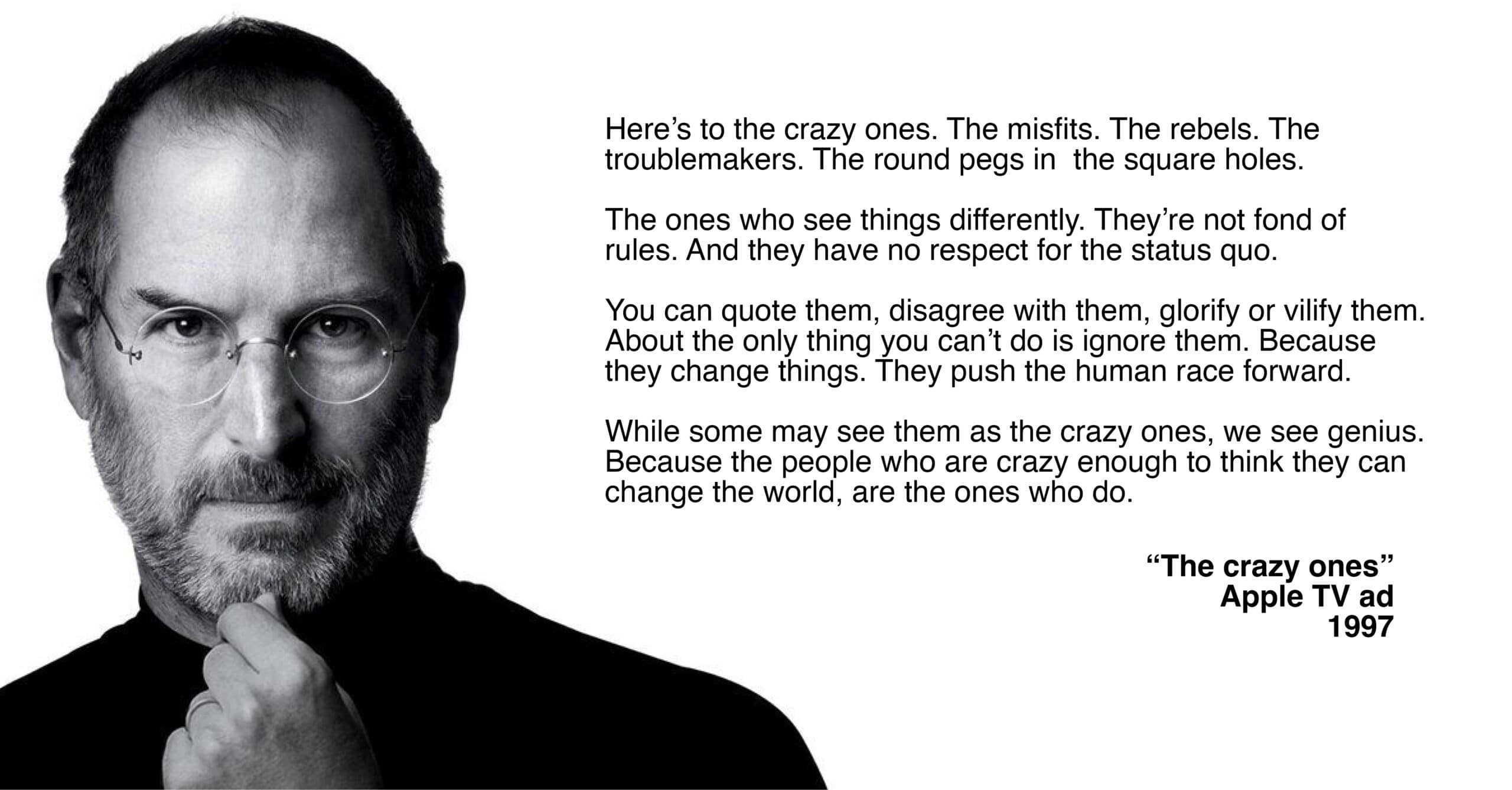
Talk about advertising that sticks, Apple advertising has delivered “simplicity” since the 1970s. Apple’s advertising has been relatively consistent for over 40 years and incredibly connected with consumers. You could build an Apple case study on the advertising alone. So we did!
Frequently asked questions about memorable and iconic advertising
What makes advertising memorable?
Memorable advertising is built around a strong central creative idea that earns attention, connects to the brand, communicates a clear benefit, and stays with the consumer after the ad ends. The four most reliable ways to build memorable advertising are to develop the creative idea over time, use emotional storytelling, invest in distinctive brand assets, and create deeper connections with existing loyal consumers.
What are distinctive brand assets in advertising?
Distinctive brand assets are the specific visual and verbal elements consumers associate exclusively with a brand — characters, colors, icons, sounds, taglines, or recurring devices. They make advertising instantly recognizable and allow each new execution to build on the brand recognition established by previous ones. Apple’s Mac and PC characters, Nike’s swoosh, and the Budweiser Clydesdales are all examples of distinctive brand assets built through consistent advertising investment.
What is emotional advertising?
Emotional advertising connects with consumers through feeling rather than purely through functional claims. It builds stronger brand associations, generates higher persuasion scores, and creates the kind of brand loyalty that functional messaging rarely achieves on its own. Dove’s Real Beauty campaign is one of the most studied examples of emotional advertising fundamentally changing a brand’s competitive position.
What is iconic advertising?
Iconic advertising is memorable advertising that transcends its original campaign and becomes part of the broader culture. Nike’s Just Do It, Apple’s 1984 Super Bowl ad, and Dove’s Real Beauty are all examples of iconic advertising — campaigns that are still referenced and studied decades after they ran. Iconic advertising almost always has a strong creative idea at its center that was built and invested in consistently over a long period of time.
How do distinctive brand assets improve advertising effectiveness?
Distinctive brand assets improve advertising effectiveness by giving each new execution a foundation of existing brand recognition to build on. When consumers already associate a character, color, or device with your brand, new advertising that uses those assets benefits from the prior investment. This compounding effect means brands that protect and reinvest in their distinctive assets get more value from each dollar of media spend over time.
What is the ABCS framework for advertising?
The ABCS framework is a four-part advertising evaluation tool developed by Beloved Brands. It stands for Attention, Brand Link, Communication, and Stickiness. Each letter represents one of the four things a strong ad needs to do — earn the consumer’s attention through the creative idea, connect that creative idea back to the brand, use the creative idea to communicate the main benefit, and be memorable enough to stick in the consumer’s mind and move them to purchase.