Most brand plans fail before anyone reads them. Weeks went into writing strategies, building execution slides, and debating budget allocations, but the foundation was never solid. The business review was rushed, the key issues were assumed rather than derived from the data, and strategies were written before anyone clearly defined what problem they were solving.
Running a successful annual brand planning process is not just about producing a document. It is about a sequential discipline that forces the right thinking at the right time. Each stage feeds the next, and shortcutting any one of them makes everything built on top of it harder to defend.
This is the process that gets plans approved.
Brand Planning Process - Table of Contents
The four stages of the brand planning process
A well-run brand planning cycle moves through four stages in sequence. The output of each stage becomes the input for the next.
- Run the deep-dive business review
- Build the vision and set the goals
- Frame the key issues and write the strategies
- Present the plan and get it approved
Most planning problems can be traced back to a team that skipped stage one, rushed stage three, or treated stage four as an afterthought. Getting the sequence right is the single most important thing a brand manager or marketing director can do to improve the quality of their plan and the speed of their approval.
1: Run the deep-dive business review
The business review is where the brand planning process starts. Not the vision. Not the strategies. The data.
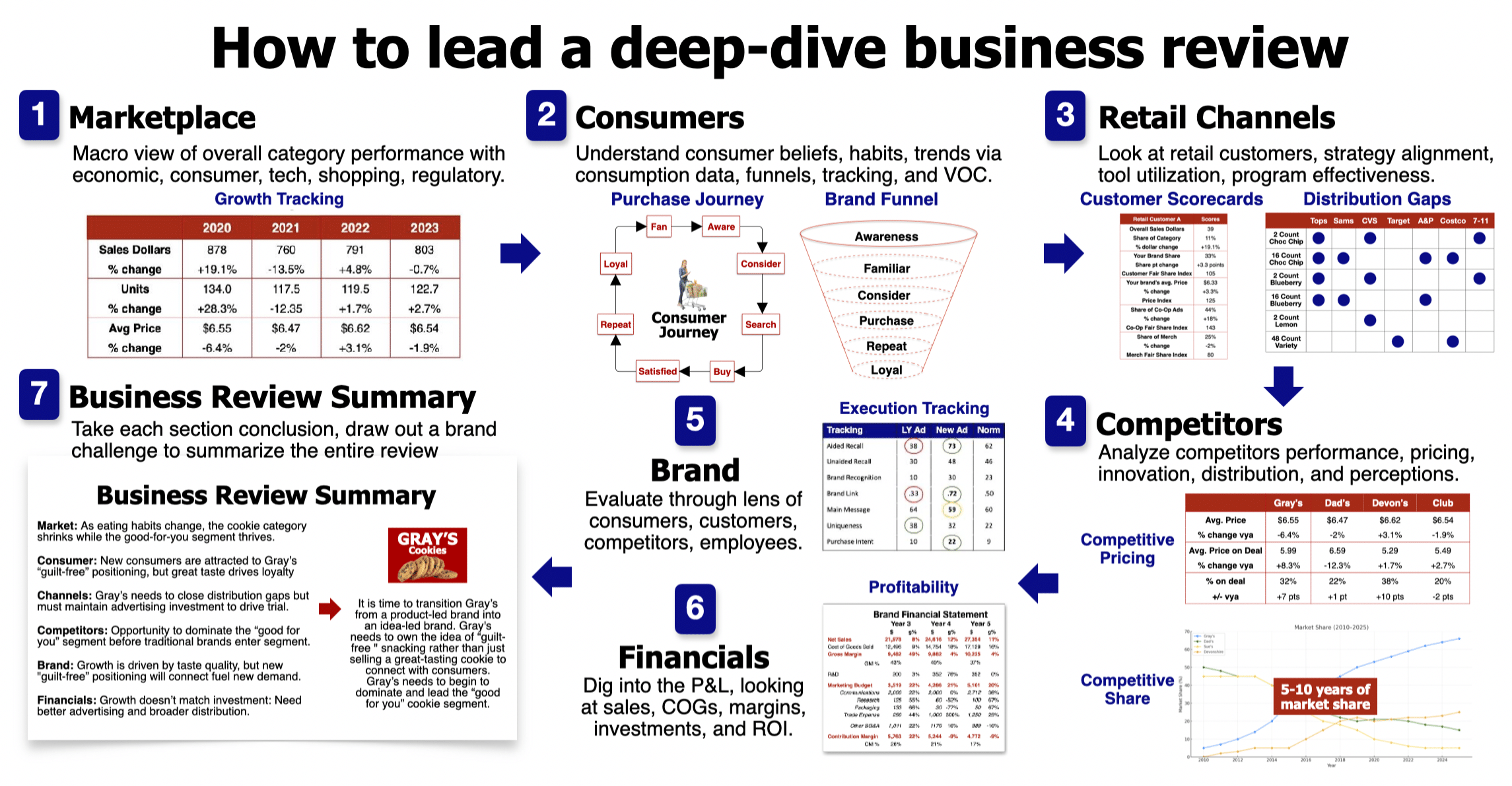
A deep-dive business review covers six areas: the marketplace, consumers, channels, competitors, brand health, and financials. Each section surfaces conclusions that feed the situation analysis. The situation analysis feeds the key issues. The key issues feed the strategies. Pull any link out of that chain, and the plan loses its grounding.
The most common planning mistake is treating the business review as a preliminary formality rather than the analytical foundation of the entire plan. Teams that rush it arrive at planning sessions with key issues that are not actually supported by the data, and strategies that address the symptoms rather than the underlying problems.
A proper business review takes time. For a brand manager running a full review for the first time, allow two to three weeks of data gathering, analysis, and slide building. The goal is to arrive at the planning process with a clear, evidence-based point of view on four questions: what is driving growth, what is inhibiting growth, where are the opportunities, and what are the threats. Those four answers define the situation analysis that the rest of the plan stands on.
The business review is not part of the brand plan presentation. Your plan reflects real strategic thinking rather than opinion dressed up as strategy.
2: Build the vision and set the goals
Once the business review is complete and the situation analysis is clear, the planning process moves to vision and goals. This is where the brand declares where it is heading and what it will achieve.
A brand vision answers one question: where could this brand be in the future? A strong vision has both a qualitative dimension — the kind of brand you are building and the space you want to own — and a quantitative anchor — a specific, time-bound financial or market position target. Without the quantitative anchor, the vision has no accountability. Without the qualitative dimension, it has no direction.
Vision statements written before the business review tend to be aspirational but disconnected. Vision statements come after the business review.
Goals translate the vision into measurable milestones.
Set goals across four areas: consumer behavior goals that track how consumers are moving along the brand funnel, brand health goals that track perception and equity, financial goals that track sales, share, and margin, and operational goals that track distribution, launch timing, and team capability. Each goal should have a baseline, a target, and a timeframe. Goals without a baseline are not goals — they are wishes.
The vision and goals section of the plan is also the one leadership scrutinizes most carefully during the approval meeting. Vague goals invite debate. Specific, data-grounded goals signal that the team did the analytical work and earned the right to present strategies.

3: Frame the key issues and write the strategies
This is where most annual brand planning processes break down. Teams move from the situation analysis directly to tactics, skipping the step that gives the plan its strategic coherence.
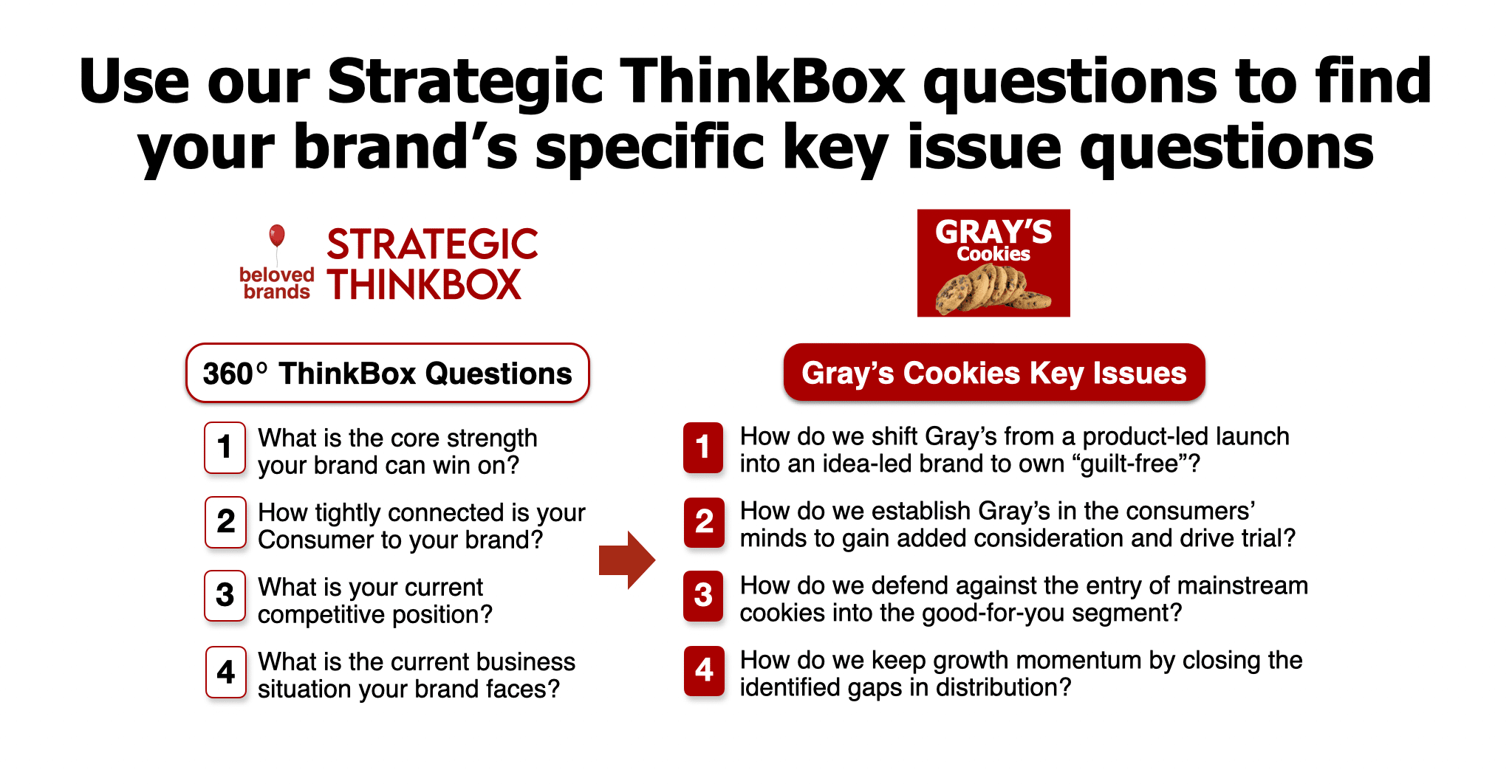
Key issues include the bridge between analysis and strategy. They translate the findings from the business review and the situation analysis into the specific questions the plan needs to answer. A key issue is not a problem statement — it is a strategic question. “How do we accelerate trial among the new target consumer?” is a key issue. “We need more awareness” is not.
Each key issue should connect directly to a finding from the situation analysis. Limiting the plan to three key issues is a discipline worth imposing. More than three tends to mean the team has not made the hard choices about what actually matters most for the brand’s performance in the coming year.
Strategies answer the key issues.
- What will you invest in?
- Who are you focused on?
- What do you expect to achieve?
A strategy must be linked back to a key issue; otherwise, it is either a tactic in disguise or an idea that did not survive the analytical process. Both belong somewhere other than the strategy section of the plan.
Writing the strategies is the most intellectually demanding part of the planning process. Block dedicated time for it. The temptation in every planning cycle is to jump to execution because execution feels concrete and tangible. Strategies are the clearest and most durable part of the entire plan.
4: Present the plan and get it approved
A well-written plan that is poorly presented does not get approved. Presenting a brand plan to senior leadership is a distinct skill, and the annual planning process should include deliberate preparation for it.
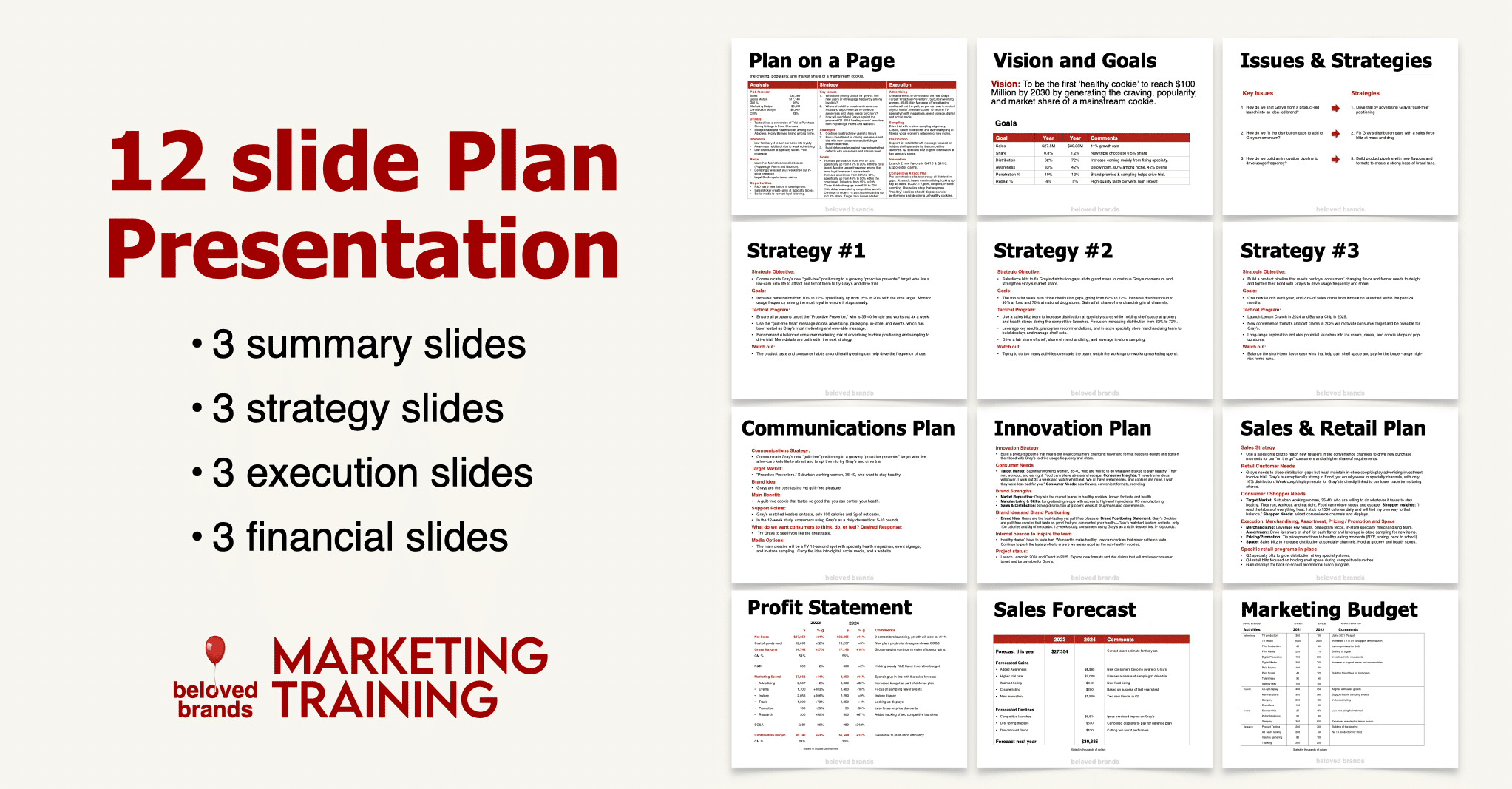
The plan presentation tells a sequential story. It starts with where the brand is now and why, which becomes the situation analysis that gets distilled into the clearest possible read of the brand’s current position. And then it moves to where the brand is going: the vision and goals. Then, explain what is standing in the way, which become the key issues. And it closes with what the team will do about it: the strategies and execution plans.
The planning sequence is not arbitrary.
Leadership needs to follow the logic before they can evaluate the strategies. A presentation that leads with strategies before establishing the analytical context forces leadership to take the team’s word for the diagnosis. Leadership rarely takes anyone’s word for anything when budget is on the line.
Keep the plan presentation to 20 to 25 slides maximum. Use the appendix for supporting analysis that validates the strategy but does not need to be in the room during the approval discussion. One key idea per slide. If a slide is trying to make two points, it is actually two slides.
The most important slide in any plan presentation is the key issues slide. It is the moment where the team demonstrates that they understand the brand’s real challenges — not the comfortable ones, not the ones inherited from last year’s plan, but the ones the business review actually surfaced. Leadership approves plans they trust. Trust comes from analytical credibility, and analytical credibility is built or lost on the key issues slide.
Build in two to four weeks for socialization before the formal approval meeting. Share drafts with sales leadership, finance, and key agency partners early enough that they can raise concerns before the room. Surprises in an approval meeting slow everything down. Concerns raised in a hallway conversation two weeks earlier get resolved before they become issues.
How long the brand planning process takes
A well-run annual brand planning process typically takes four to five months from the start of the business review to an approved plan. Here is how that breaks down:
- Two months for the deep-dive business review — data gathering, analysis, and the situation analysis that comes out of it.
- One month to build the plan — vision, goals, key issues, and strategy statements. This is the stage that gets compressed most often and suffers most from that compression.
- One month to build out the execution plans — the detailed communication, innovation, and sales programs that translate strategy into action.
- Two to four weeks for socialization, revisions, and the formal approval process.
Teams that compress the business review stage tend to write key issues that do not hold up under scrutiny. Teams that compress the strategy stage tend to produce execution plans that are not connected to a coherent strategic direction. Both problems show up in the approval meeting at the worst possible time.
The most common brand planning process mistakes
Starting with strategies before completing the business review
The data does not lie but the planning process can ignore it. Teams that begin writing strategies before the business review is complete are essentially writing strategies based on what they already believed before the analysis started. The business review exists to challenge those beliefs, surface new information, and force the team to confront the actual state of the brand. Skip it and the plan reflects the team’s prior assumptions, not the market reality.
Writing too many key issues
Three key issues is a discipline, not a limitation. A plan with six key issues is a plan that has not made any choices. Limited resources spread across six strategic challenges achieve nothing meaningful on any of them. The harder and more valuable work is deciding which three issues matter most — and being willing to accept that the others will not be addressed this year.
Confusing tactics with strategies
A strategy defines the direction and the logic. A tactic is a specific action that executes the strategy. “Invest in digital media to build awareness among the new target consumer” is a strategy. “Run a six-week Instagram campaign in Q2” is a tactic. Plans that list tactics in the strategy section have skipped the strategic thinking entirely and gone straight to execution. Leadership can see this immediately, and it undermines confidence in the entire plan.
Presenting before socializing
The formal approval meeting is not the right place to introduce concerns for the first time. By the time the plan reaches the approval stage, every major stakeholder — sales, finance, operations — should already have seen a draft, raised their questions, and had those questions addressed. The approval meeting should be a confirmation of a direction already understood and supported, not a first reading.
Recycling last year’s plan
The annual brand planning process is an annual exercise for a reason. Markets shift, consumers change, competitive dynamics evolve, and last year’s key issues are rarely this year’s key issues. A plan that starts from last year’s strategies and adds incremental updates has skipped the most valuable part of the process — the fresh analytical read that tells the brand where things actually stand.
Frequently asked questions about the brand planning process
What is the annual brand planning process?
The annual brand planning process is the annual discipline a brand team runs to produce a marketing plan — moving sequentially through a deep-dive business review, vision and goal setting, key issue framing, strategy development, and plan presentation. It is a process for running the right thinking in the right order, not just a template for producing a document.
What is the difference between a brand plan and a marketing plan?
The brand plan and a marketing plan cover the same content but differ in scope and audience. A brand plan tends to focus on the long-term direction of the brand — the vision, positioning, and multi-year strategy. A marketing plan typically focuses on the annual operating plan — the specific goals, strategies, and execution programs for the coming year. At Beloved Brands, we treat them as closely related documents that come out of the same planning process.
How long should the brand planning process take?
A well-run annual brand planning cycle takes four to five months from the start of the business review to an approved plan. The business review alone should take two to three months for a thorough analysis. Teams that compress the process tend to produce key issues and strategies that do not hold up under scrutiny in the approval meeting.
What are the key issues in a brand plan?
Key issues are the strategic questions the plan needs to answer. Translate the findings from the business review into the specific challenges the strategies must address. A well-framed key issue is a question — “how do we drive trial among the new target consumer?” — not a problem statement or a goal. Each strategy in the plan should answer one of the key issues directly.
How many strategies should a brand plan have?
A brand plan should have three strategies, one for each key issue. More than three strategies typically means the team has not made the difficult prioritization choices that a well-run planning process requires. Limited resources spread across too many strategies produce mediocre results. Three focused strategies with sufficient resources behind each one produce meaningful results.
How does a Brand Plan get approved?
Getting a brand plan approved requires a presentation that tells a clear, sequential story. Include the current state of the brand, the vision and goals, the key issues, and the strategies. Leadership needs to follow the logic before they can evaluate the recommendations. Socializing the plan with key stakeholders two to four weeks before the formal approval meeting resolves most concerns before they reach the room. Surprises in an approval meeting slow approval down significantly.