Most marketers treat price as a defensive move, something to adjust when inflation bites or a competitor cuts their price at the shelf. The smartest brand leaders use price as a weapon to drive brand value. Your pricing strategy plays a major role in driving brand growth, so treat it as a continuous process that projects your brand positioning and keeps you competitive. Match your pricing strategy to your overall business strategy and financial objectives, and consider how you structure your business to generate revenue and the role price plays in achieving those results.
Start with the Strategic ThinkBox and your brand positioning, looking at how customers value your main benefits relative to your brand’s perceived product quality, added services, and the strength of the customer connection.
Price Value
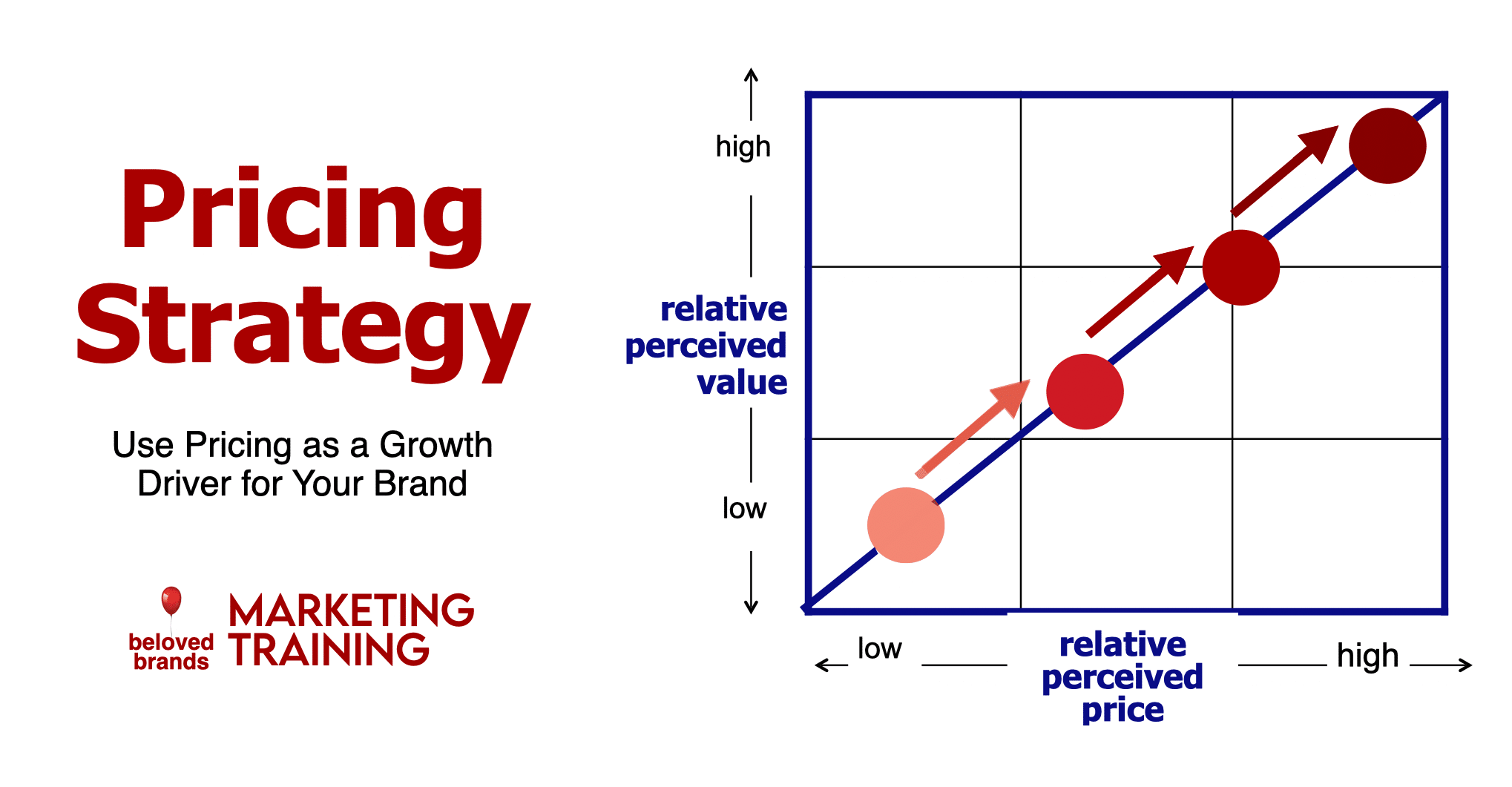
Your pricing strategy starts with understanding the brand’s price-value relationship and identifying ways to increase perceived value. In the chart, perceived value and perceived price meet along the diagonal line where the two find equilibrium. Every base product starts at the going commodity price (the pink circle), and you move up the curve to a higher price (the darker red circles) by building perceived value.
Five ways to increase perceived value
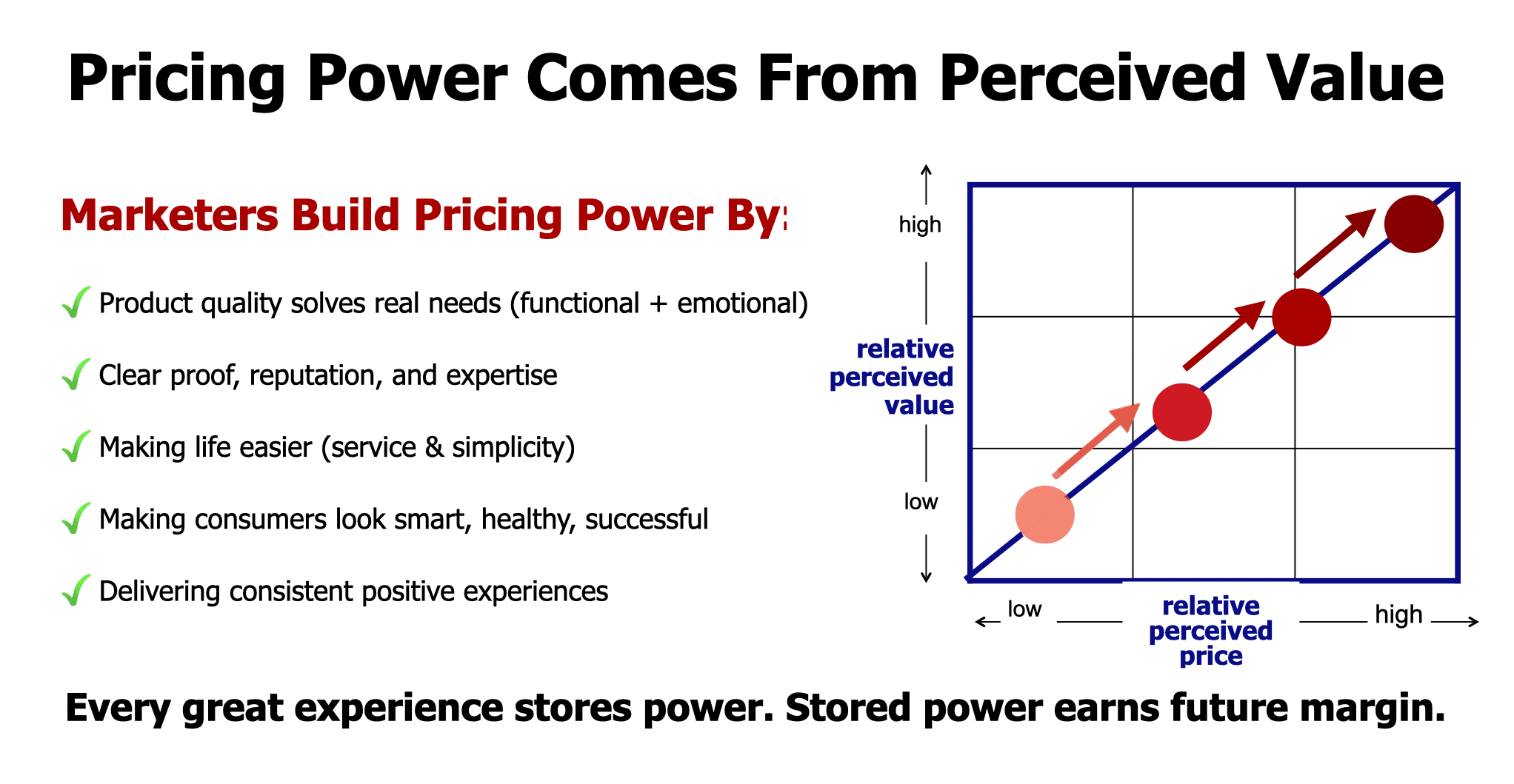
- Perceived quality of the product: Show how the product benefits match the customer’s needs. Adding emotional benefits takes you beyond a commodity.
- Reputation for expertise: Build it through experience, past usage, and reviews or referrals from a similar situation.
- Perceived quality of the services: Go beyond the product to make things faster, easier, or smarter by handling the activities the customer cannot do or would rather not do.
- Make your customer look better: Add value to their own brand, or make them look smarter to the people they answer to.
- Happy customers: Happy experiences build trust, which lets the consumer open up emotionally. With each happy experience, you add more value to the brand.
When you find a unique position that motivates consumers and sets you apart from competitors, use that motivation and the delivery of great experiences to strengthen your bond with consumers.
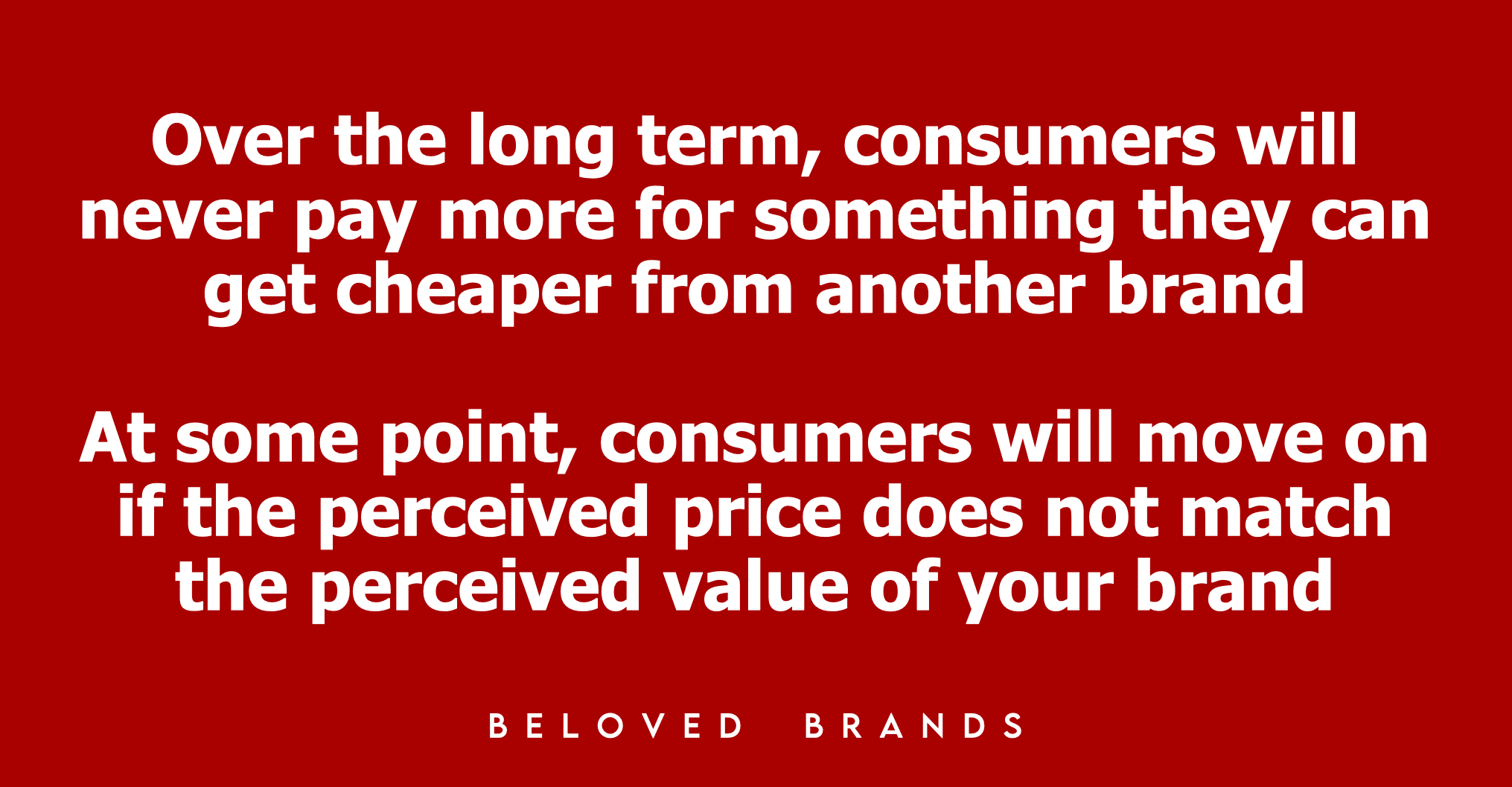
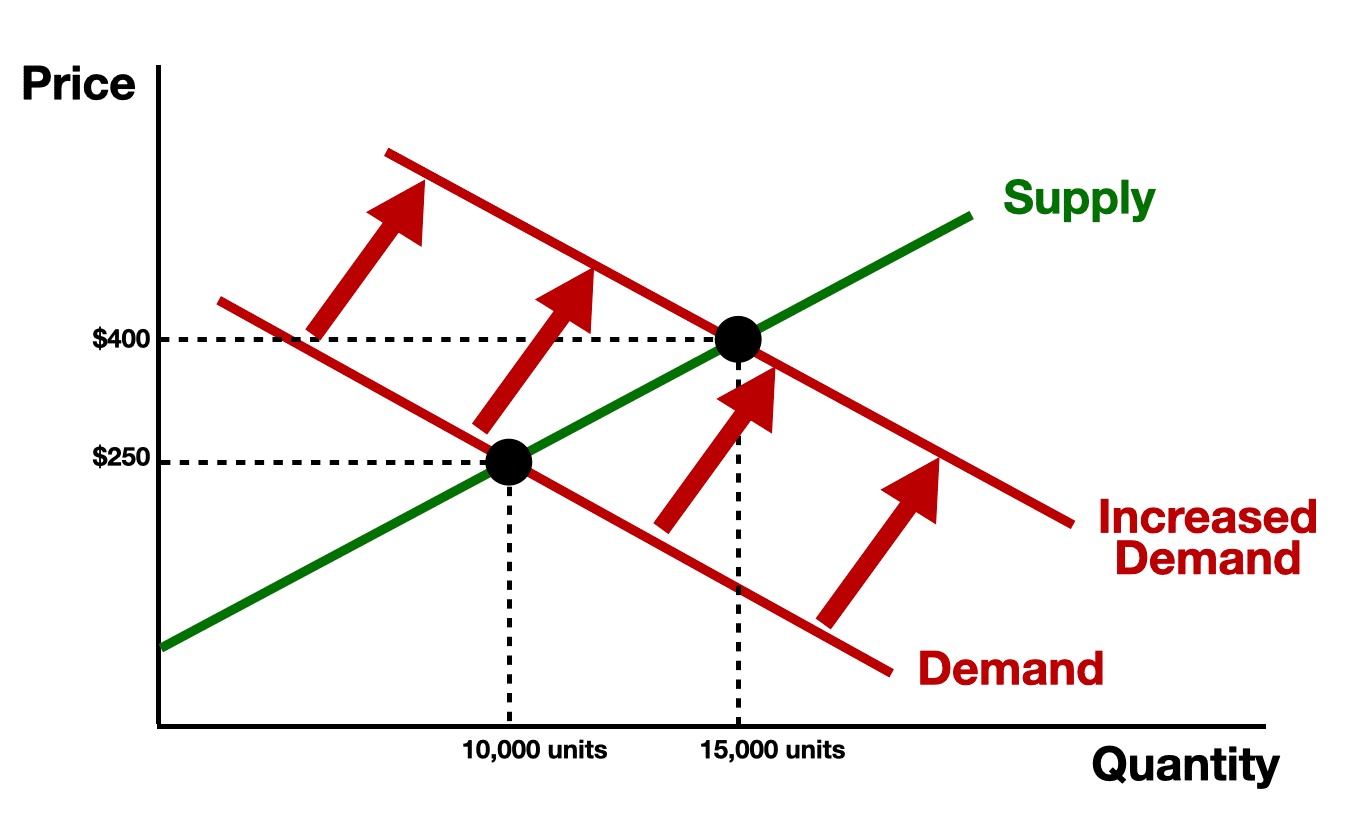
An indifferent brand has low perceived value and ends up at a much lower price point. A beloved brand uses its emotional connection to drive perceived value, so the price premium still reads as good value. Consumers will happily pay $5 for a Starbucks latte, $750 for an iPad, or $100,000 plus for a Mercedes, then price shop on brands they have no feelings for. A beloved brand has an inelastic price, which means the quantity demanded barely changes when the price moves.
Happy experiences builds trust that allows consumers to open up emotionally

When you find a unique position, which you know motivates consumers, and can differentiate you from competitors. Use the motivation of your positioning and the delivery of amazing experiences to tighten the bond with your consumers.
An indifferent brand has low perceived value and will end up with a much lower price point. A beloved brand can use its emotional connection to drive perceived value and ensure the price premium is perceived as good value. For instance, consumers are undoubtedly willing to pay $5 for a Starbucks latte, $750 for an iPad or $100,000+ for a Mercedes. The same consumers will price shop on brands where they have no feelings. A beloved brand has an inelastic price, which means the quantity demanded does not change very much when the price changes.
Pricing strategies
Price increase
A brand can push through a price increase when the market or consumers allow it. A beloved brand has an easier time, since it can use its power with consumers, competitors, and channels. When you push an increase through retail channel partners, they usually want proof that the new price will hold or that your product costs have risen. The health of both the brand and the category helps your case.
Price decrease
Use a price decrease to battle a competitor, to react to a sluggish economy, or to answer retail channel pressure. You can also cut aggressively when you hold a cost advantage in manufacturing, materials, or distribution, using the lower price to drain a competitor’s resources.
Any price change risks a competitive overreaction, so model the likely competitive responses in your financial analysis before you move. Be careful. As hard as a price change is to implement, it is almost impossible to reverse.
Trade consumers up or down
Another approach is a range of products at different price levels, a good, better, best structure that lets the brand reach up or down to a new segment. Make sure you do it for the right reason, or it can backfire on you.
Trading consumers up
Carve out a meaningful difference so consumers see a clear reason to move up to a second or third tier. Once your brand has earned trust and a bond, it is easier to use that reputation and your product performance to move loyal consumers up to the next level.
Trading consumers down
When you see an unserved market, you can trade consumers down if the move does little damage to the brand image. In a tough economy, a lower-priced set of products is often smarter than cutting the price of your main brand. When the economy recovers, you can discontinue the lower-priced option.
Adding value to your products
What the marketer can do to add value
- Use claims and emotional benefits to explain the value of your products.
- Build a brand idea that anchors your positioning and your reputation.
- Work with sales to explain the quality of your added services.
- Spell out what you add, so your consumers can pass that value on to their own customers.
- Know who your best consumers are and why they are happy, then keep sending the messages that keep them that way.

Pricing Management
Operationalize pricing inside your team. Set up a pricing team with clear roles and a process that runs across sales, marketing, finance, and forecasting. Understand market dynamics, especially in a market where prices move. Put one person in charge of maintaining all pricing information and sharing it so the whole team gets smarter. Gather intelligence on customers and competitors to understand each business model and the financial pressures that shape their pricing. Then follow a consistent process with shared decisions.
Pricing execution
Implement pricing by understanding elasticity, seasonality, geography, customer types, and the benefits you offer. Use a good-better-best structure. When you are pressured to drop your price, offer a lower product or service level instead. Keep your messaging and behavior consistent so customers understand your strategy. If you are a higher-quality product at a 10 percent premium, stay a 10 percent premium. Define price corridors by product, using lead-product pricing or a total cost you can explain and quantify.
Managing pricing
Build a system to monitor your price corridors, watch for changes in elasticity, hold your margin requirements, and test price levels through win/loss analysis. Set price ranges based on volume, services offered, and customer type. Stay aware of market dynamics relative to your current customers so your prices stay in range and customers do not go shopping elsewhere.
Pricing, Economics, and Profit
The economics for how a beloved brand turns brand love into profit
The whole point of a strong pricing strategy is profit. When you drive demand, you earn the power to push price up, and higher volumes give you the economies of scale to drive costs down. Higher prices and lower costs together drive higher margins. A beloved brand turns its loyal following into a relatively inelastic price, richer margins in channel negotiations, and more efficient marketing spend.
We cover the full picture, including the 8 ways to drive profit and our Marketing Finance 101 framework, on a dedicated page.
The accounting for how a beloved brand turns brand love into profit
Most beloved brands can use their loyal brand lovers to command a premium price, creating a relatively inelastic price. The weakened channel customers cave in during negotiations to give the brand richer margins. Satisfied and loyal consumers are willing to trade up to the next best model. A well-run beloved brand can use their high volume to drive efficiency, helping to achieve a lower cost of goods structure.
Not only can beloved brands use their growth to drive economies of scale, but suppliers will cut their cost to be on the roster of the beloved brand. The beloved brand will operate with much more efficient marketing spend, using their power with the media to generate lower rates with plenty of free media. Plus, the higher sales volumes make the beloved brand’s spend ratios much more efficient. The consumer response to the marketing execution is much more efficient, giving the brand a higher return on investment.
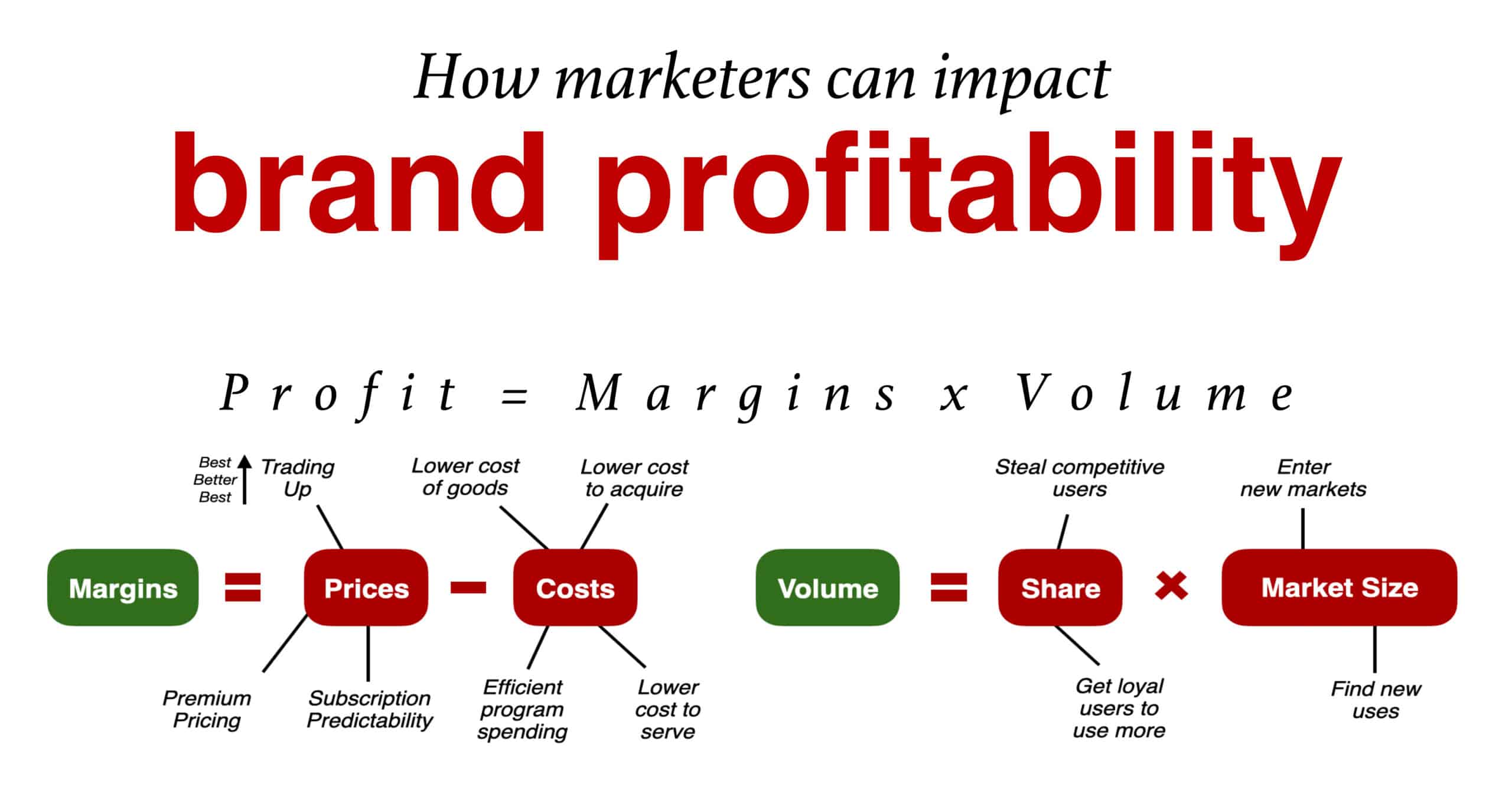
Beloved brands use higher shares of a bigger market to drive higher volume
The beloved brands use their momentum to reach a tipping point of support to drive higher market shares. They can get loyal users to use more, as consumers build the beloved brand into life’s routines and daily rituals. It is easier for the beloved brands to enter new categories, knowing their loyal consumers will follow. Finally, there are more opportunities for the beloved brand to find more uses to increase the number of ways the beloved brand can fit into the consumer’s life.
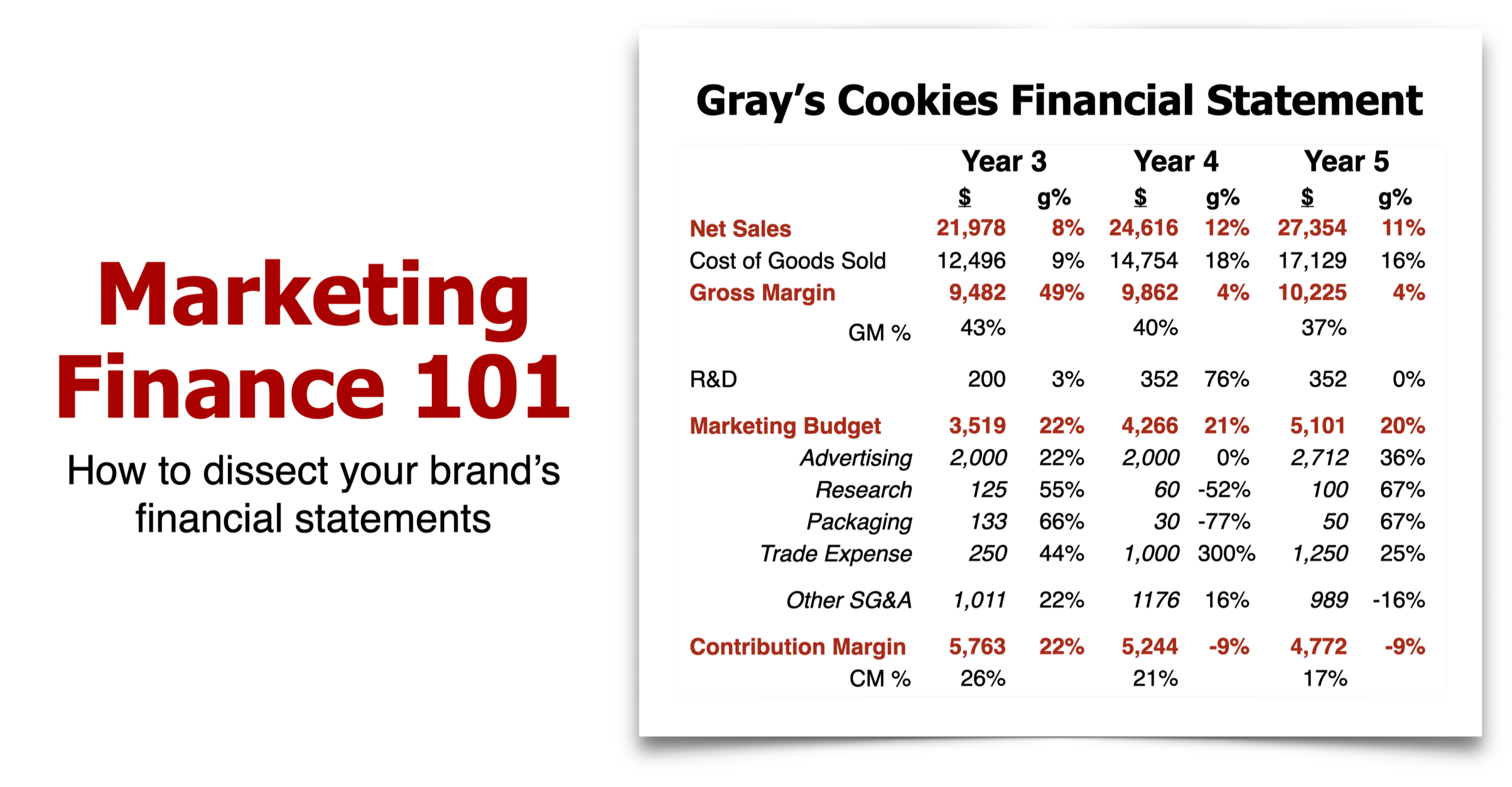
Marketing Finance 101
8 ways to drive profit
The whole point of a strong pricing strategy is profit. When you drive demand, you earn the power to raise prices, and higher volumes give you economies of scale to lower costs. Higher prices and lower costs together drive higher margins. A beloved brand turns its loyal following into a relatively inelastic price, richer margins in channel negotiations, and more efficient marketing spend. We cover the full picture, including the 8 ways to drive profit and our Marketing Finance 101 framework, on a dedicated page.
Frequently asked questions about pricing strategy
What is a pricing strategy?
A pricing strategy is the plan you use to set and adjust your prices so they match your brand positioning, your business strategy, and your financial goals. A strong one treats price as a way to project value and drive growth, rather than a number you only touch when a competitor moves.
What are the main types of pricing strategy?
The common moves are a price increase when the market allows it, a price decrease to battle a competitor or react to the economy, and a good, better, best range that lets you trade consumers up or down across price tiers. The right one depends on your brand’s strength and where you are trying to grow.
What is price elasticity?
Price elasticity is the percentage change in the quantity consumers buy in response to a one percent change in price. High elasticity means consumers are sensitive to price and cut back when it rises. Low elasticity, which beloved brands enjoy, means demand barely moves when the price changes.
How do you push through a price increase?
You earn it with the strength of your brand and with proof for your channel partners. Retailers usually want evidence that the new price will hold or that your costs have gone up. A healthy brand in a healthy category has a much easier time making the increase stick.
What is a good, better, best pricing strategy?
It is a range of products at different price levels that lets your brand reach more than one segment. The better and best tiers need a meaningful difference that consumers can see, so loyal customers have a clear reason to trade up.