To run a brand well, you have to understand your consumers better than anyone else does, and market research is how you get there. Done right, marketing research gives you a clear read on your target, your competitors, your advertising, your new products, and the moment someone decides to buy. The hard part is not running the research. It is knowing which type to use for the decision in front of you, then turning the data into a consumer insight you can act on.
This guide covers the market research methods every brand manager should know, where each one fits in your brand strategy, and how to turn what you learn into insights that move consumers. When the budget is tight, I will also show you how to run a lot of this yourself for free.
Always start with the consumer
Every good brand strategy starts with the consumer. Use quantitative research like surveys and questionnaires to get hard data on who they are, what they prefer, and how they behave, then build your targeting from there. Use qualitative research, such as interviews and focus groups, to understand the “why” behind the numbers, including how consumers see you relative to your competitors.
From there, research helps you cover your blind spots in execution. You can test advertising before you spend, validate new product concepts before you launch, and study the in-store experience to find what is quietly costing you sales.
Consumer target
Using market research for consumer targeting
Knowing your target audience is the foundation of an effective brand strategy. Consumer targeting research helps you understand the demographics, psychographics, and purchasing habits of your market. Surveys gather data from a large, specific audience online, by phone, mail, or in person. Focus groups go deeper, giving you a qualitative read on attitudes and behavior from a small group. In-depth interviews go deeper still, one consumer at a time.
There are several types of market research that can be used to gather knowledge of consumers.
- Surveys: Surveys are a popular method for gathering data on consumer preferences and behaviors. This type of market research can be conducted online, by phone, or in person, and can be used to gather data on a wide range of topics, including brand awareness, purchasing habits, and product satisfaction.
- Focus Groups: Focus groups are another popular method for gathering data on consumer preferences and behaviors. They involve bringing a small group of people together to discuss a specific topic, usually moderated by a trained facilitator. Focus groups can be used to gather qualitative data on consumer attitudes and perceptions, as well as generate ideas for new products or advertising campaigns.
- In-Depth Interviews: In-depth interviews are a type of qualitative market research that involve conducting one-on-one interviews with individual consumers. They can be used to gather detailed information on consumer attitudes and behaviors, as well as explore specific topics in more depth.
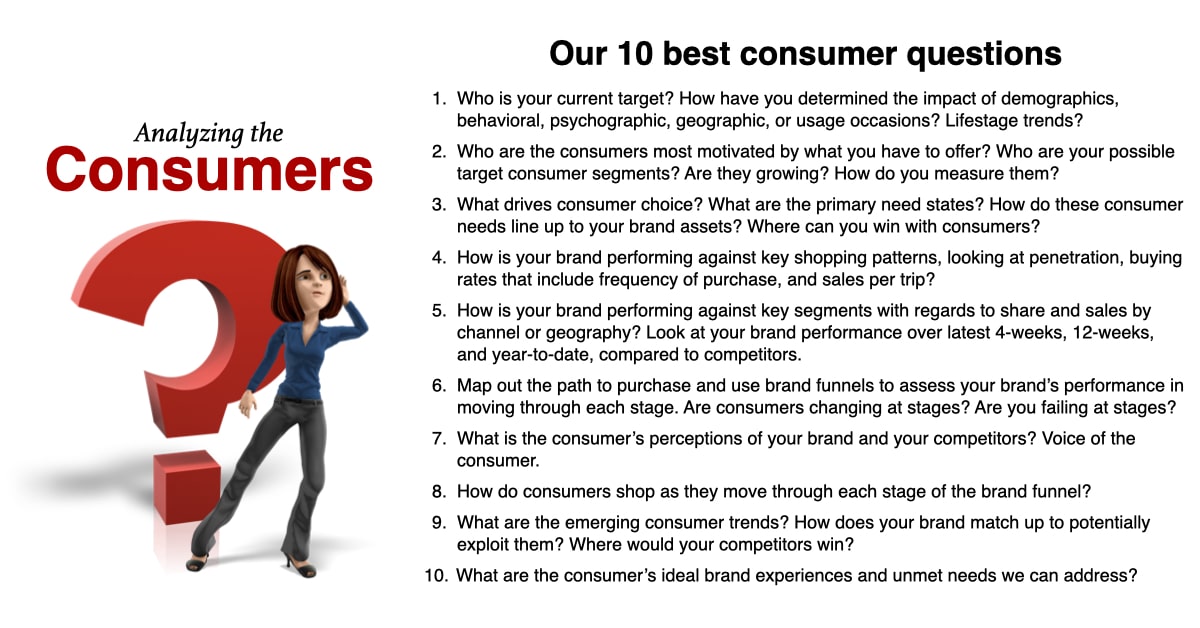
How to find and focus on your ideal consumer target
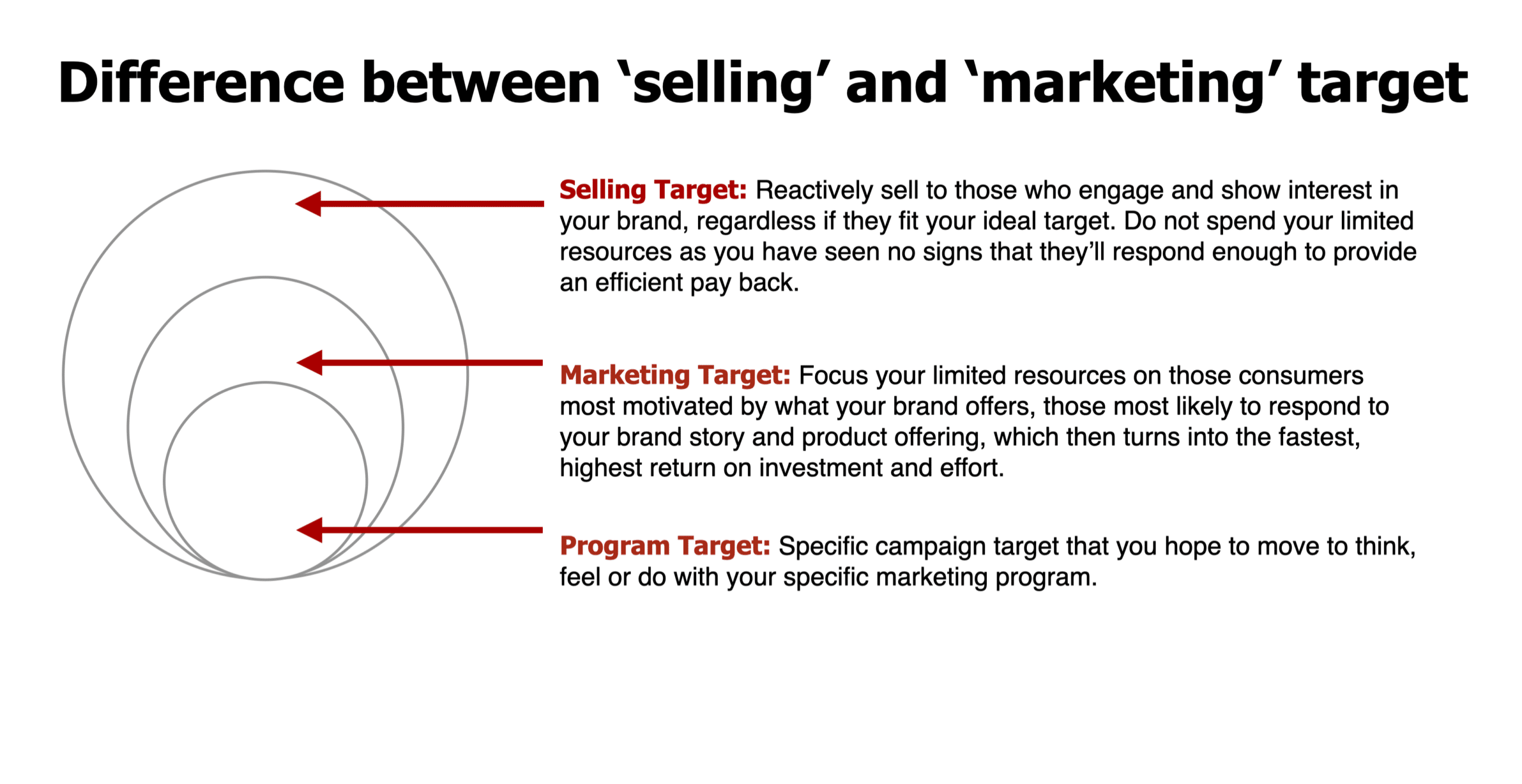
One of the biggest mistakes I see marketers make is picking too broad a target. There is a myth that a bigger target makes the brand bigger, so the scared marketer aims at everyone out of fear of leaving someone out. Spreading your limited resources across an entire population is cost-prohibitive and yields a lower return, eventually draining your brand. Please focus.
- Selling target: Everyone who comes through the door and wants to buy. It should never be your marketing target, because aiming there spreads you so thin you miss the consumers most likely to respond.
- Marketing target: focus your resources on the consumers most likely to respond to your positioning, advertising, and innovation. A tighter target gives you the fastest, highest return.
- Program target: for a specific campaign, narrow further to the people you want to move, especially when launching a product or tying into a season like back-to-school or Christmas.
Consumer Insights
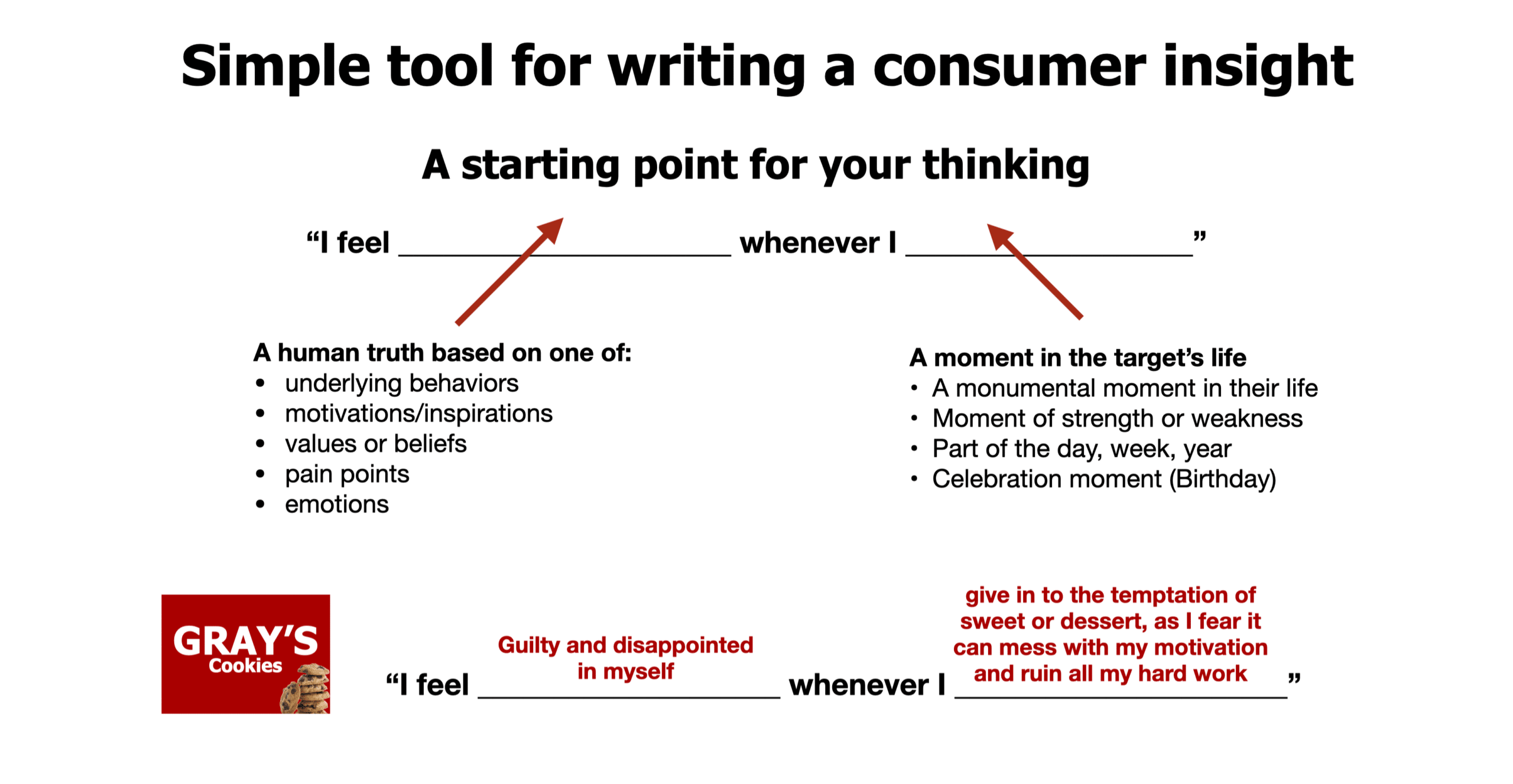
Research only matters once you turn it into a consumer insight. An insight puts you in your consumer’s shoes and speaks in their voice. Start every consumer insight with the word “I” so you are talking as the consumer, and put it in quotes to keep that voice alive.
A simple way to draft one is a fill-in-the-blank: “I feel ______ whenever I ______,” with a human truth in the first blank and a real moment from your consumer’s life in the second. The best insights feel so true that your consumer wonders how you climbed inside their head.
Competitors
H3: Using market research for competitor analysis
Understanding the competition gives you the insight to position against them. Secondary research, like industry reports and competitor analysis, tells you a lot, and primary research, like surveys and focus groups, tells you how consumers actually perceive each competitor. Use both to shape your positioning and messaging.
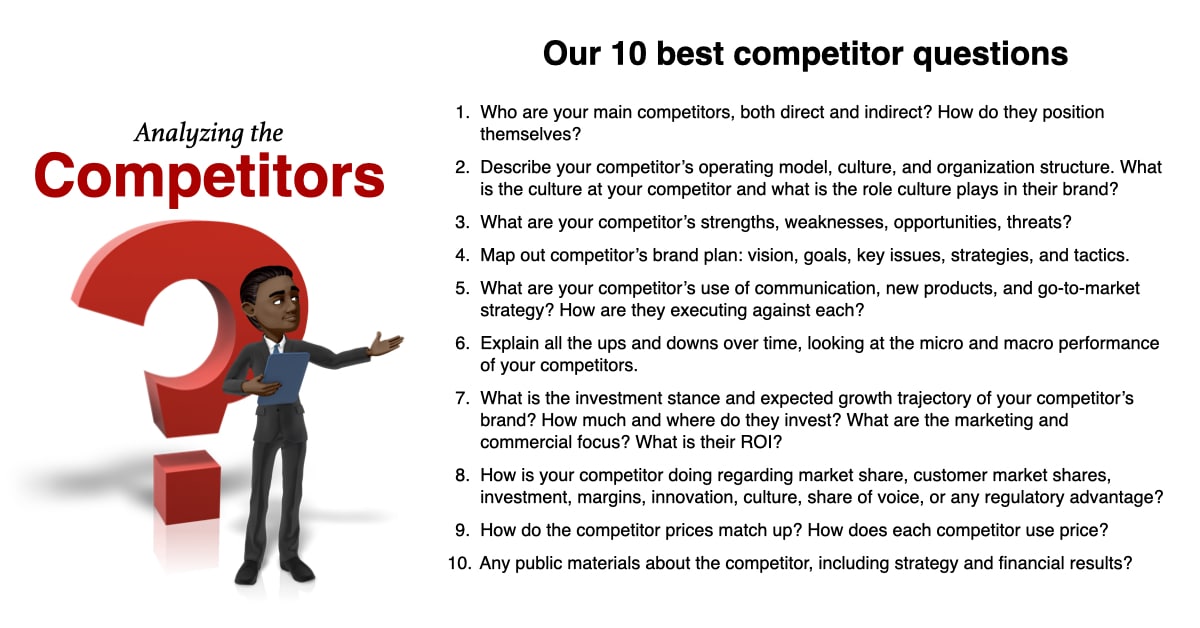
Market analysis looks at the overall market, its size, growth, and trends to identify key players and opportunities. Competitor analysis digs into a rival’s products, pricing, strategy, and audience to find their strengths, weaknesses, and the gaps you can own. Mystery shopping sends a trained researcher into a competitor’s store or site as a regular customer to read their products, pricing, service, and experience firsthand.
Advertising
Using Market Research to help assess and improve advertising.
Advertising is an essential aspect of brand strategy and advertising research can provide valuable insights into what messaging and media channels are most effective for reaching the target audience.
Pre-testing methods such as focus groups and surveys can be used to gather consumer feedback on advertising concepts and campaigns before they are launched. Post-testing methods such as surveys and data analysis can be used to evaluate the effectiveness of advertising campaigns after they have been launched.
beloved brands
The playbook for how to create a brand your consumers will love
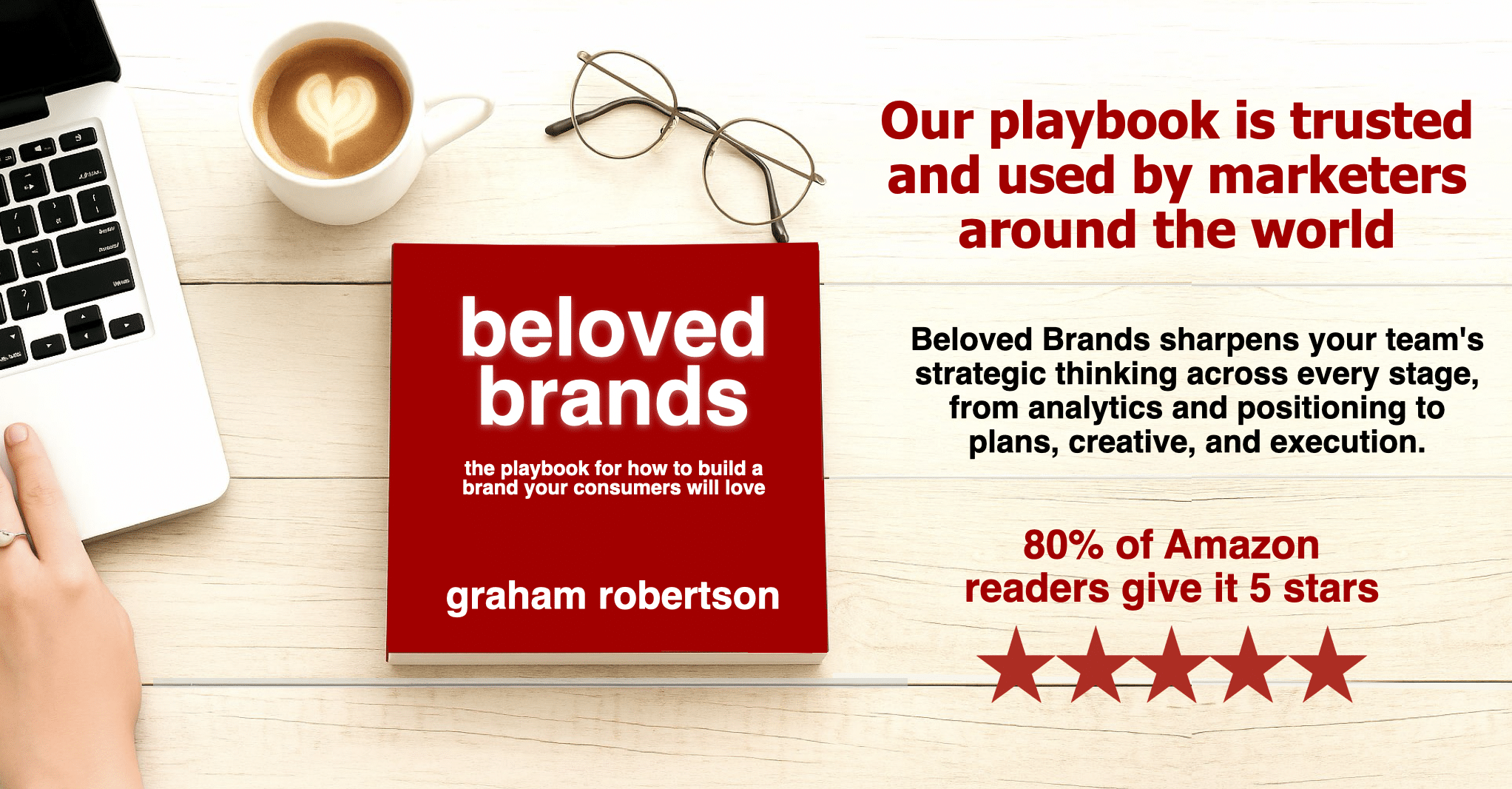
Covering every aspect of brand management, it is no wonder that our readers reach for Beloved Brands multiple times each week to guide them through the challenges of day-to-day brand management.
Get ready for a mind-bending journey as we take you on a deep dive into your brand strategy. We’ll challenge you with thought-provoking questions designed to shake up your thinking and help you see your brand in a whole new light. And our unique process for defining your brand positioning will leave you with fresh ideas and new possibilities for how to differentiate your brand.
But we won’t just leave you with ideas – we’ll show you how to turn them into action. Learn how to write a brand plan that everyone can follow, ensuring that all stakeholders are aligned and contributing to your brand’s success. We’ll walk you through the creative execution process, from writing an inspiring brief to making smart and breakthrough decisions.
And when it comes tao analyzing your brand’s performance, we’ve got you covered. Our innovative methods will help you dive deep and uncover insights you never knew existed, giving you the knowledge you need to make the best decisions for your brand’s future.
But don’t just take our word for it – our Amazon reviews speak for themselves.
With over 85% of our customers giving us a glowing five-star rating and an overall rating of 4.8 out of 5.0, we know we’re doing something right. And with numerous weeks as the #1 bestseller in brand management, you can trust that we have the experience and expertise to help you achieve success.
Ready to join the ranks of the Beloved Brands community? Order our book on Amazon, Rakuten Kobo, or Apple and start your journey towards brand success today.

New product innovation
How market research helps determine the success of new product innovation.
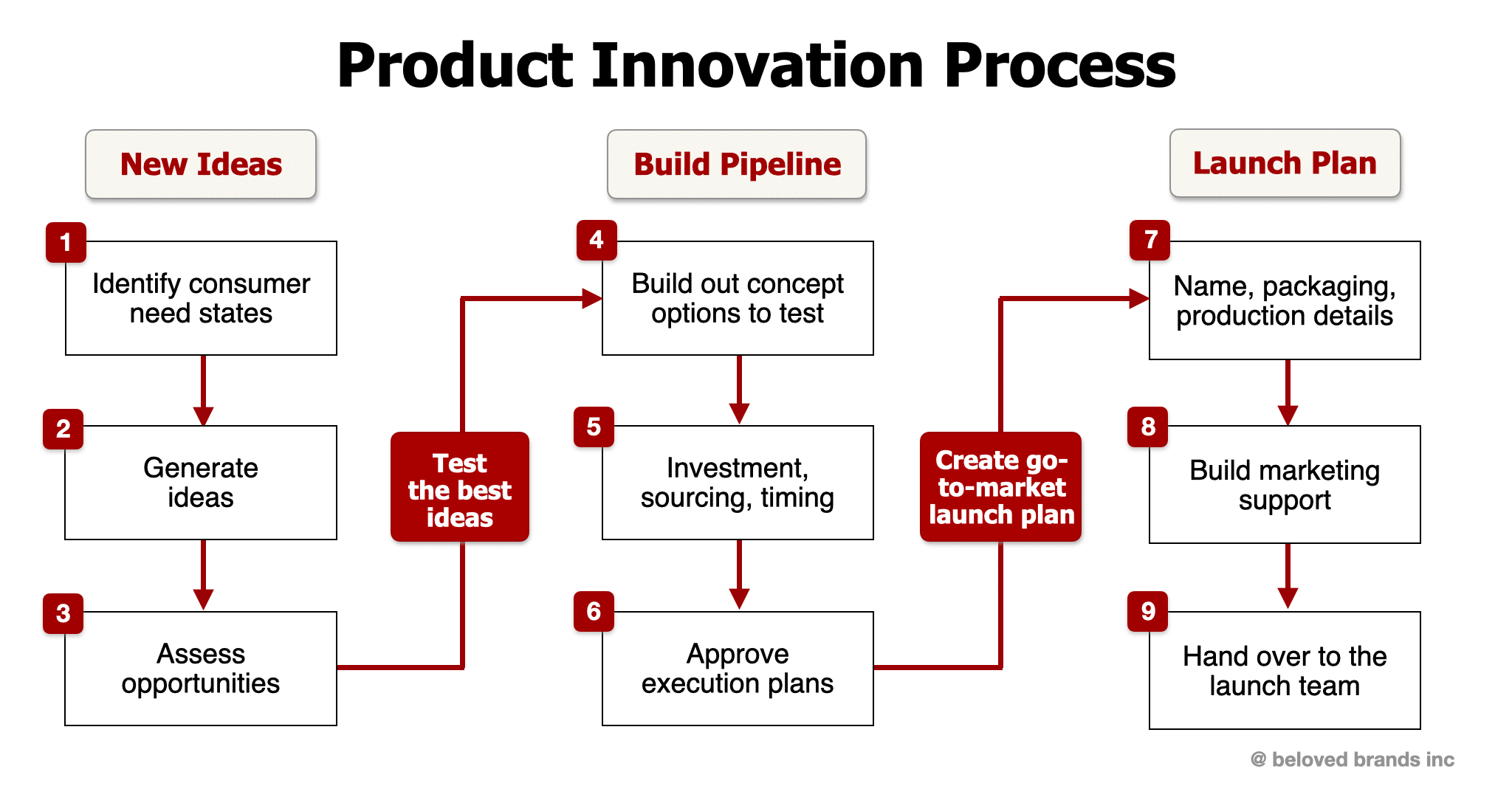
New product research tells you what consumers need before you build. Test concepts with surveys and focus groups, test prototypes in person or virtually, and test the finished product in a market test or controlled launch before you roll out fully.
The sequence is simple. Identify the target and their pain points, analyze the competition to find the gap your product fills, gather direct feedback through focus groups, surveys, and pilots, then run a pilot test to make final tweaks before launch. Each step lowers your risk and raises your odds.
Using our innovation checklist
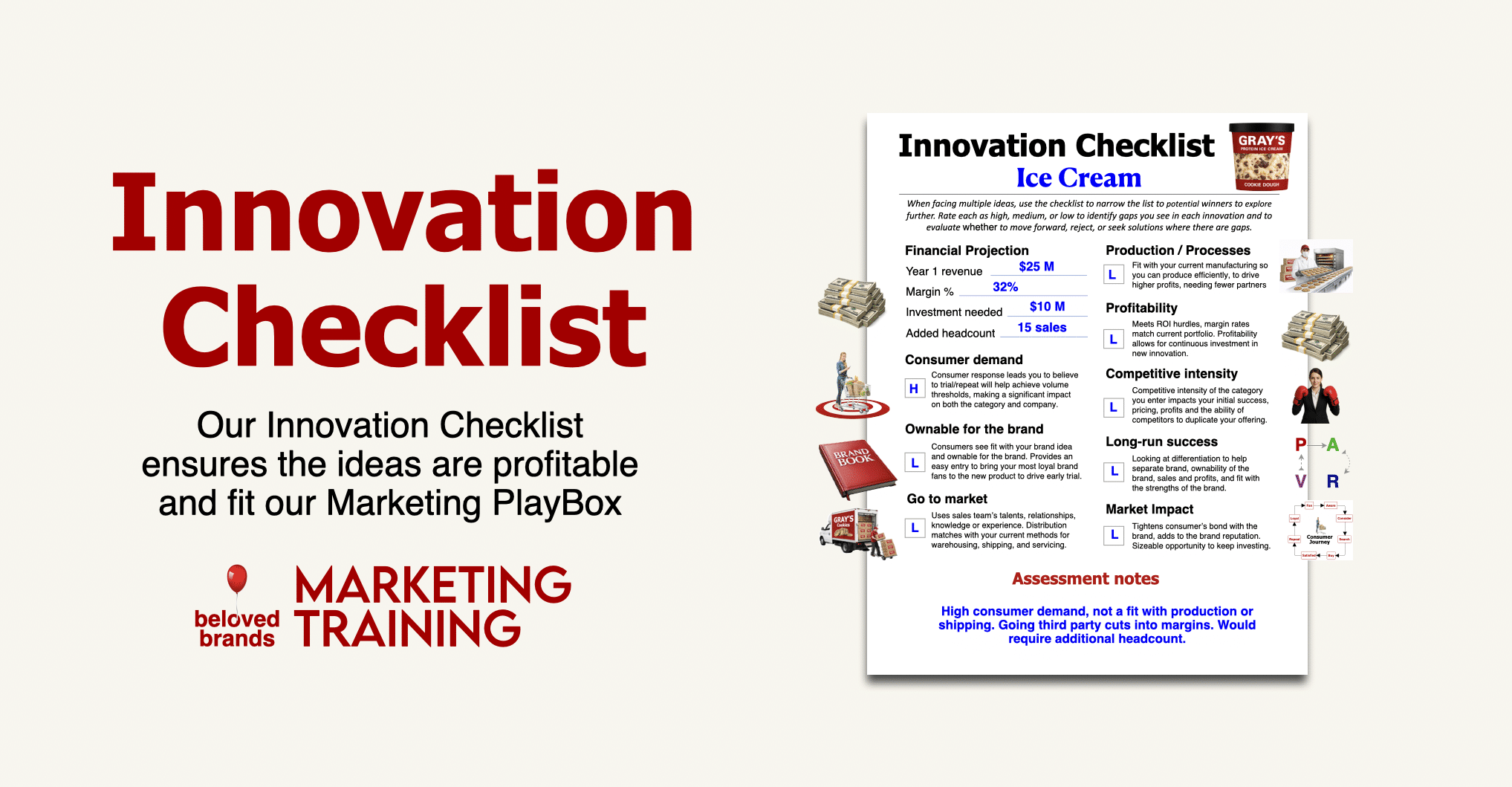
Our Innovation Checklist helps brand leaders compare ideas on an equal footing. First, assess the potential of each idea in terms of consumer demand and competitive intensity to see whether it meets your sales and profit thresholds. Then check its fit with the brand idea, and its fit with company strengths like manufacturing, sales, distribution, and servicing.
Purchase moment
Using market research to understand the purchase moment
In-store research reveals the real customer experience and sharpens your merchandising, placement, and layout. In-store observation captures how people select products, navigate, and decide. Mystery shopping captures service quality, staff product knowledge, and how well a store follows its own policies.
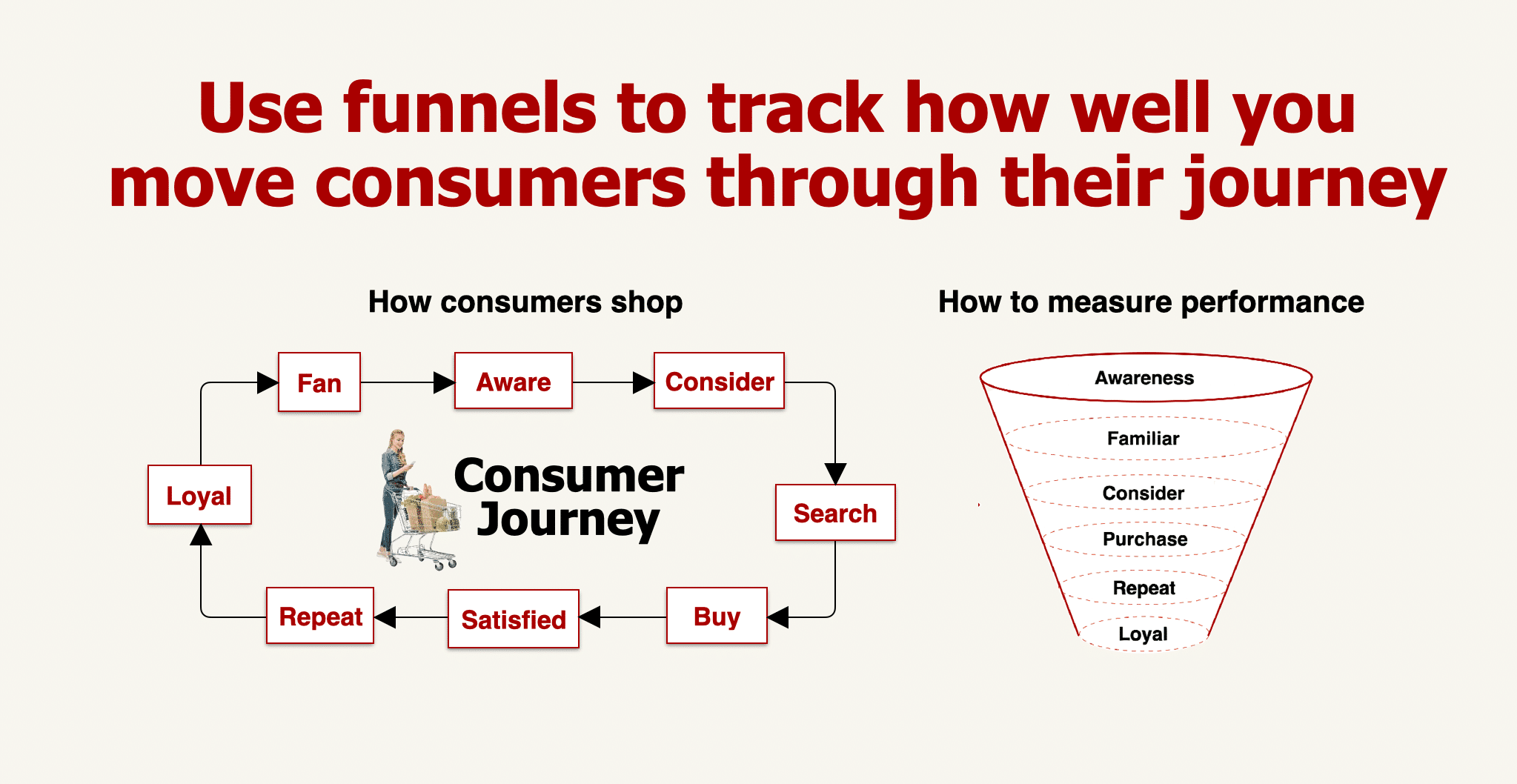
A classic marketing funnel measures how well you move consumers through awareness, familiarity, consideration, purchase, repeat, and loyalty. It tells you where your brand is now and, read with intelligence, hints at where you can go next.
Do your own market research for free
When the budget is tight, you can still run useful market research yourself. Here are five free tools I recommend.
SurveyMonkey is the fastest way to build and share a survey online when you need data quickly.
Qualtrics lets you build more involved online research studies and send them to people who opt in.
Google Analytics shows where your website traffic comes from and which pages pull the most attention. I also lean on Neil Patel’s Ubersuggest for site research, which has a free version, and use it several times a week on my own site.
Hotjar lets you watch how users actually behave on your site, map their journey, and spot the patterns behind their needs.
Buzzsumo surfaces the top-performing content in any industry, shows what people say about your competitors, and gives you real questions to answer in your own content.
Whatever tools you use, run a deep-dive business review on your brand at least once a year. There is no value in having data you never dig into, and the best brand leaders tell strategic stories through their analytics. Our 64 analytical questions are a good place to start.
Frequently asked questions about market research
What is market research?
Market research is the process of gathering and analyzing information about your consumers, competitors, and category to make smarter brand decisions. It spans everything from surveys and focus groups to in-store observation and advertising testing.
What is the difference between market research and consumer insights?
Market research is the data you collect. A consumer insight is the meaning you draw from it, expressed in the consumer’s own voice. Research tells you what is happening, and an insight tells you the human truth behind it that you can act on.
What are the main types of market research?
The two big buckets are quantitative research, like surveys that give you hard numbers, and qualitative research, like interviews and focus groups that explain the why. Beyond that, the type depends on the decision: targeting, competitor analysis, advertising testing, concept testing, or in-store research.
How can I do market research for free?
You can get a long way with free tools like SurveyMonkey, Qualtrics, Google Analytics, Hotjar, and Buzzsumo, plus a yearly deep-dive review of the data you already have. Most brands are sitting on more insight than they ever use.
Why market research matters for the brand manager
The brand managers who win are the ones who know which research to reach for and how to turn it into action. Consumer research reveals who your target is and what drives them. Competitor research shows you where to position. Advertising research protects your spend. Innovation and in-store research raise your odds at the two moments that matter most: launch and purchase. Use them together, and you make better decisions than anyone guessing from the gut.