
Most CMOs sense their team is underperforming before they can articulate why. The work ships. The meetings happen. The decks look polished. But the business isn’t moving — and the team can’t explain why.
Here’s the pattern. After 25+ years running brands and training marketing teams across 30+ countries, the same five gaps show up over and over. They’re not random. They map directly to the five capabilities every high-performance marketing team needs: brand analytics, strategic thinking, brand positioning, brand planning, and marketing execution.
If you suspect your team is underperforming, the question isn’t whether they’re working hard. They probably are. The question is whether they’re working on the right things — and whether they have the skills to do those things well.
Here’s how to diagnose where the gap actually is.

Table of Contents - 5 Signs Your Marketing Team Is Underperforming

Sign #1: Your Team Can't Turn Data Into Decisions
You can spot this team in a business review. They read the deck. Or, they walk through the numbers. They show you charts. And at the end, you still don’t know what they actually think.
High-performance teams use data to make decisions. Underperforming teams use data to describe what happened. They pull dashboards, report on KPIs, and tell you sales were up 3% in Q2. But they can’t tell you why, what it means for next quarter, or what they’re going to do about it.
What this looks like in practice
- Business reviews that are 40 slides of data and 2 slides of “what’s next.”
- Lots of surface-level opinions that can’t be proven.
- Decisions are delayed because “we need to look into it more.”
- Junior analysts present findings while the brand manager nods.
- Reports that summarize, not synthesize.
- Over-reliance on agencies or research firms to interpret the data.
- Answers with “let me get back to you” and never follows up.
What to do about it
Strong analytics isn’t about pulling more data. It’s about asking better questions. What’s the one thing this data is telling us we need to act on? What would we recommend if we had to decide today? Marketers who can synthesize data into decisions become indispensable. Marketers who only describe it become replaceable.

Sign #2: Your Team Jumps to Tactics Before Defining the Problem
You ask the team how they’ll address a decline in penetration. They come back with a campaign idea. Or a promotion. Or a packaging refresh. They don’t come back with the question: Is the issue penetration, or is it that the consumers we’re getting don’t come back?
High-performance teams define the problem before they design the solution. Underperforming teams design solutions and hope the problem fits.
What this looks like in practice
- Every conversation jumps to “what should we do” without asking “what’s the issue.”
- Brand plans that read like activity calendars rather than strategies.
- The team confuses tactics with strategy (“our strategy is to launch X in Q3”).
- Calendars get filled before priorities get set.
- The same problems show up year after year because nobody framed them clearly the first time.
What to do about it
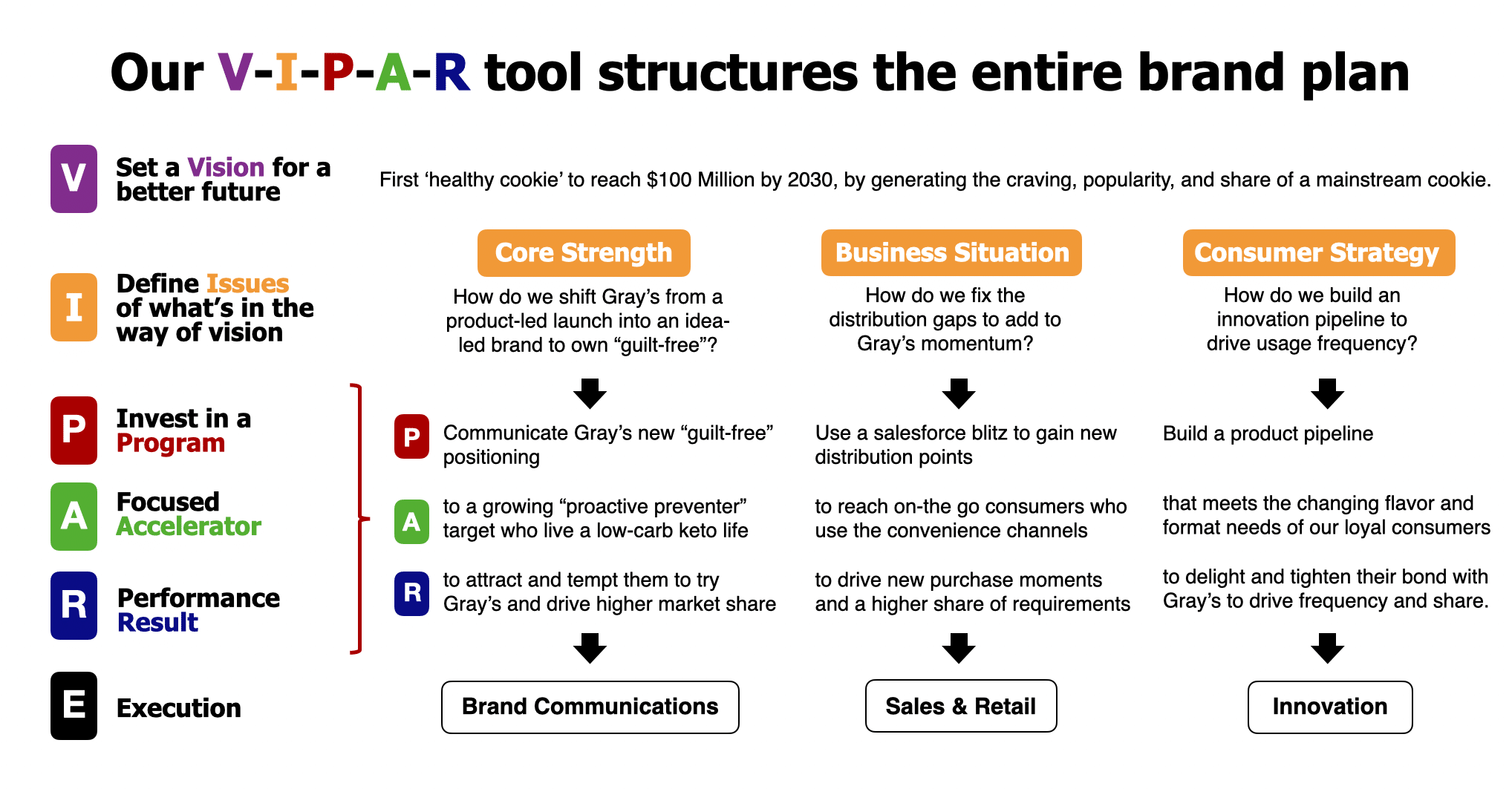
Strategic thinking isn’t innate — it’s a discipline. The best marketers learn to define key issues as questions rather than statements. They build strategy statements that link directly to business outcomes. And they cascade that thinking through the team so every decision rolls up to a clear logic.
Sign #3: Your Team Is Trying to Be Everything to Everyone
Ask the team to describe who the brand is for. You’ll get a demographic. “Women 25–54 who shop at modern trade.” That’s not a target. That’s a census.
High-performance teams know exactly who their brand is for — and, just as importantly, who it isn’t. Underperforming teams chase everyone, dilute the message, and end up resonating with no one.
What this looks like in practice
- Targets are defined as broad demographics with no real insight underneath.
- Brand positioning that sounds like every other competitor.
- Communications that try to say too much in one breath.
- The brand idea is unclear or changes depending on who’s presenting.
- Sales, R&D, and the agency all describe the brand differently.
What to do about it
Brand Positioning is the foundation everything else sits on — and most teams haven’t done the work to land it. The discipline is identifying a specific consumer target, finding a meaningful insight, building functional and emotional benefits that motivate, and writing a positioning statement clear enough for the whole team to repeat from memory. When positioning is locked, Sales, R&D, and the agency follow. When it isn’t, they each invent their own.

Sign #4: Your Brand Plan Is a Wish List, Not a Strategy
The team’s brand plan has 15 priorities. Every priority has 3 supporting initiatives. Every initiative has a budget line. It looks comprehensive. It is comprehensive. And it’s almost certainly wrong.
High-performance teams write brand plans that focus limited resources on the few things that will actually move the business. Underperforming teams write brand plans that try to do everything — and end up doing nothing well.
What this looks like in practice
- Brand plans with too many priorities and no real prioritization
- Strategy statements that sound nice but don’t link to a number
- Plans that can’t be summarized on one page
- Mid-year reviews that reveal half the plan never happened — and nobody noticed
- The CFO asks why the marketing budget is going up and the team struggles to answer
What to do about it
A real brand plan has a clear vision, focuses on three to five key issues, and ties every strategy to a dollar. Marketers need to learn to write plans the CFO doesn’t roll their eyes at — plans that prioritize ruthlessly, link to financials, and align the entire organization around what matters.

Sign #5: Your Execution Doesn't Match Your Strategy
You agreed on the strategy with the team. You approved the positioning. The brief went to the agency. Six weeks later, the work comes back — and it doesn’t deliver what the brief promised.
High-performance teams know how to brief, evaluate, and lead creative work that delivers the strategy. Underperforming teams hand off the brief and hope.
What this looks like in practice
- Creative briefs that are too long, too vague, or both.
- The team can’t articulate what makes great work different from okay work.
- Decisions made on personal taste, not strategic fit.
- Executions that go into the market despite being off-strategy.
- Different campaigns that don’t ladder up to the same brand idea.
What to do about it
Marketing execution is where most strategy dies. Strong teams write briefs that inspire creative people to do their best work. They evaluate creative against strategic criteria, not gut feel. They lead the execution rather than delegate it. And they make sure every output — across paid, owned, earned, and shared — connects back to the same brand idea.
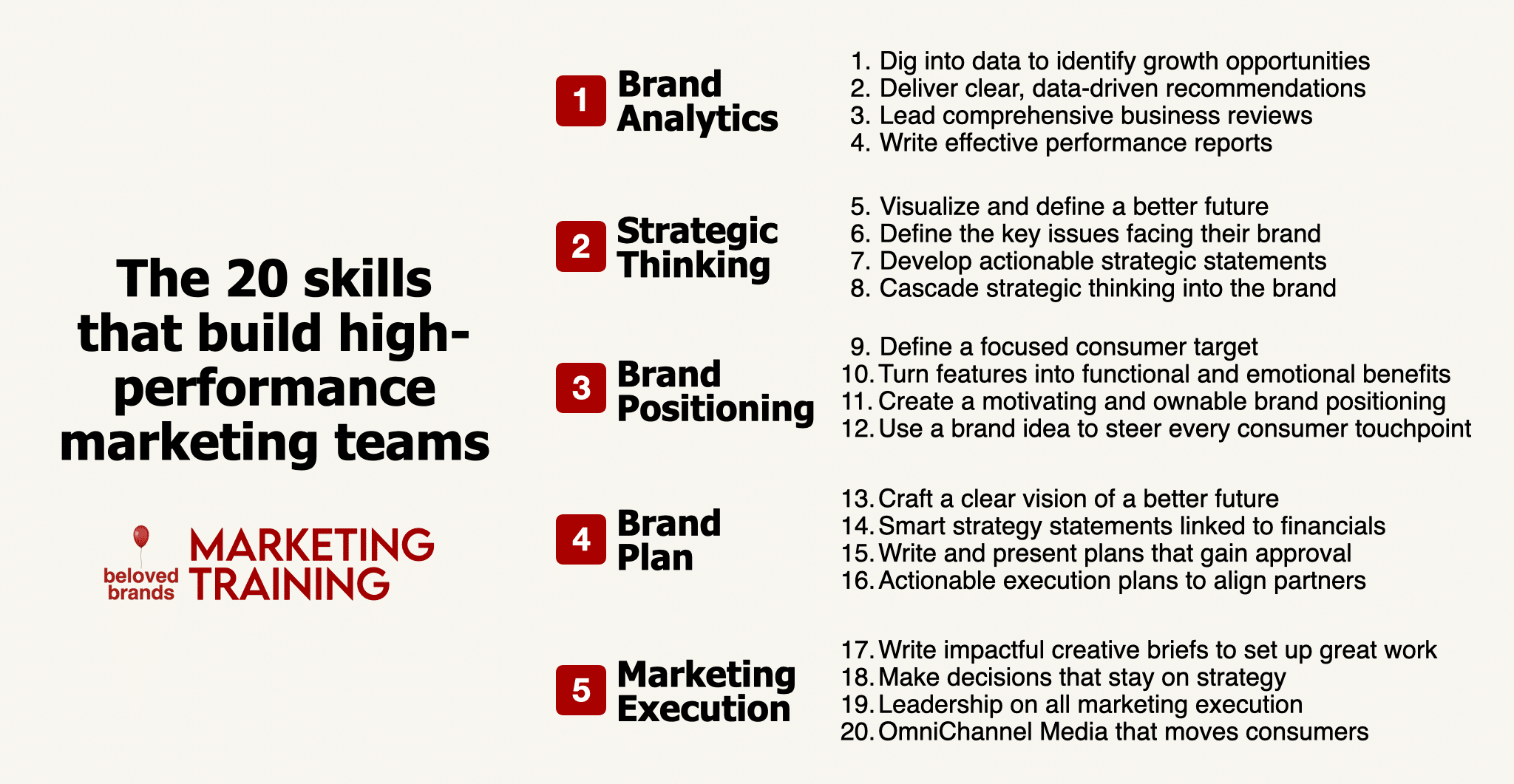
How to Build a High-Performance Marketing Team
If you recognized your team in two or more of these signs, you’re not alone. Most marketing teams have gaps in at least two of the five capability areas. The problem isn’t talent. It’s training.
Most marketers are never properly trained.
A recent LinkedIn study found that only 32% of marketers feel they’ve had the development they need to do their job well.
The other 68% are figuring it out as they go — picking up bad habits from whoever last briefed them, copying what they saw at their previous company, and hoping nobody asks them to defend their decisions.
The fix isn’t more pressure on the team. It’s giving them the structured skills that turn capable people into a high-performance marketing team.
The best brand managers I’ve ever worked with didn’t get there by accident. They got there because someone — a boss, a mentor, a structured training program — taught them to think strategically, make sound decisions, and execute with discipline.
Your team can get there too. The question is whether you’re going to invest in the capability or keep hoping it shows up on its own.