Most brands settle for being liked. The few that win figure out how to build a beloved brand, the kind of brand consumers feel something for and keep buying even when a cheaper option sits right beside it on the shelf. Getting there means learning to build brand loyalty on purpose, shaping every step of the consumer journey, and moving your brand up the Brand Love Curve until consumers refuse to live without it.
Beloved brands are the most profitable brands in their category. A loyal fan pays a little more, stays a little longer, and brings their friends along. That premium shows up in the P&L every quarter. The catch is that consumer love never happens by accident. It gets built on purpose, through choices a marketer makes every day.
After 20 years running brands and another decade training marketing teams across more than 30 countries, I keep coming back to the same five elements. They separate the brands people love from the ones they merely tolerate.
Start With the Brand Love Curve
Before the five elements, you need a way to see where your brand sits today. I use the Brand Love Curve, which tracks a brand through four stages: Indifferent, Like It, Love It, and Beloved. Most brands get stuck at Like It, where consumers see them as one acceptable choice among many. There’s just no passion. Without that emotional connection and future bond, you’re leaving profit on the table.
Brand love is not fluff. It’s about making more money.
The job of a marketer is to move the brand up that curve, one consumer relationship at a time. Every element below is a lever for closing the gap between a brand people accept and a brand people refuse to live without.
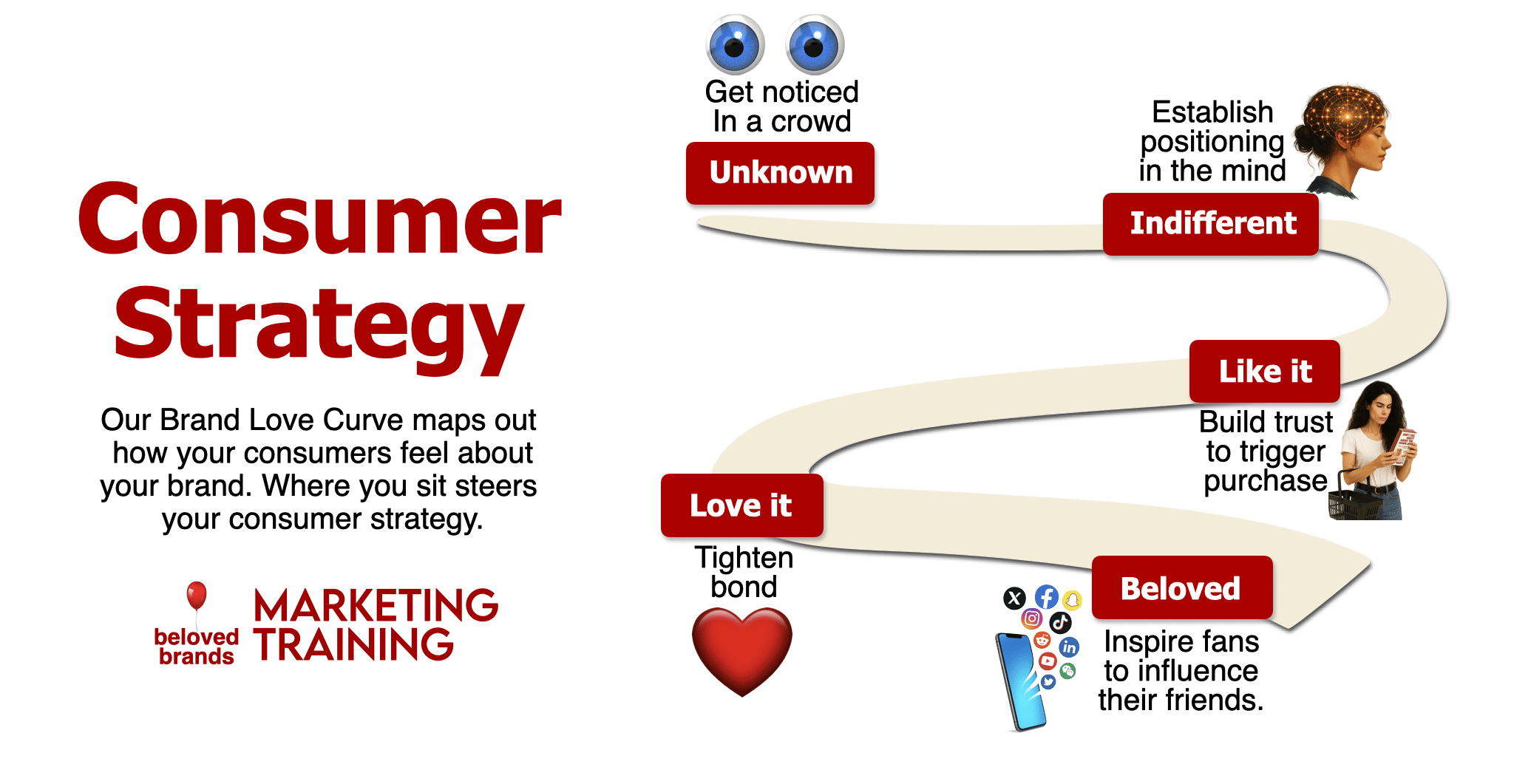
I created the brand love curve to show the differences in how consumers feel about a brand as they move through five stages. It defines consumers’ feelings as unknown, indifferent, like it, love it, and onto the beloved brand status.
For unknown brands, the strategic focus should be to stand out so consumers will notice the brand within a crowded brand world. For indifferent brands, the strategy must establish the brand in the consumer’s mind so they can see a clear point of difference.
At the like it stage, the strategy separates the brand from the pack, creating happy experiences that build a trusted following. For brands at the love it stage, the focus shifts to tugging at heartstrings to tighten the bond with the most loyal brand fans. At the beloved brand stage, the strategic challenge is creating outspoken, loyal brand fans willing to whisper to their friends on the brand’s behalf.
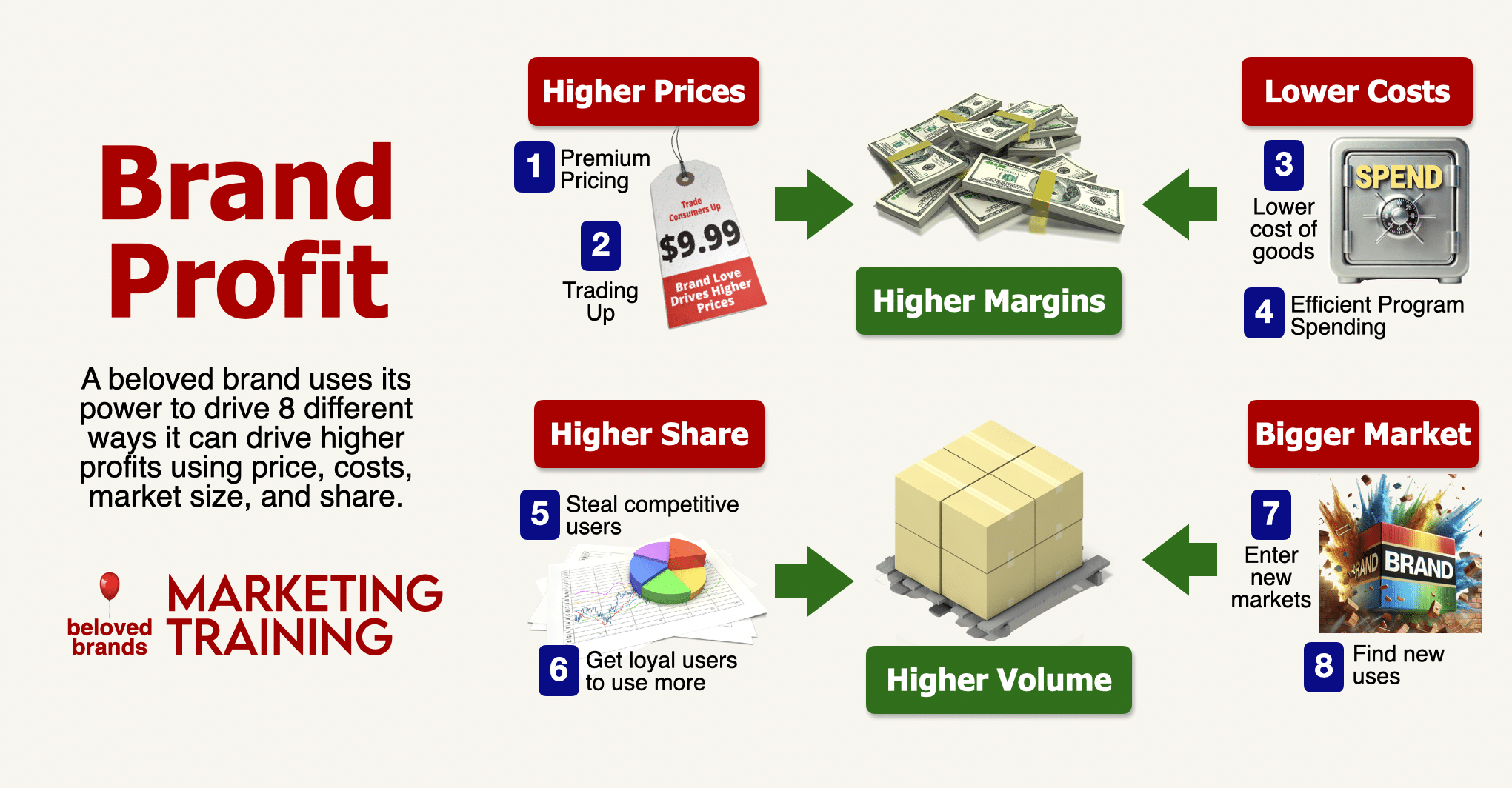
Beloved brands can use higher prices and lower costs to drive higher margins
Most beloved brands can use loyal brand lovers to command a premium price, creating a relatively inelastic price. During negotiations, the weakened channel customers cave in to give the brand richer margins. Satisfied and loyal consumers will trade up to the next best model. A well-run, beloved brand can use its high volume to drive efficiency, helping to achieve a lower cost of goods sold.
Not only can beloved brands use their growth to drive economies of scale, but suppliers will also cut their costs to be on the beloved brand’s roster. The beloved brand will operate with much more efficient marketing spend, using its power with the media to generate lower rates with plenty of free media.
The higher sales volumes make the beloved brand’s spending ratios much more efficient. The consumer response to the marketing execution is much more efficient, giving the brand a higher return on investment.
Beloved brands use higher shares of a bigger market to drive higher volume
The beloved brands use their momentum to reach a tipping point of support to drive higher market shares. They can get loyal users to use more as consumers build the beloved brand into life’s routines and daily rituals.
It is easier for beloved brands to enter new categories, knowing their loyal consumers will follow. Finally, there are more opportunities for the beloved brand to find more uses to increase the number of ways the beloved brand can fit into the consumer’s life.
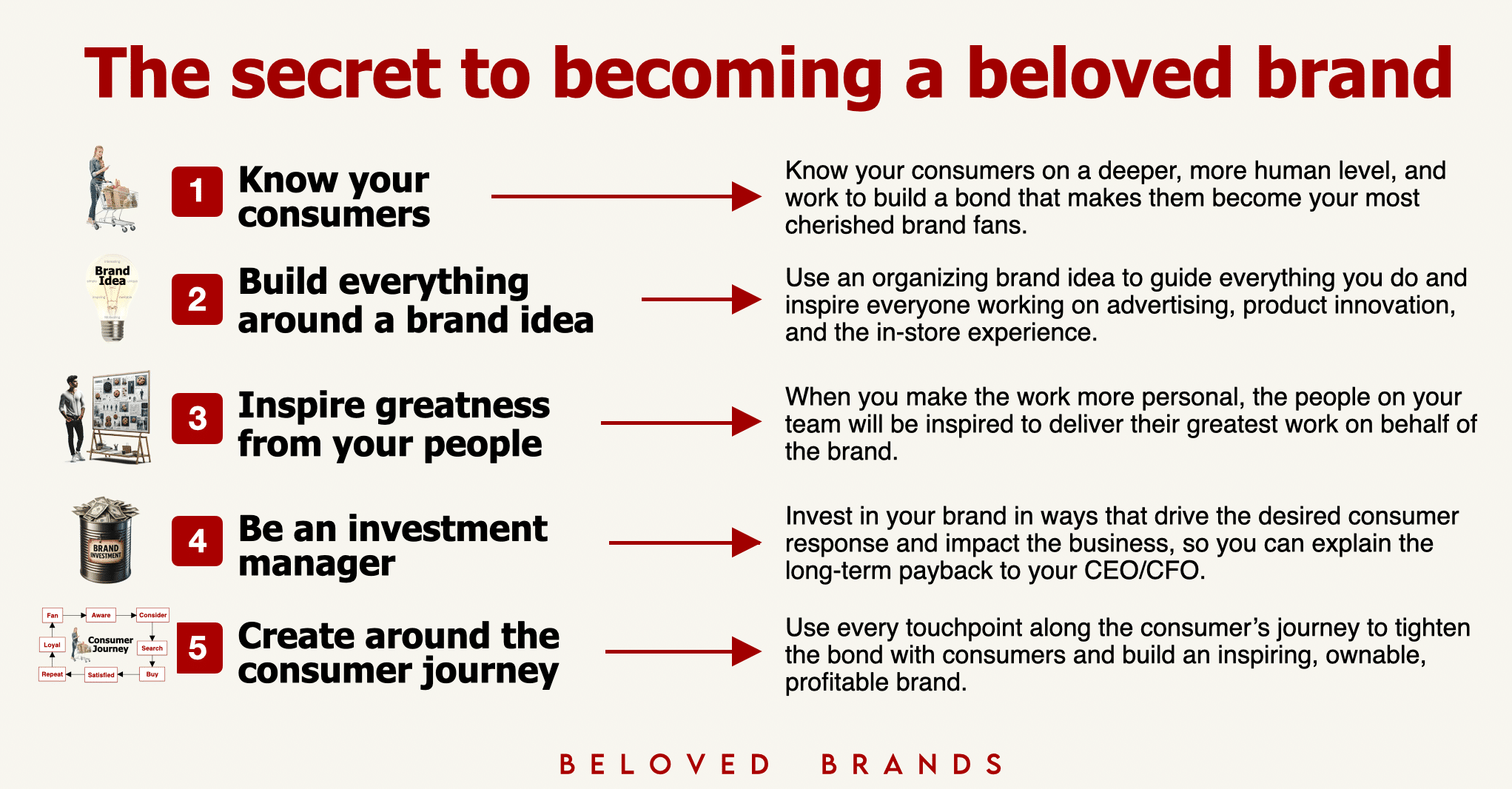
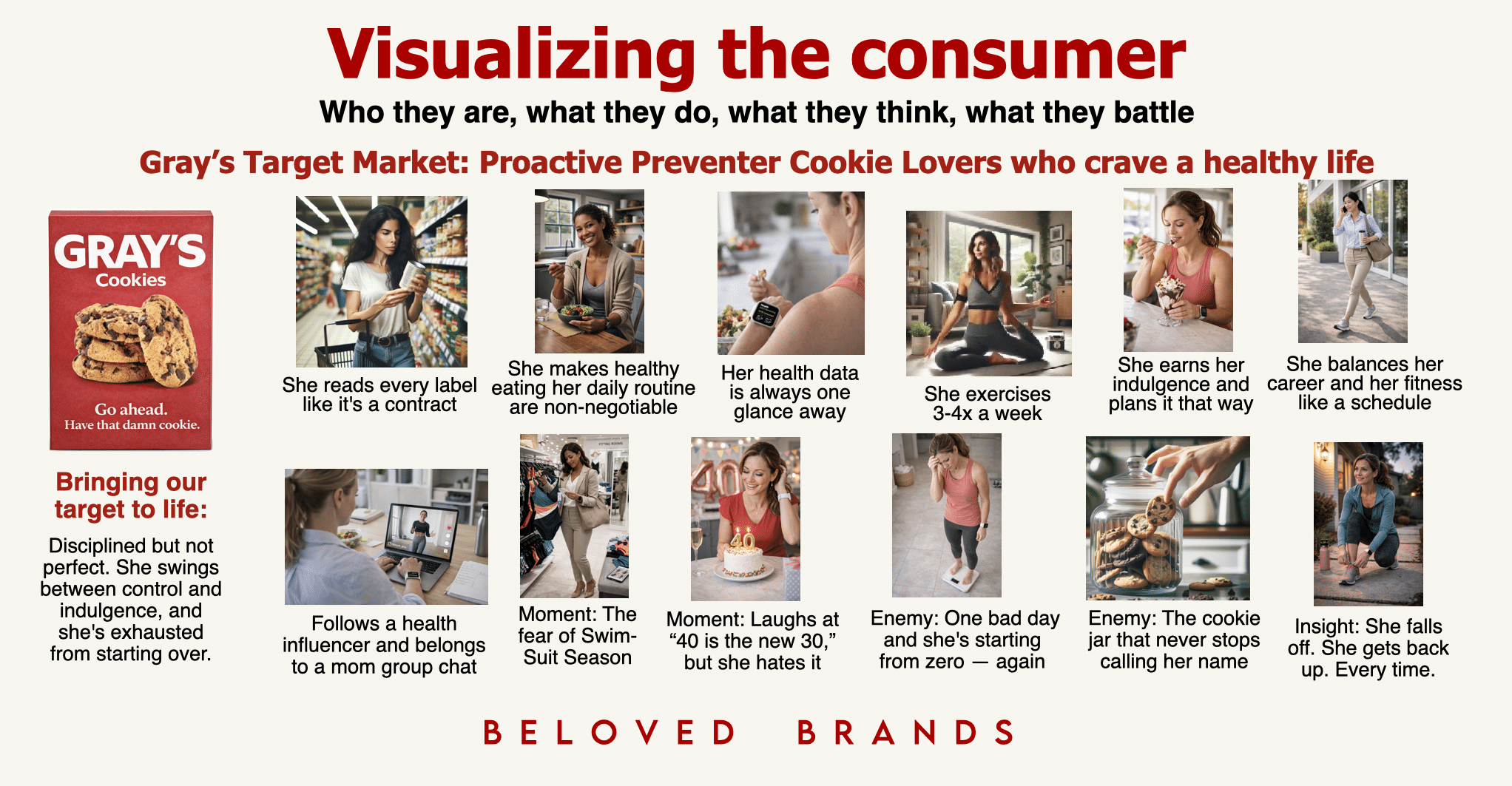
1. Know Your Consumer on a Human Level
You cannot build a bond with someone you do not understand. The first step in how to build a beloved brand is to know your consumer on a deeper, more human level than your competitors bother to reach.
That means going past age, income, and the usual demographic boxes. It means understanding what your consumer wants, what they fear, and the moment in their day when your brand can solve something real for them. When you build a consumer profile that captures a need this clearly, your positioning gets sharper and your advertising gets easier, because you stop guessing at what might land.
Take Gray’s Cookies, the teaching brand I use in my workshops. The win never came from talking about flour and sugar. It came from understanding the small ritual of a parent handing a cookie to a child after school, and building the brand around that feeling. Know the human truth, and the bond starts to form.
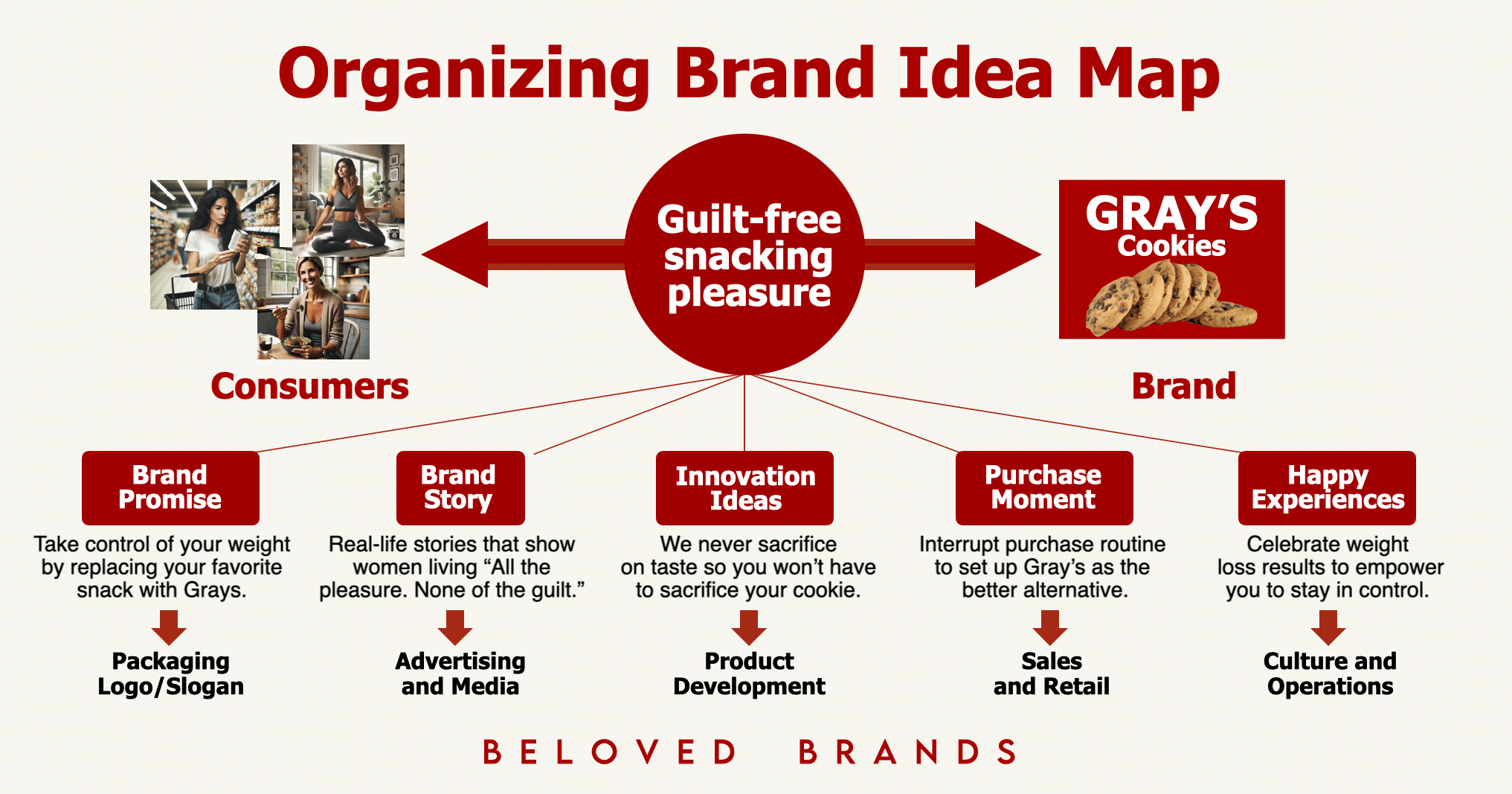
2. Build Everything Around One Brand Idea
A beloved brand says one thing and says it everywhere. That one thing is your brand idea, the organizing thought that guides every decision and inspires everyone who works on the brand.
The brand idea sits at the center, and your advertising, your product innovation, and your in-store experience all ladder back to it. When those pieces point in the same direction year after year, the brand compounds. Consumers start to know what you stand for before you say a word. When the pieces drift apart, the brand blurs, and a blurry brand never earns love.
This is the discipline most teams underrate. A clear brand idea is what lets a small team punch above its weight, because every dollar reinforces the same story rather than being scattered across competing messages. Pick the idea, then protect it.
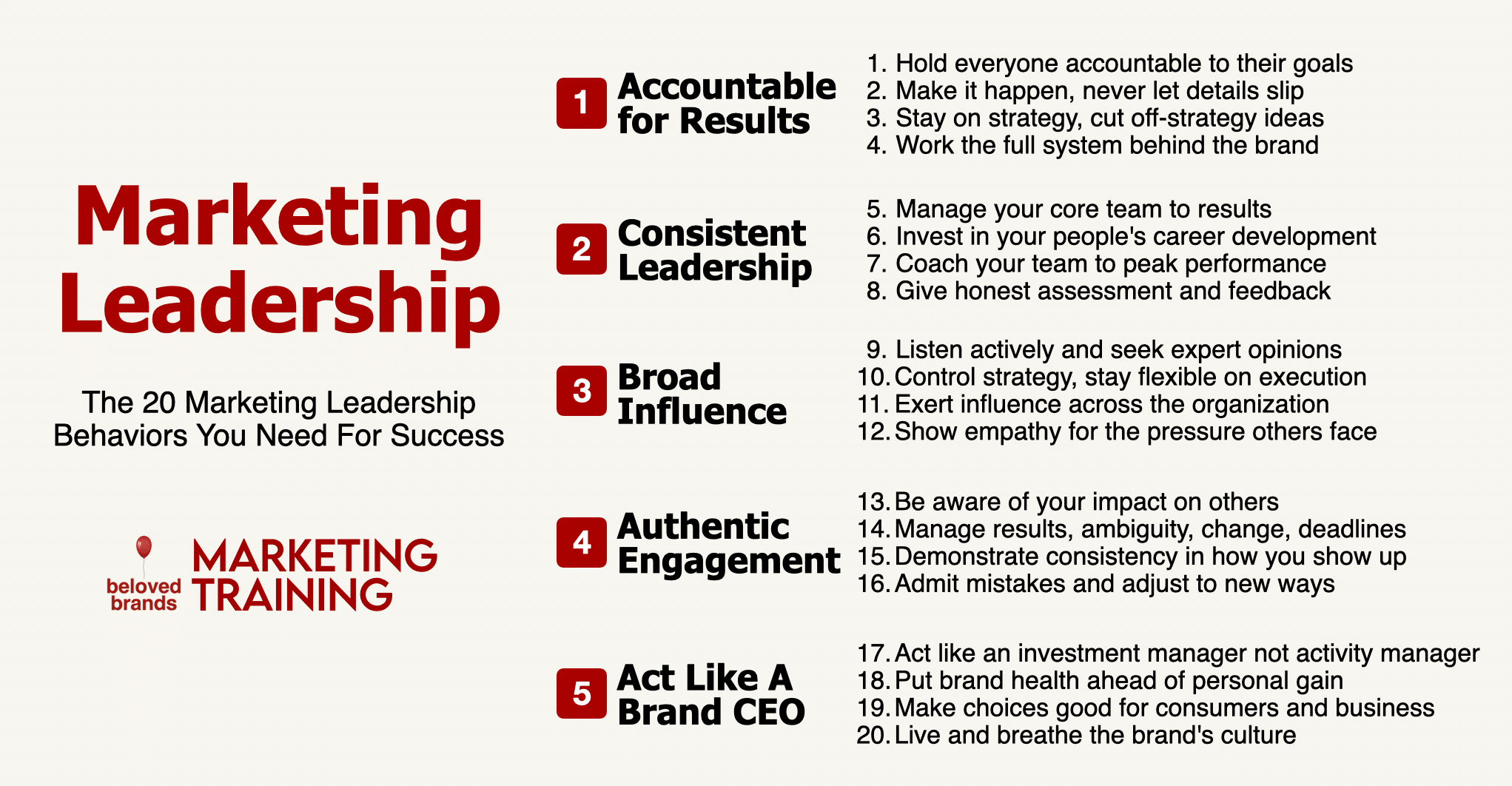
3. Inspire Greatness From Your People
Consumers can feel the difference between a team that cares and a team that clocks out. Your own people are part of how you build brand loyalty, even though they never appear in the research.
When the work feels personal, people pour their best into it, and that energy reaches the consumer through better advertising, smarter innovation, and a sharper experience. When a team settles for OK, that settles into the work too, and consumers feel the flatness just as fast. Passion is contagious, and so is indifference.
Leaders set the tone here. Make the work matter, give people room to do their best thinking, and connect their day to the consumer they serve. A brand culture built on pride is one of the quietest advantages a beloved brand has, and one of the hardest for a competitor to copy.

4. Be an Investment Manager for Your Brand
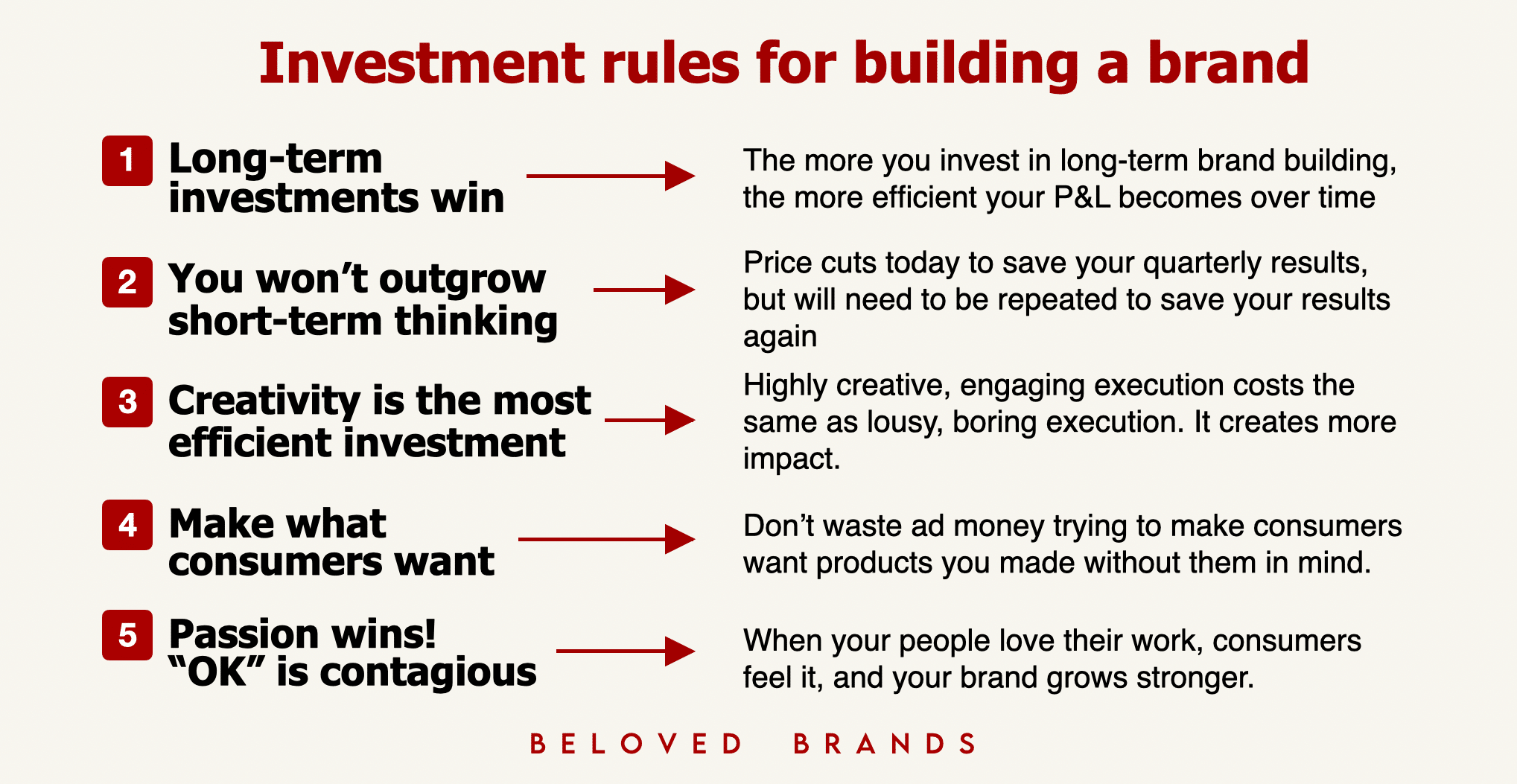
Marketers who want a seat at the table have to think like investment managers. Every dollar you put behind the brand is an investment, and it should drive a consumer response you can connect back to the business.
That shift in mindset changes how you spend. You stop chasing activity and start chasing payback. You learn which investments build the brand for the long term and which ones only rent a short-term bump. Most important, you can sit across from your CEO or CFO and explain the return, in their language, with the numbers behind it.
This is where a lot of brand love dies quietly. A marketer who cannot tie spending to results loses the budget that builds the brand, and the brand slides back down the love curve. Protect the investment by proving it works.
5. Create Around the Consumer Journey
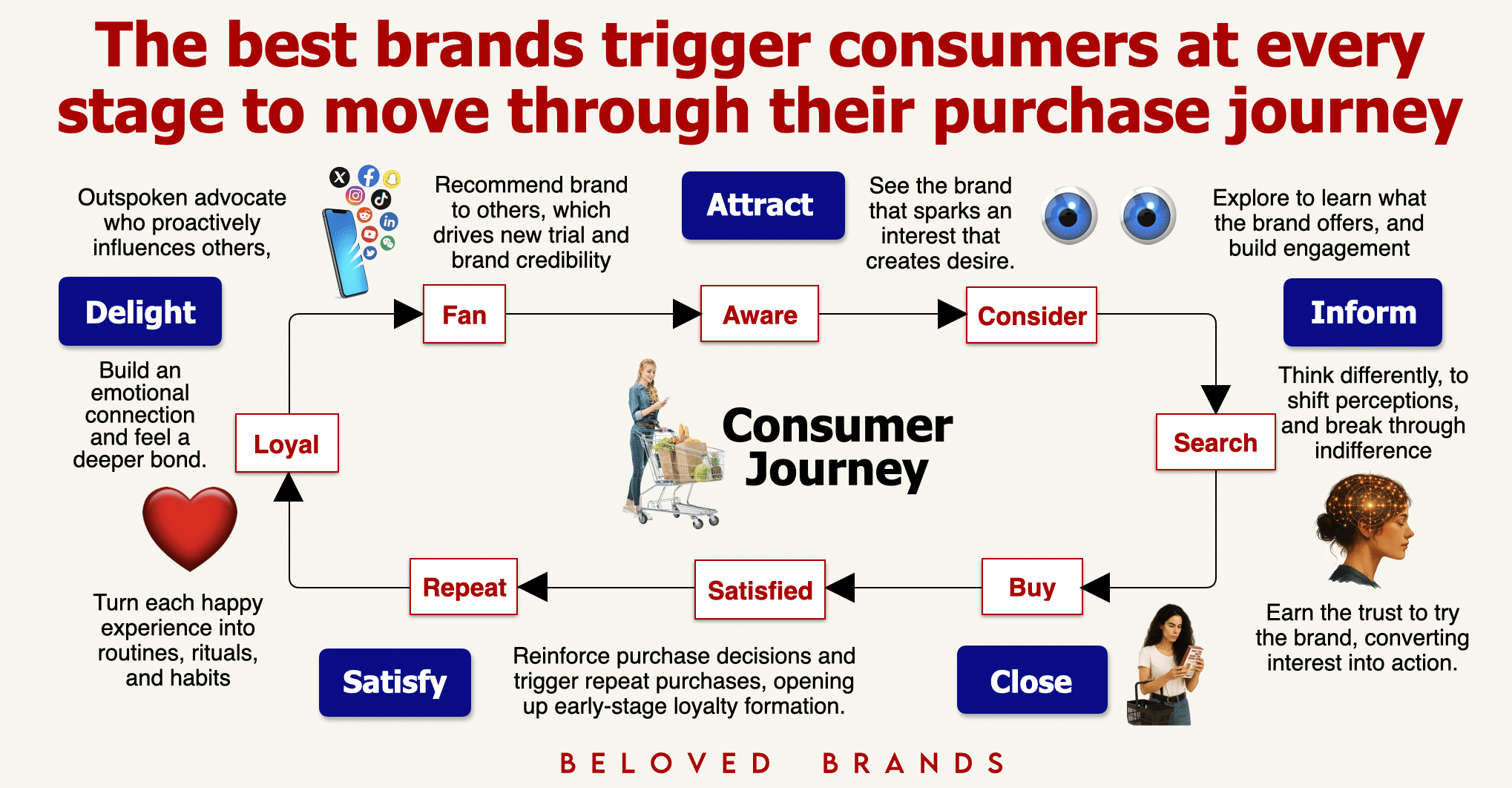
Love is built across a relationship, not in a single ad. The last element in how to build a beloved brand is to map and shape the entire consumer journey, from the first moment of awareness through search, purchase, use, and on toward becoming a loyal fan.
Every touchpoint along that journey either tightens the bond or loosens it. A confusing website loosens it. A delivery that arrives early tightens it. A support call that solves the problem in one try tightens it more. When you design each moment to reinforce the brand idea, the journey itself becomes the thing consumers fall for.
Walk the journey as your consumer experiences it, find the moments that matter most, and put your best thinking there. That is how a buyer turns into a fan, and a fan turns into the kind of advocate that grows a beloved brand for you.
Bringing the Five Elements Together
These five elements work as a system. Know your consumer, and the brand idea writes itself. Land the brand idea, and your people have something worth rallying behind. Inspire your people, and the journey gets better at every touchpoint. Manage the investment, and you earn the budget to keep all of it going.
Building a beloved brand is the most profitable thing a marketer can do, and it is fully within your control. Start where your brand is weakest on the love curve, pick the element that will move it most, and get to work.

Frequently Asked Questions
What is a beloved brand?
A beloved brand is one that consumers feel a genuine emotional connection to, choosing it even when cheaper alternatives are available. These brands sit at the top of the Brand Love Curve, where loyalty turns into advocacy. They are also the most profitable brands in their category, because loyal fans pay more and stay longer.
How do you build a beloved brand?
You build a beloved brand through five connected elements: knowing your consumer on a human level, organizing everything around one brand idea, inspiring greatness from your people, managing your spending like an investment manager, and shaping the full consumer journey. Each element builds the bond between the brand and the consumer. Worked together as a system, they move a brand up the love curve over time.
Why are beloved brands more profitable?
Beloved brands earn loyalty that protects pricing and reduces the need for constant discounting. A loyal fan buys more often, stays with the brand longer, and recommends it to others, which lowers the cost of winning new customers. That combination of premium price and durable demand shows up directly in stronger margins.
What is the Brand Love Curve?
The Brand Love Curve is a model that tracks a brand through four stages of consumer affection: Indifferent, Like It, Love It, and Beloved. It gives marketers a clear way to see where their brand stands and how much room there is to grow. The goal is to move the brand steadily up the curve through stronger consumer bonds.