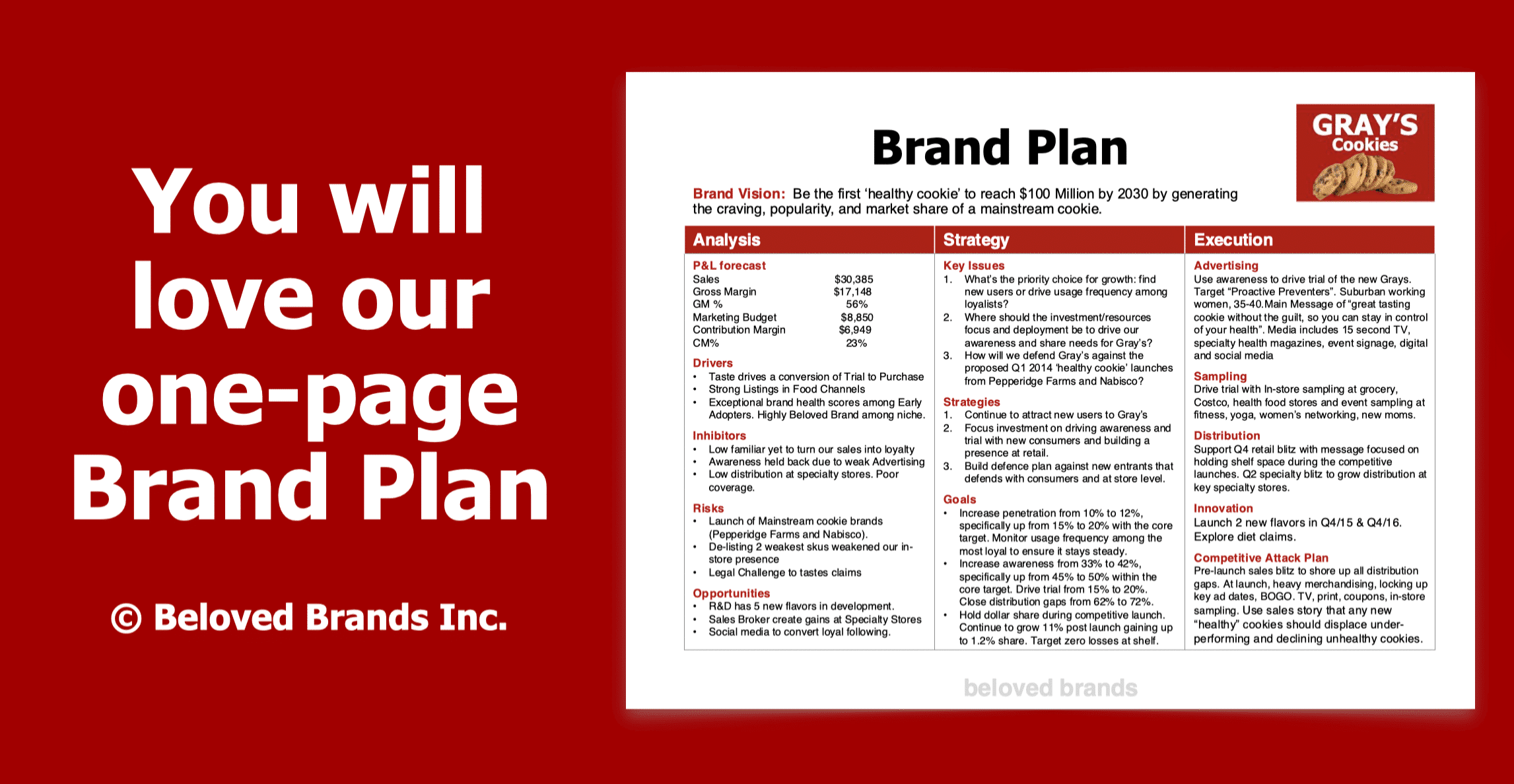
A one-page brand plan keeps your entire team — marketing, sales, finance, product, and agencies — aligned around a single, clear strategy. Unlike a 50-slide deck that no one revisits, this living document guides daily decisions and earns leadership trust at a glance.
In this article, we share real examples across consumer, B2B, healthcare, and retail — and show you exactly how to use our one-page brand plan template to build your own.
What's Inside the Brand Plan Template
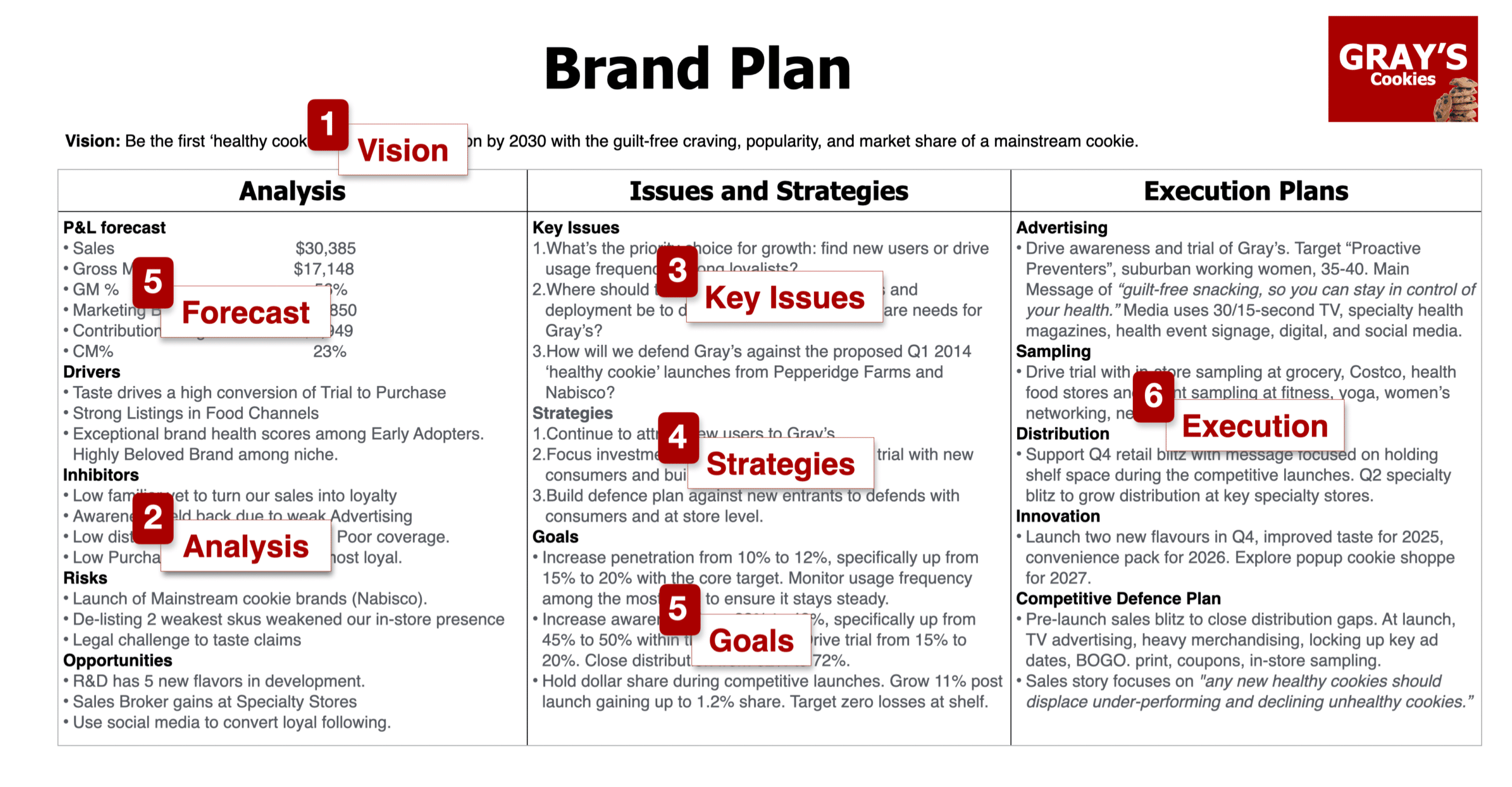
Our template covers five core areas:
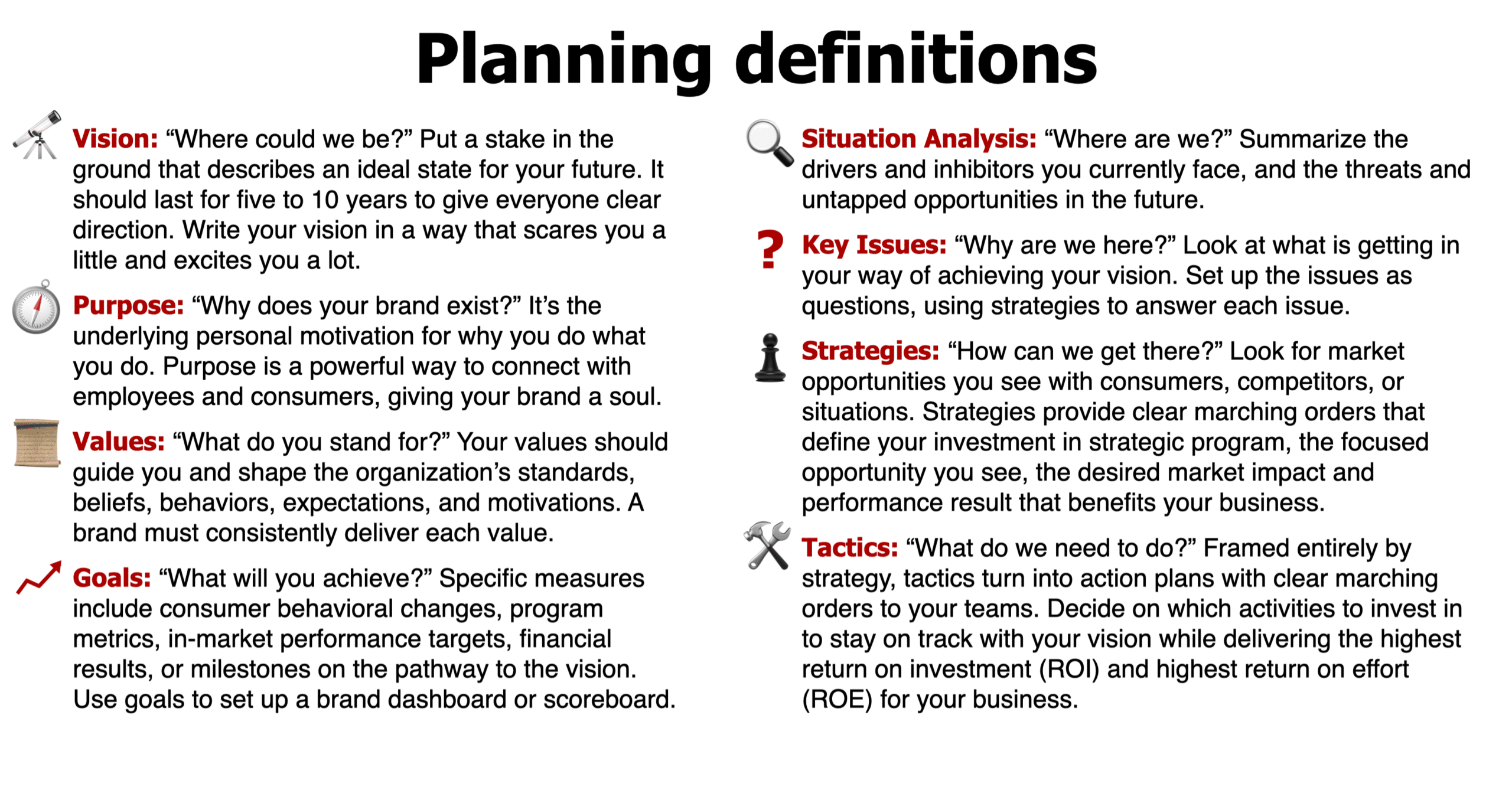
Vision – where the brand is headed
Analysis – key growth drivers, barriers, threats, and opportunities from your annual business review
Key Issues – the top three strategic questions standing between you and your vision
Strategies & Goals – answers to each key issue, with measurable targets
Execution Plans – specific initiatives mapped to consumer touchpoints (communications, innovation, sales)
How to Use the One-Page Brand Plan Template
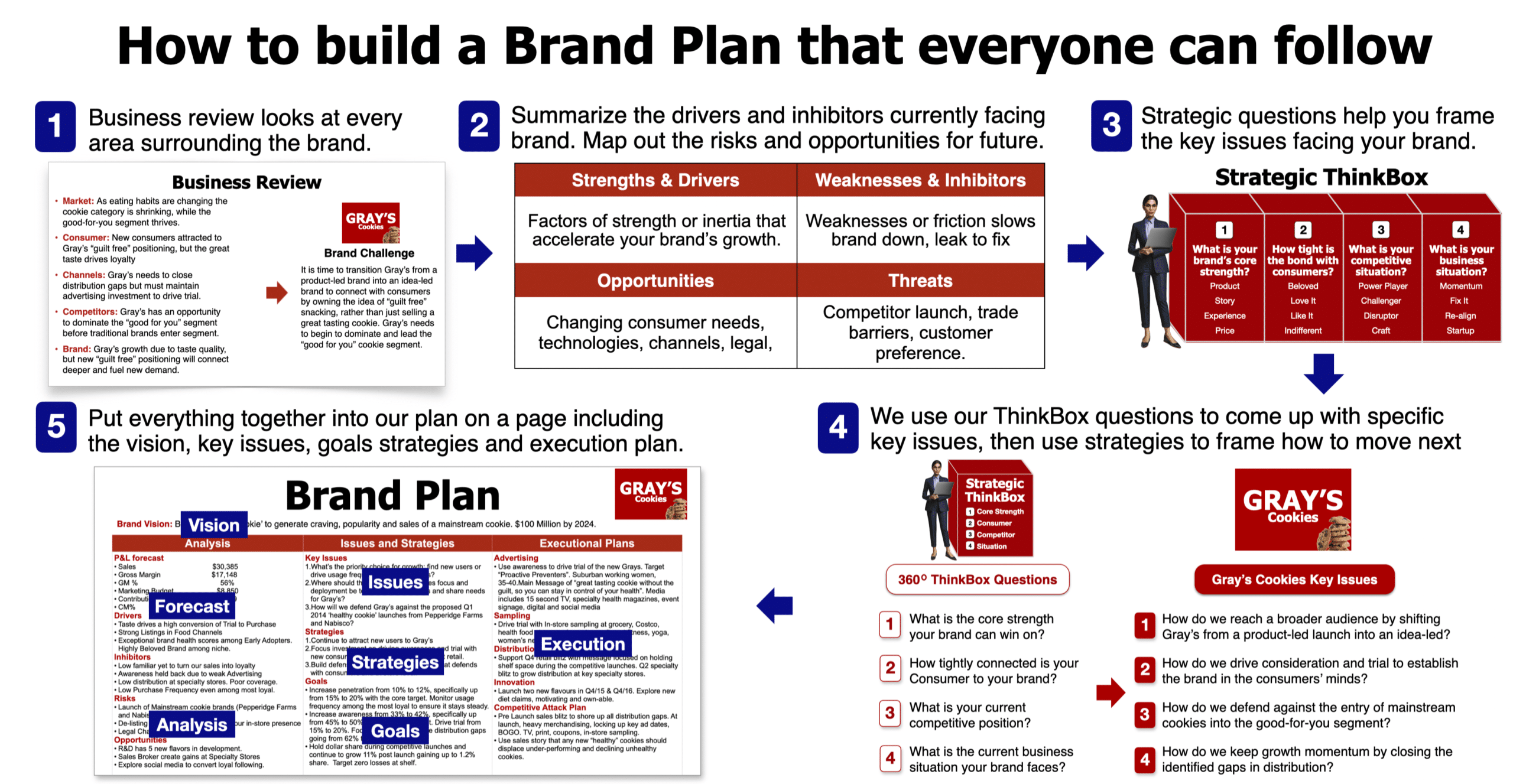
Start with your annual deep-dive business review. Look at the market, consumers, channels, competitors, and your brand. Ask four questions: What is driving your growth? What is holding it back? What threats could hurt the brand? What opportunities exist?
Then use the Strategic ThinkBox to surface your top three key issues. Each issue should be a question that, when answered, produces your core strategies.
The four ThinkBox lenses are:
What is the brand’s core strength?
How strong is the bond with consumers?
What is your competitive stance?
What is the current business situation?
Each key issue drives a strategic answer — and a goal to measure it. The one-page format forces focus, which is exactly the point.
Focus Your Plan with the Power of Threes
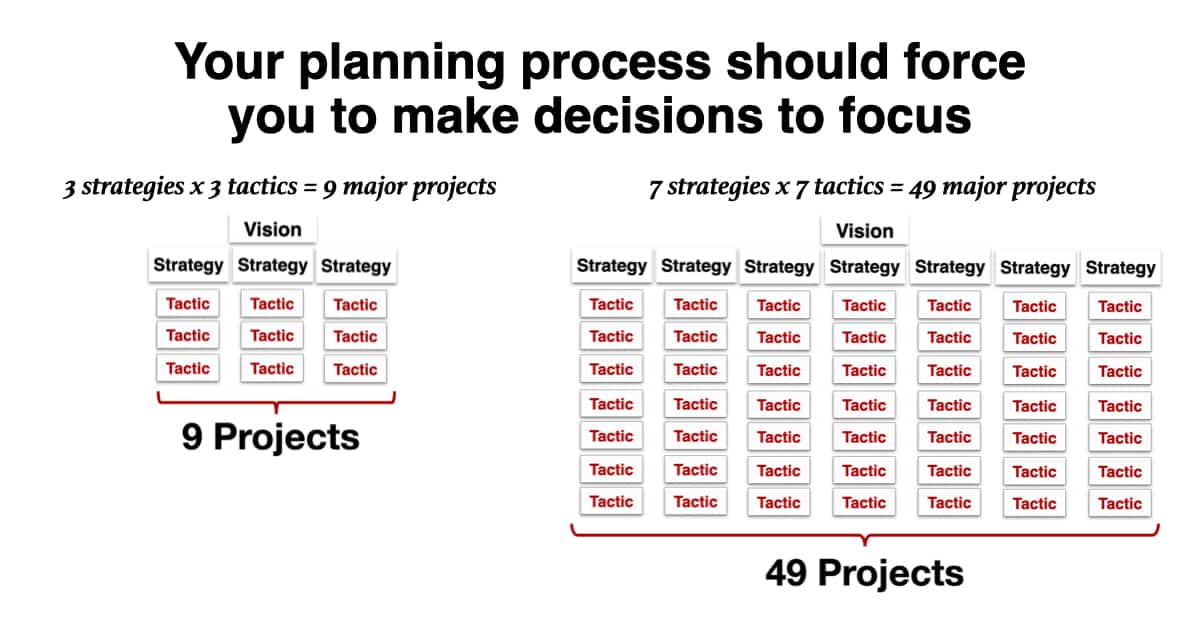
We believe in “the power of threes.” Aim for three strategies, each supported by three tactics — nine meaningful projects in total. This keeps resources concentrated where they matter most.
The math makes the case: three strategies × three tactics = 9 projects. Five × five = 25. Seven × seven = 49. With 49 projects, your brand’s limited resources are spread so thin that nothing gets executed with full brilliance. With nine, everything does.
A focused plan isn’t a small plan — it’s a smart one.
Back-to-Back One-Pagers for Every Team
Pair the plan with a relevant execution document for each function. Laminate them back-to-back so everyone keeps their version close at hand:
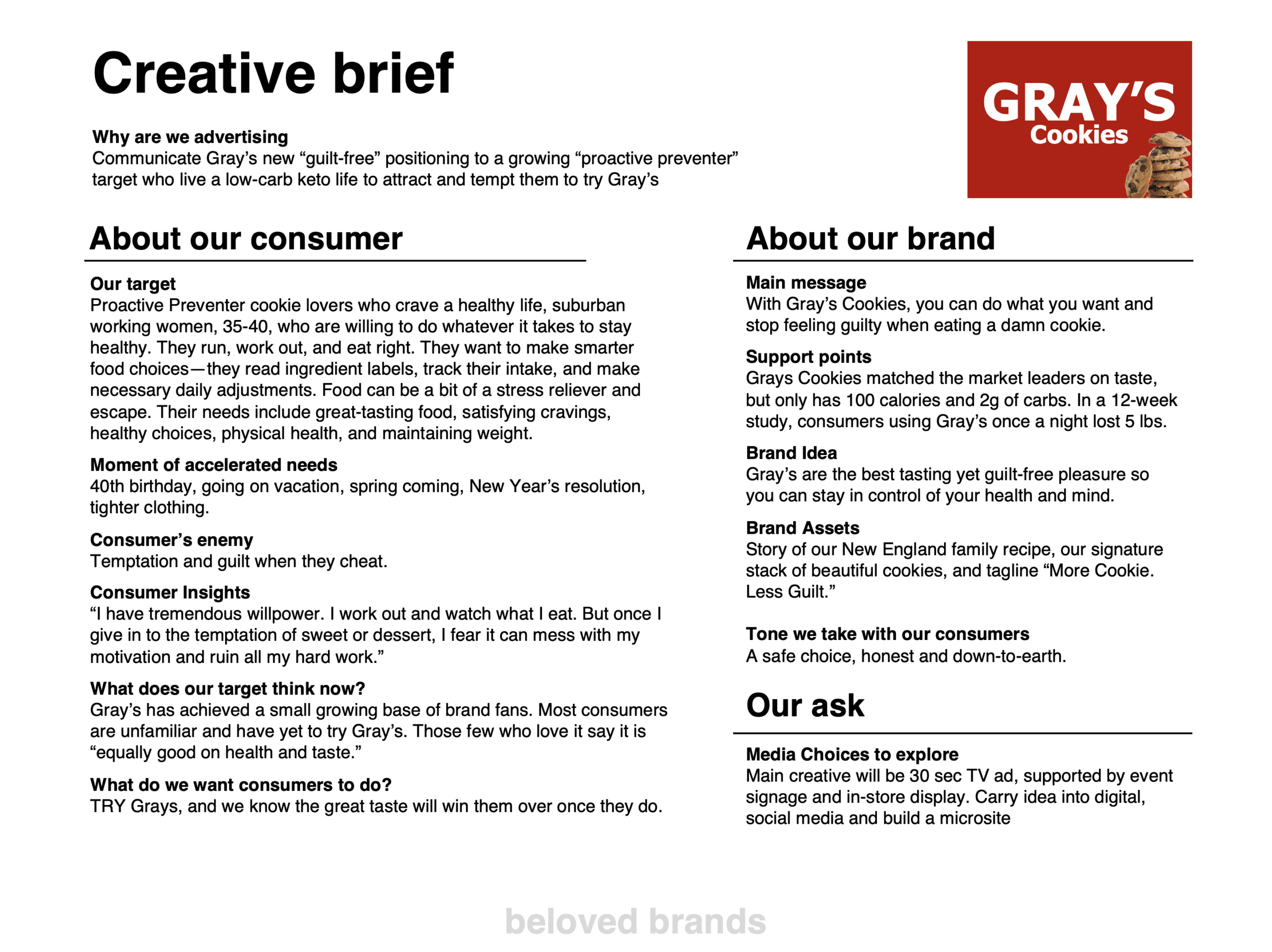
Ad agencies: Brand Plan + Creative Brief
R&D: Brand Plan + Innovation Plan
Sales: Brand Plan + In-Store Merchandising Plan
One-Page Brand Plan Examples
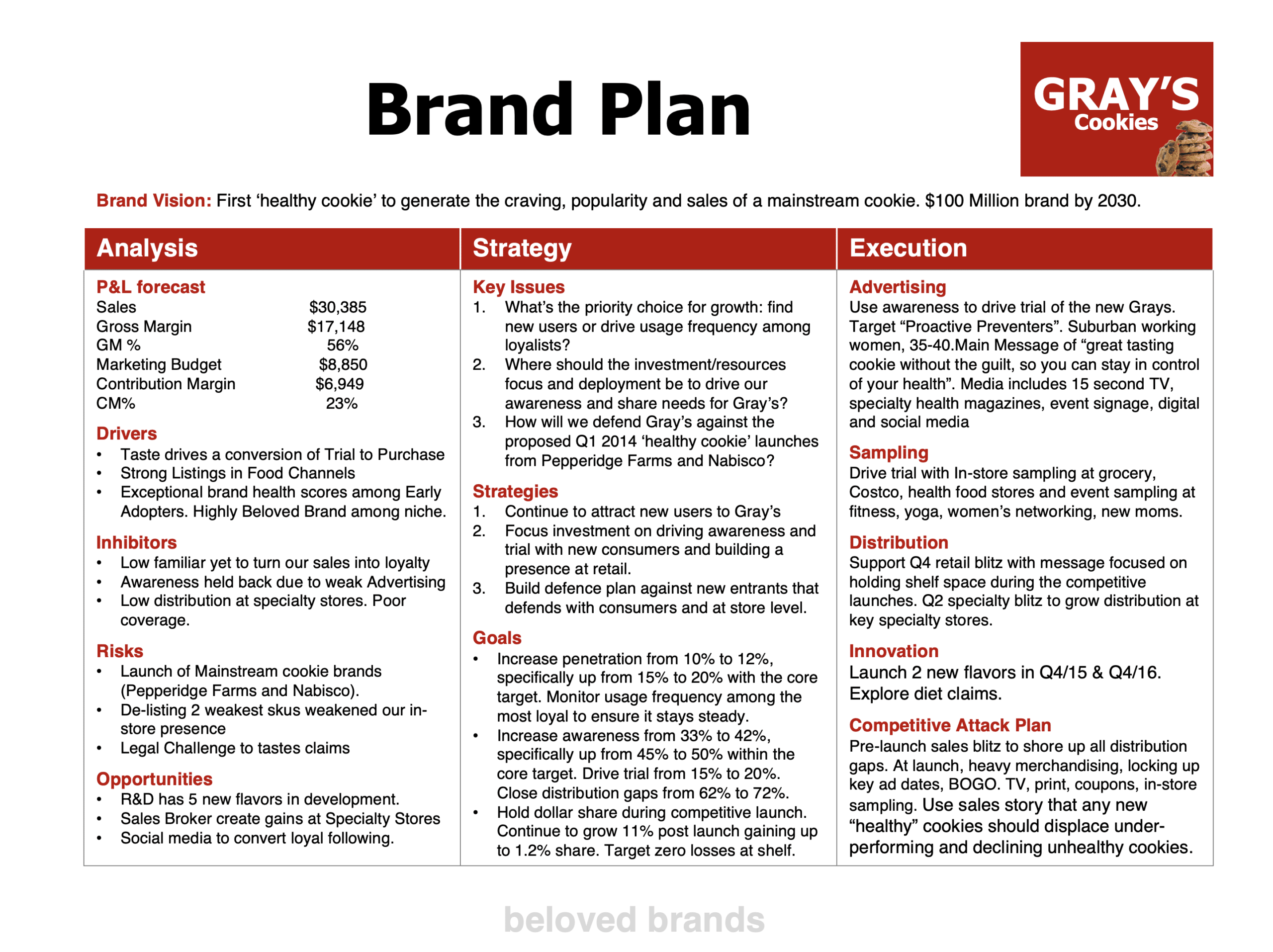
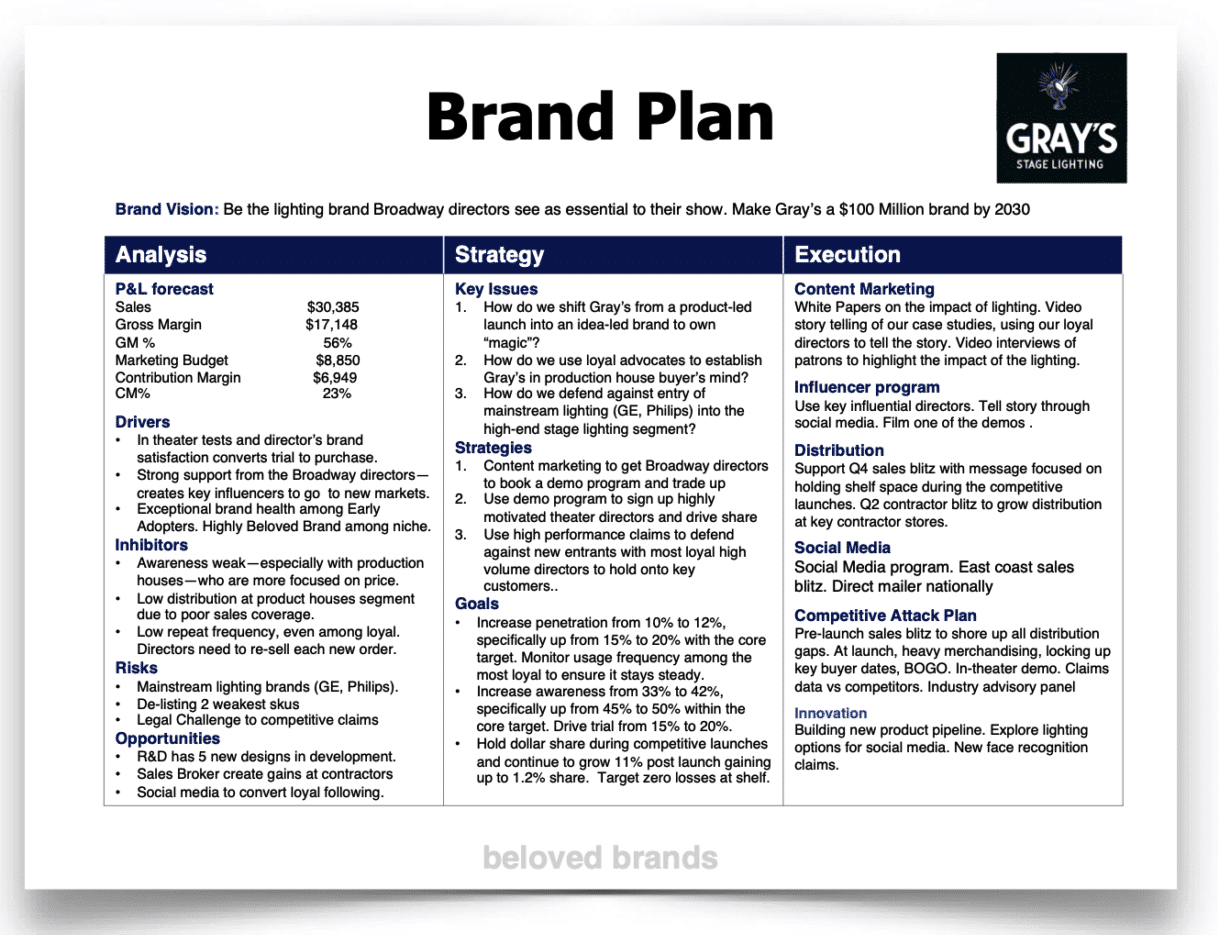
We provide ready-to-use examples across four brand categories. Click any template to see it in full:
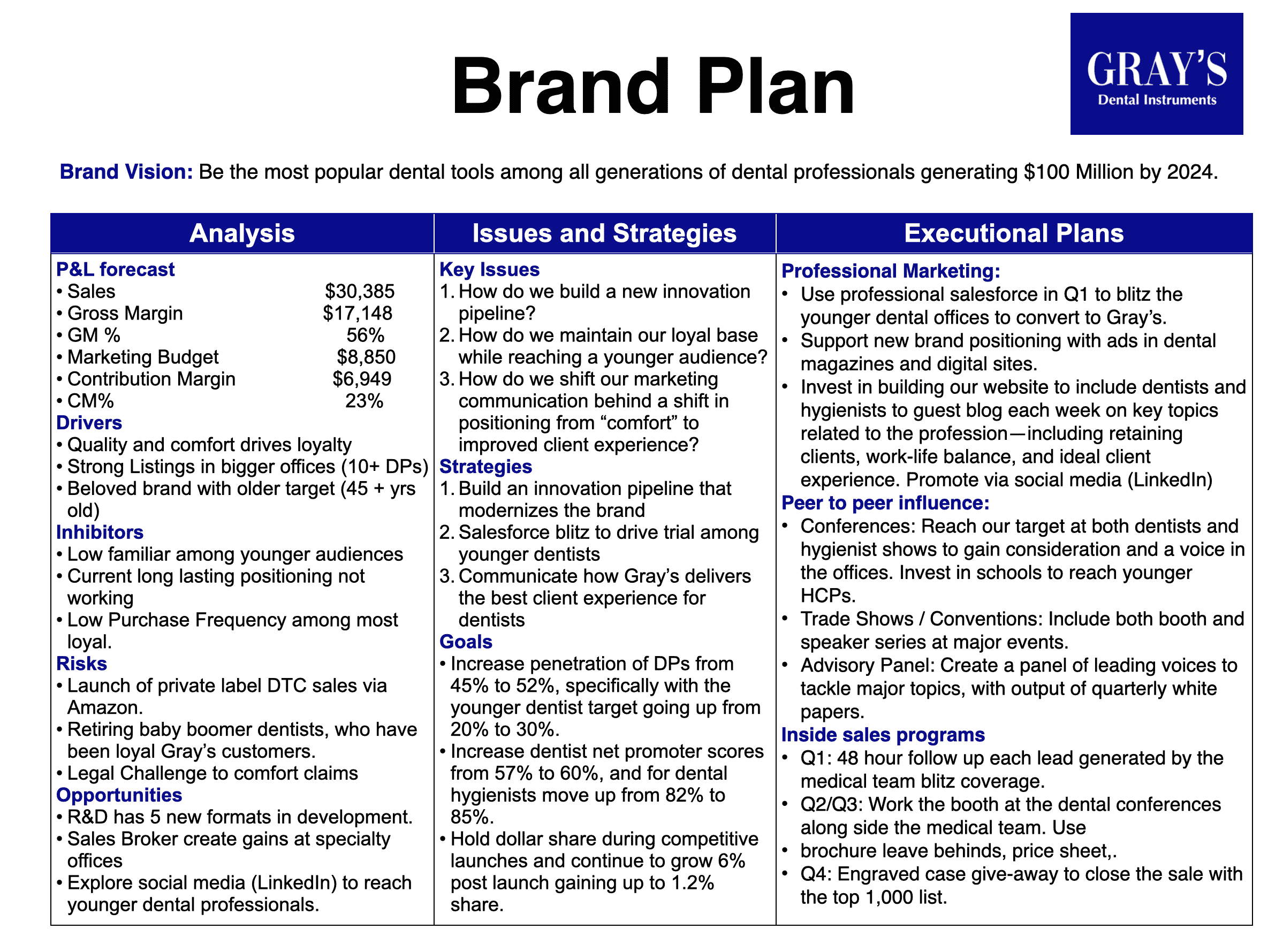
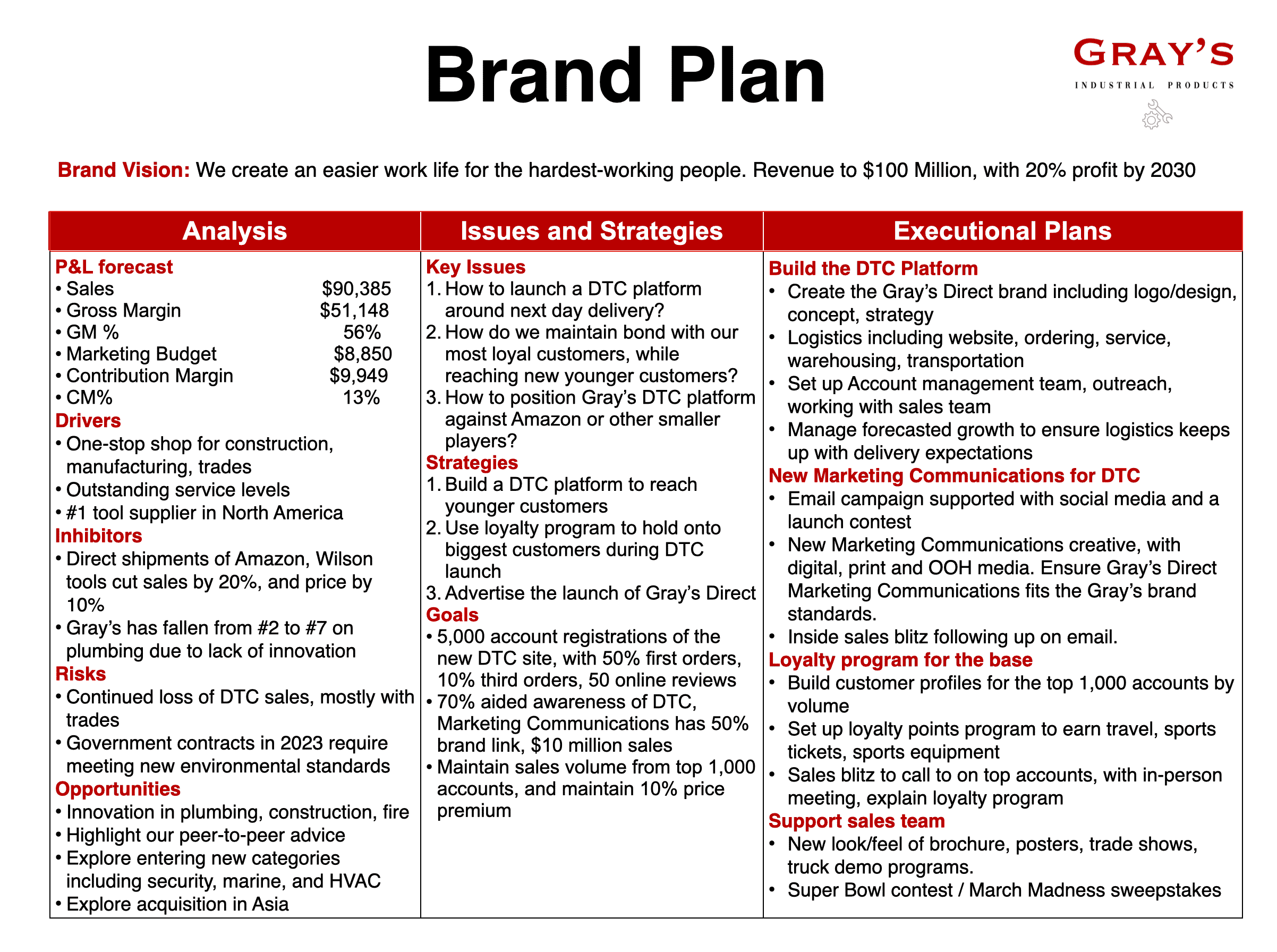
B2B example — structured around sales, partnerships, and competitive positioning
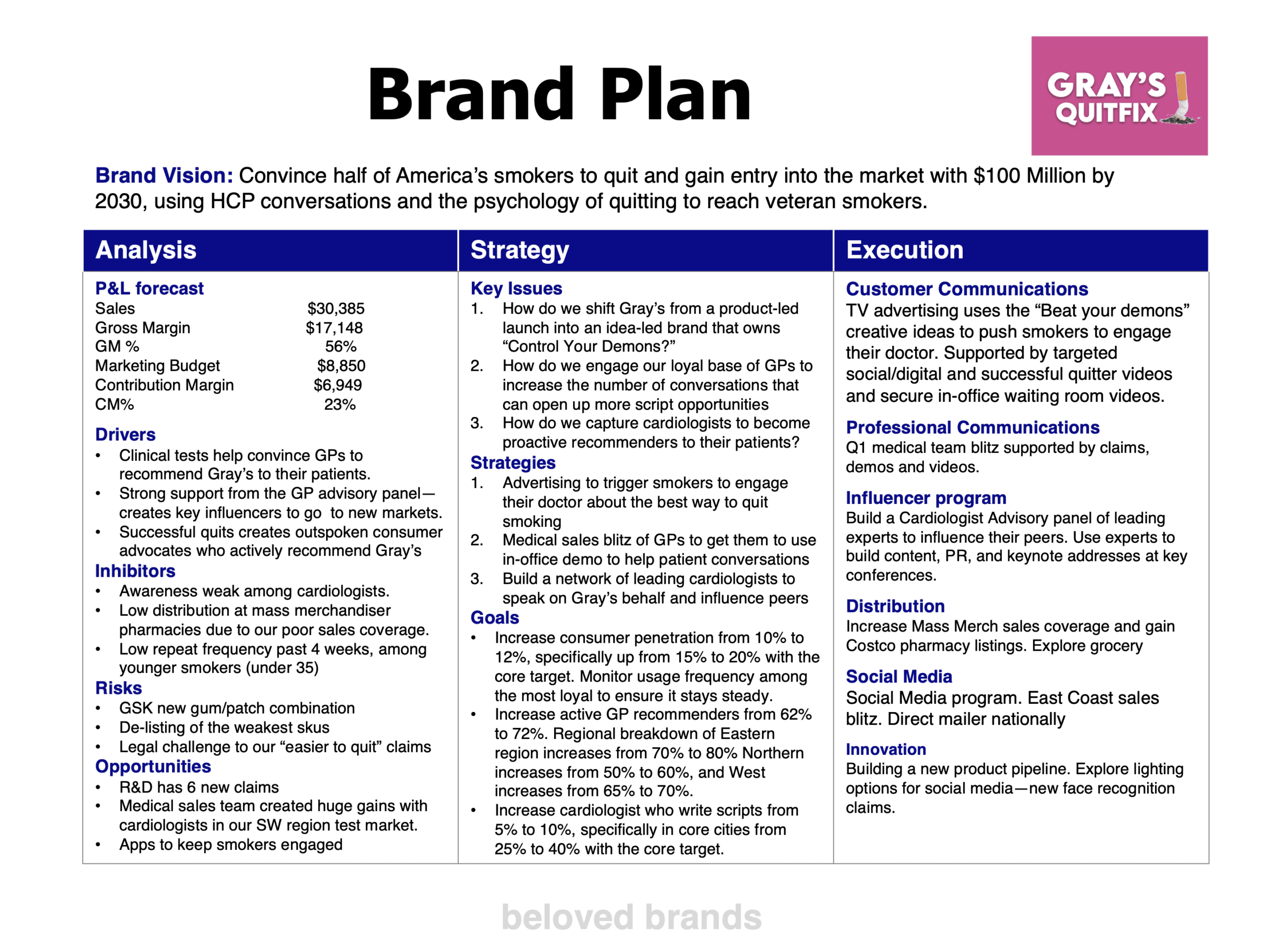
Healthcare example — built for pharmaceutical and consumer healthcare brands.
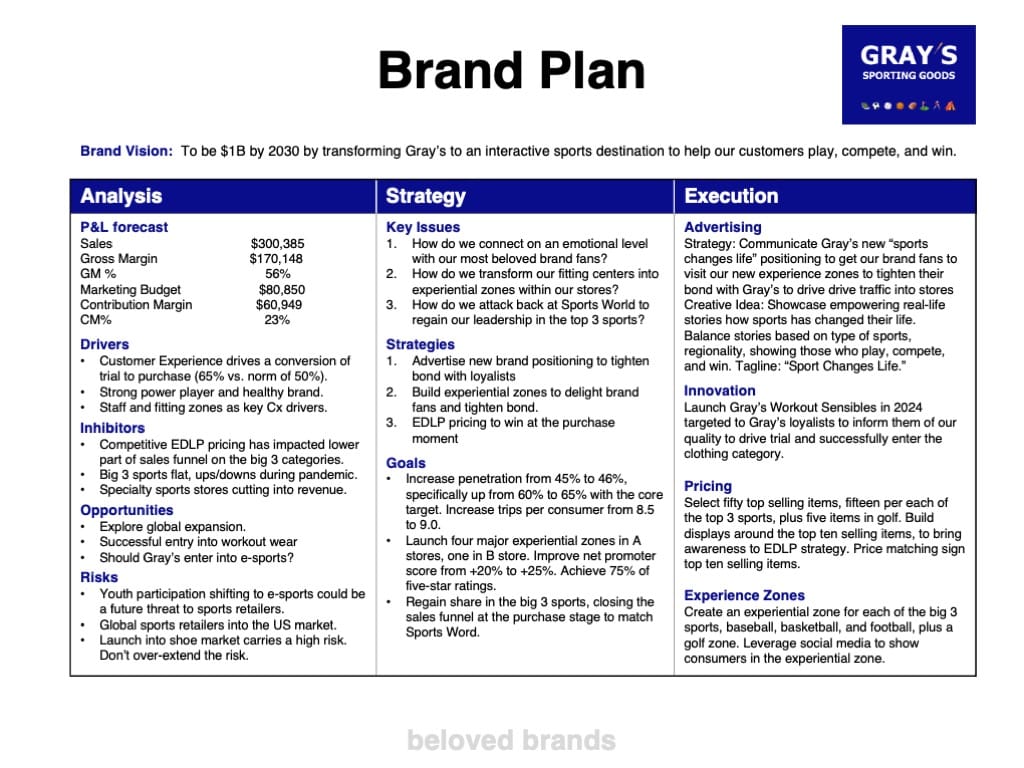
Retail example — focused on in-store execution and category leadership
B2B industrial and medical equipment examples — adapted for complex, long-cycle sales environments
B2B brand plan example
Healthcare brand example
Retail example
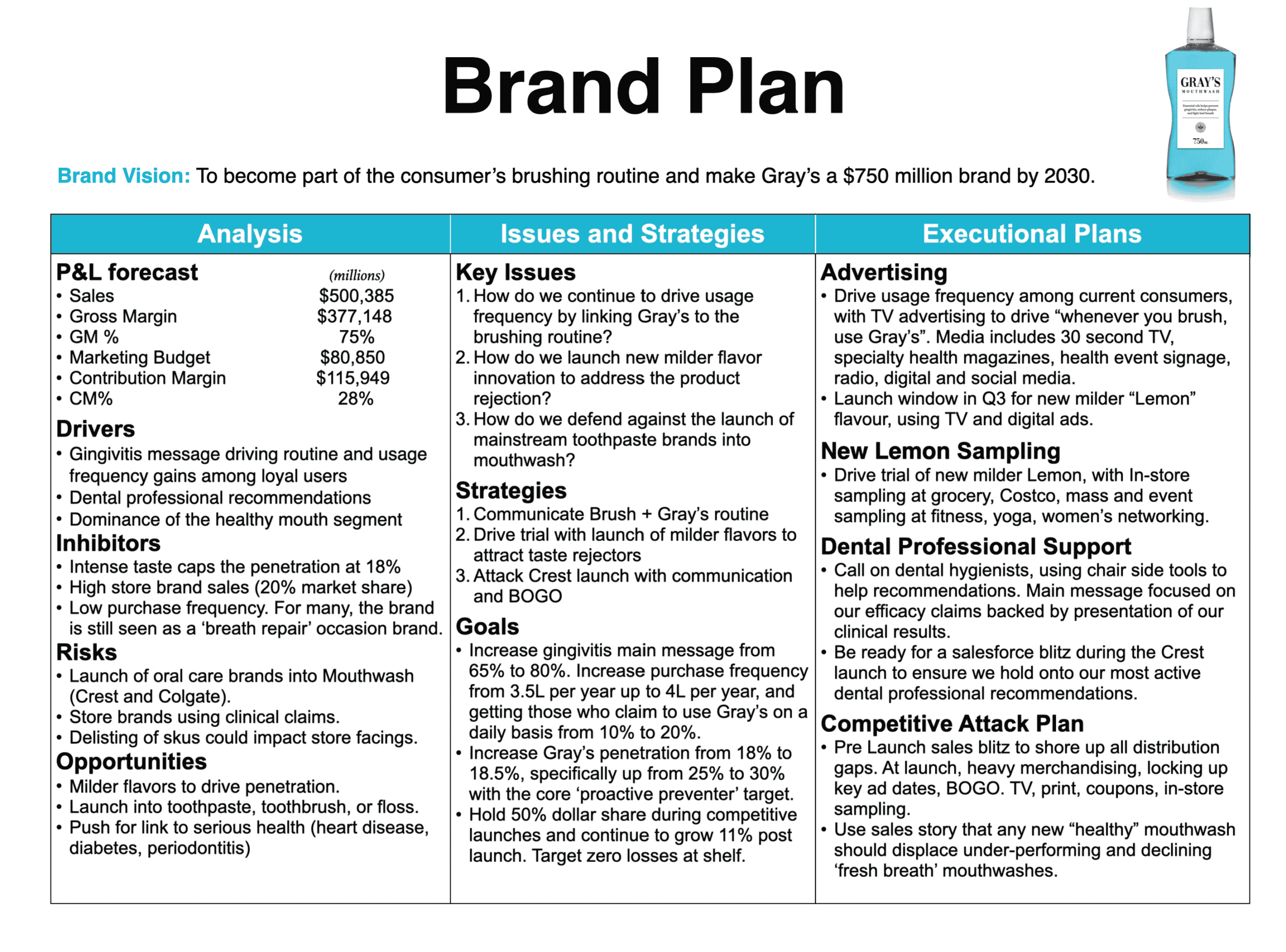
Consumer Healthcare example
B2B medical equipment example
Example for a B2B industrial brand
Frequently Asked Questions
What are the major steps in writing a brand plan?
Set a clear vision tied to a sales goal.
Conduct an annual business review (market, consumer, channels, competitors, brand).
Use the Strategic ThinkBox to identify key issue questions.
Write strategies that answer each issue; brainstorm tactics with your team.
Set measurable goals for each strategy and tactic
Why is a brand plan important?
A brand plan serves two purposes: it wins approval from leadership by showing how you’ll deploy resources to drive growth, and it gives your entire team a shared roadmap — with clear vision, priorities, strategies, and tactics — to work from all year.
What makes a good brand plan?
Focus and coherence. A good brand plan tells a unified story and forces hard choices about where to concentrate limited resources. It should answer the question: “If we could only do three things this year, what would they be?” — and then commit fully to executing those three things brilliantly.
What is the difference between a brand plan and a marketing plan?
A brand plan captures the overall strategic direction — vision, key issues, strategies, and goals — for the brand as a whole. A marketing plan goes deeper into specific execution: media, communications, campaigns, and channel activity. The one-page brand plan is the anchor document; the marketing plan is one of the execution layers beneath it.
Related
Search our site for any marketing topic
"Beloved Brands is the Cheat Code for Brand Managers"
If you run a brand, our Beloved Brands playbook will equip you with the marketing skills, tools, strategies, and insights needed to tackle every challenge in managing it. This is your essential resource for navigating the complexities of building and growing a successful brand.
📊 Build Brand Analytics that uncover what others miss
Our Beloved Brands playbook shows you how to run deep-dive brand audits that expose hidden challenges, surface real growth opportunities, and focus your team on the few issues that truly matter.
💡 Challenge your Strategic Thinking
You’ll learn to ask smarter, tougher questions that change how you see your brand, your market, and your role as a marketer—unlocking sharper strategies and clearer choices.
🎯 Sharpen your Brand Positioning
We give you proven tools and consumer benefit frameworks that help you define positioning that is meaningful, motivating, and defensible—turning functional and emotional benefits into competitive advantage.
📝 Build a Brand Plan that sets your future direction
You’ll learn how to create a clear, aligned brand plan that focuses priorities, mobilizes teams, and drives smarter decisions across your organization.
📺 Master the decisions that drive Marketing Execution
From writing stronger creative briefs to making confident calls on advertising, innovation, and campaigns, this book helps you lead execution that gets noticed and gets results.
⭐ Trusted by marketers who demand real-world impact
Over 80% of our Amazon reviews are 5-star. Marketers tell us this playbook stays within arm’s reach when the pressure is on and the decisions matter most.
Our Beloved Brands Marketing Training builds high-performing marketing teams that think, act, and perform at a higher level
Experience the Beloved Brands difference. Our marketing training program is hands-on, intensive, challenging, real-world, and designed to elevate the marketer’s performance.
We don’t teach theory. We build capability.
Your marketing team gains sharper thinking, stronger tools, practical frameworks, and the confidence to operate at a higher level from day one.
You will see the difference in how your team thinks, acts, and performs.
Our Beloved Brands Marketing Training program
🛠️ We build essential Marketing Skills
Our program equips your team with the core skills required to raise performance, including brand analytics, strategic thinking, positioning, planning, and execution.
📈 Marketers will work on their own brand
We drive real performance improvement by having marketers apply every tool, method, and framework directly to their own brands. They build their brand’s business review, brand positioning, plan, and creative brief.
🚀 Our marketing coaching is like having a VP in the room
Our hands-on coaching recreates real-world pressure, expectations, and decision-making—the same standards encountered in leadership meetings and boardrooms.
🌍 Custom-Tailored Marketing Training Programs
We tailor each program to your business model — Consumer, B2B, Retail, and Healthcare — using industry-specific examples that make it easy for teams to apply learning immediately.